Criminal Justice-Studies

Why Criminal Justice-Studies?
A career in criminal justice offers purpose, variety, and the chance to make a difference every day. In this program, you will learn to apply the principles of law enforcement, corrections, and community advocacy to help maintain peace and protect lives. You will gain critical thinking, problem-solving, and communication skills needed to meet the complex challenges of today’s justice system.
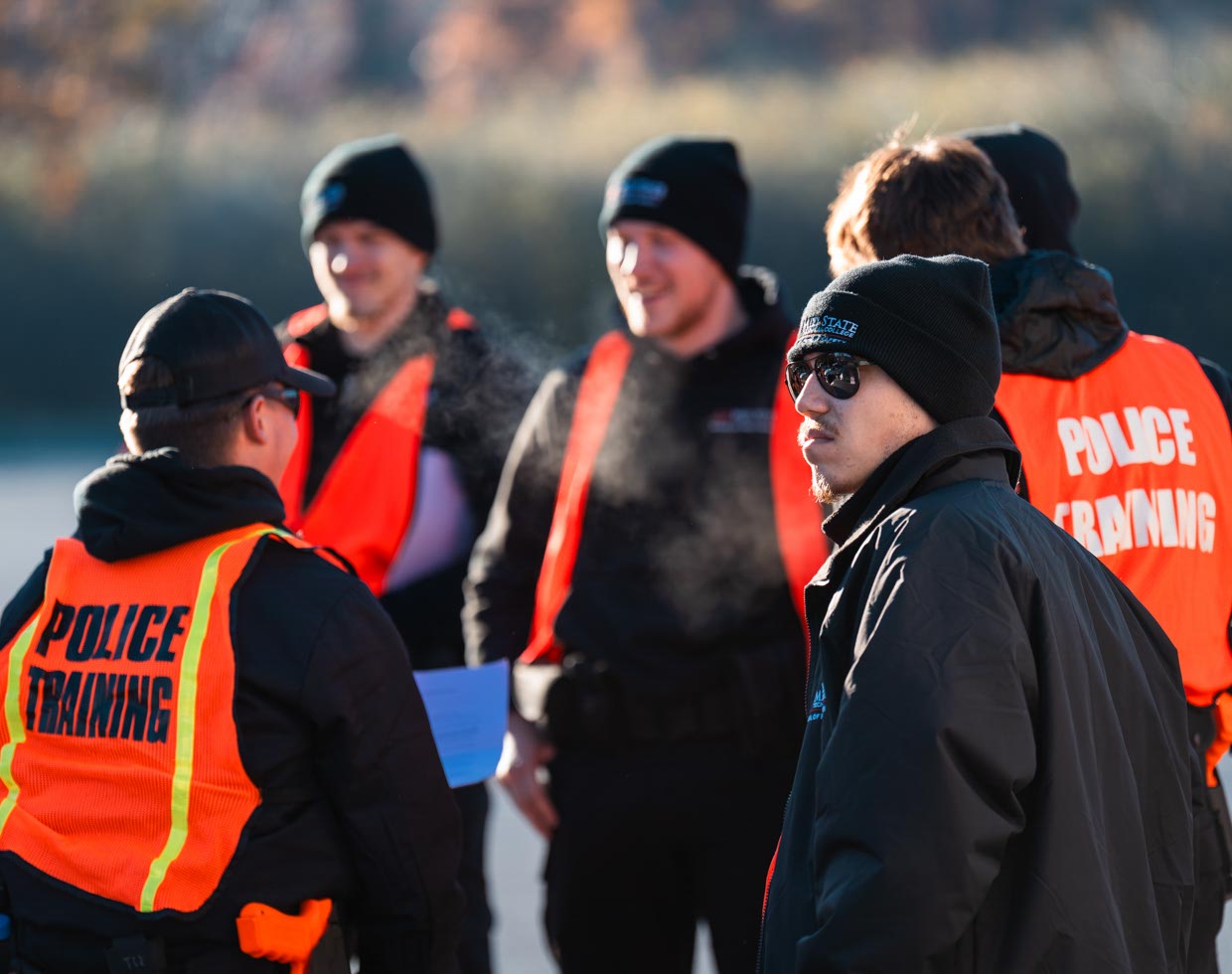
At Mid-State, you’ll learn from experienced professionals through classroom instruction, simulations, and hands-on activities. Students have the opportunity to apply for the Criminal Justice–Law Enforcement 720 Academy and complete it during their fourth semester, earning certification while satisfying degree requirements.
Program Facts
Program Outcomes
Graduates leave ready to succeed in their careers. Each year, data from Mid-State's Graduate Survey and statewide reports show consistently high satisfaction and strong starting salaries. Here's a snapshot of what success looks like after graduation.
Career Opportunities
Program Details
Take a closer look at what the program offers and what to expect.
Following is the list of courses within the program. Your course plan may vary, and you'll get a recommended sequence once you're enrolled. See the program information guide below for full course details or talk with your advisor.
Program Information Guide (PDF)
Full-Time Curriculum (61 Total Credits)
Credit for Prior Learning (CPL) options are available for some courses.
Term 1: (16 Credits)
Course Number | Course Name | CPL | Credits |
|---|---|---|---|
10504114 | Yes | 3 | |
10504125 | No | 3 | |
10504164 | No | 3 | |
10801136 | Yes | 3 | |
10804107 or 10804189 | Yes | 3 | |
10890102 | Yes | 1 |
Term 2: (15 Credits)
Course Number | Course Name | CPL | Credits |
|---|---|---|---|
10504140 | Yes | 3 | |
10504144 | No | 3 | |
10504163 | No | 3 | |
10801198 or 10801196 | Yes | 3 | |
10809198 or 10809188 | Yes | 3 |
Term 3: (15 Credits)
Course Number | Course Name | CPL | Credits |
|---|---|---|---|
10504103 | Yes | 1 | |
10504112 | No | 3 | |
10504123 | No | 3 | |
10504195 or 10504196 | Criminal Justice Internship or Criminal Justice Applications | No or Yes | 2 |
10809122 or 10809196 | Introduction to American Government or Introduction to Sociology | Yes | 3 |
10809172 | Yes | 3 |
Term 4: (15 Credits)
Course Number | Course Name | CPL | Credits |
|---|---|---|---|
10504115 or 10504185 | Contemporary Issues in Law Enforcement or Basic Jail Academy 2 | No or Yes | 3 |
10504129 | No | 3 | |
10504134 | No | 3 | |
10504143 | No | 3 | |
10504166 or 10504184 | No or Yes | 3 |
Meet our full-time instructors.
Paul Bushmaker, BS
Paul earned his bachelor of science degree in political science from the University of Wisconsin–Stevens Point. He is a graduate of Command College #3 in conjunction with UW–Madison and is a Certified Public Manager. He has over 23 years of law enforcement experience, with 16 years as a patrol sergeant. He holds a number of specialty certifications, is a DOJ-certified instructor, and has been training and teaching law enforcement officers for over 18 years.
“I am honored to be a part of the Mid-State criminal justice studies team. The chance to help educate, mentor, and train the future law enforcement officers of this state is a once-in-a-lifetime opportunity.”
Michael Topness, BAS
Mike earned his bachelor of applied science in leadership and organizational studies from University of Wisconsin-Oshkosh and his associate degree in criminal justice from Western Technical College in La Crosse, Wisconsin. His background includes over 13 years of work as a patrol officer in central Wisconsin. He’s also had the opportunity to serve in a variety of roles including field training officer, assistant entry team leader on an area special response team, and shift lead officer. Mike holds numerous specialty certifications with an emphasis on controlled substance enforcement and law enforcement tactics as well as being a certified firearms and tactical response instructor.
“I am eager for the opportunity to mentor the future of law enforcement and help continue the excellence in policing that central Wisconsin has grown accustomed to.”
Employers will expect graduates of this program to be able to:
- Examine the components of and interrelationships in the criminal justice system.
- Analyze situational responses.
- Apply communication skills as a criminal justice professional.
- Conduct investigations.
- Adhere to the professional code of ethics for a criminal justice practitioner.
- Maintain personal wellness.
Alongside your career training, you'll develop key workplace strengths. Explore the additional skills you'll build.
To succeed in this program, you'll need to meet certain technical standards. These are the key skills and abilities needed for the program and future career success—with or without reasonable accommodations. Be sure to review them carefully before you apply.
Explore the resources and next steps below. Your academic advisor will help you know what to complete and when.





Explore Other Options
Other Programs
Explore more Mid-State programs and find your path to success.

Workforce Training
Not ready for a full degree? Learn job-ready skills with our workforce training options.

Continuing Education
Add a new skill, explore a hobby, or take the next step in your career with our lifelong learning options.