Paramedic Technician
Why Paramedic Technician?
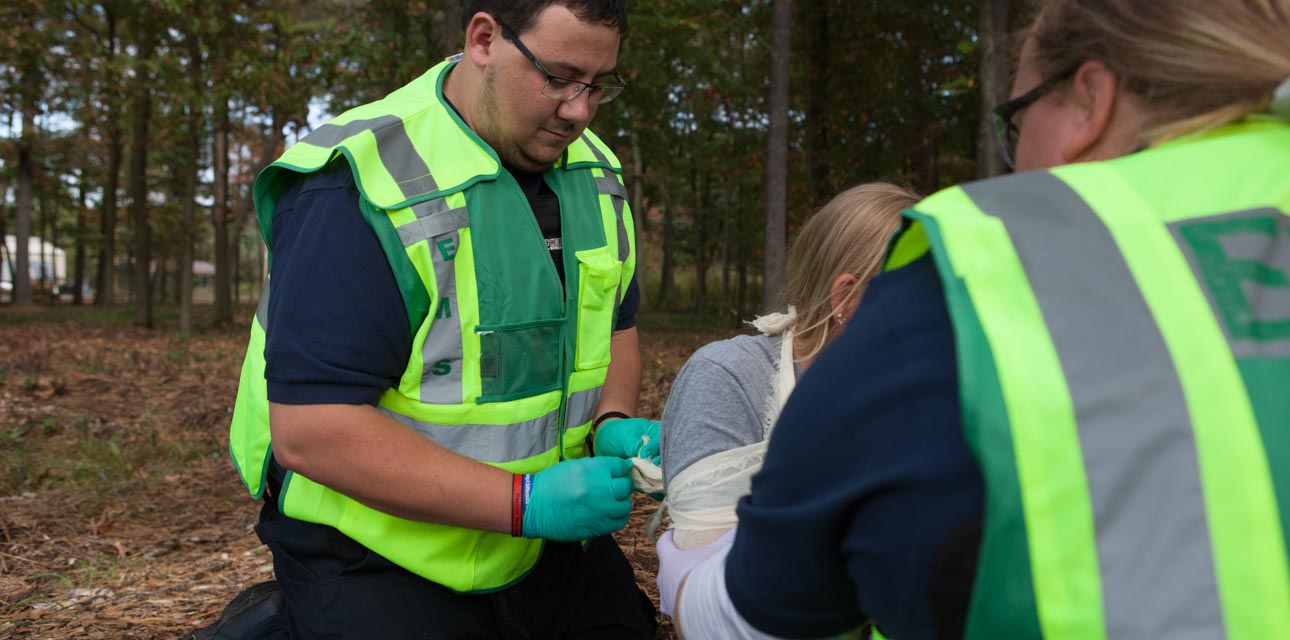
Paramedic technicians are the advanced providers who respond when every second matters. In this associate degree program, you’ll learn to assess and stabilize patients, provide advanced life-saving interventions, and lead in high-pressure emergency situations. Training takes place in the classroom, skills lab, hospital settings, and prehospital environments to prepare you for real-world demands.
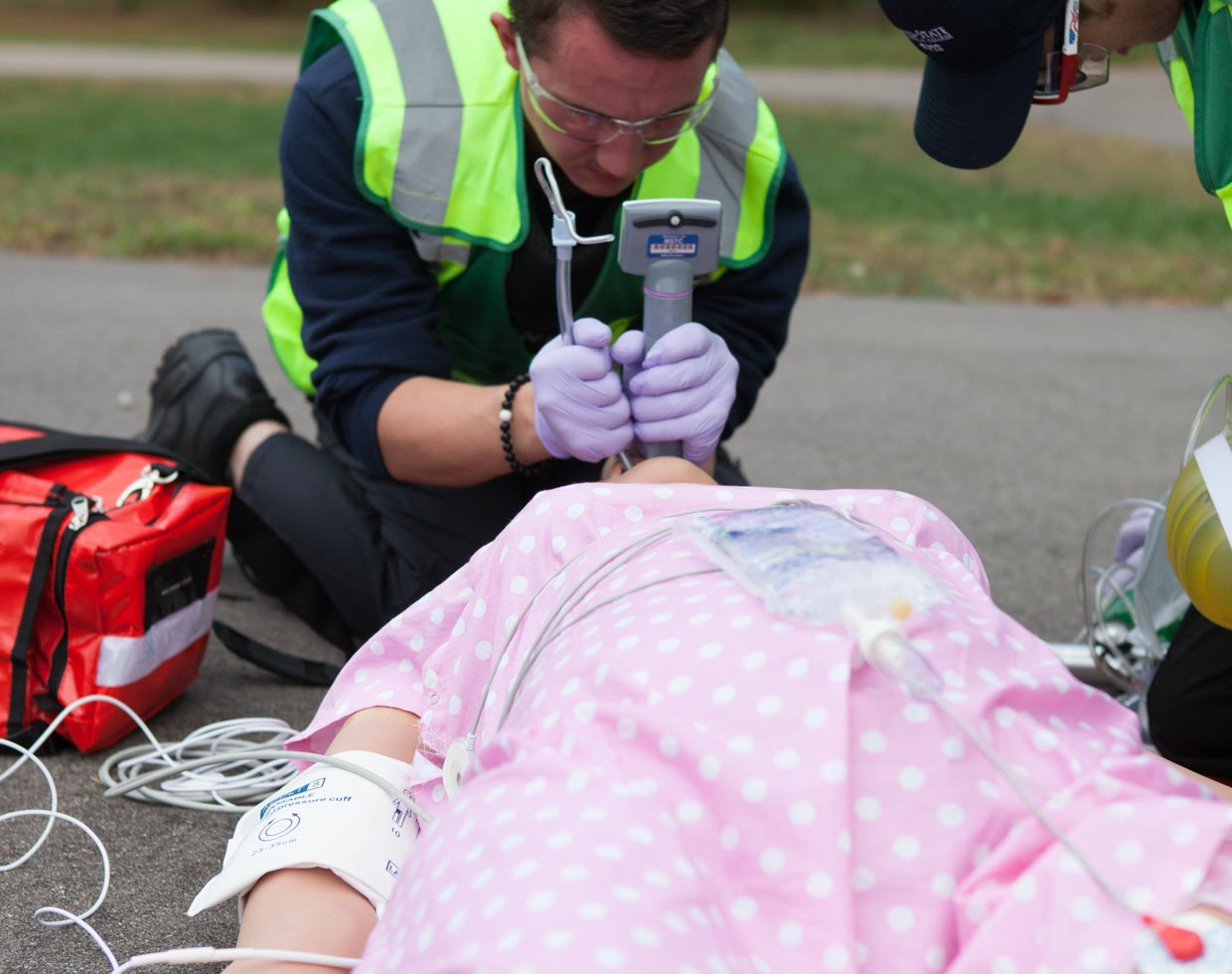
At Mid-State, you’ll complete general studies along with core paramedic courses in a joint cohort with Paramedic students. Students benefit from hands-on simulation experiences in the Healthcare Simulation Center that enhance and support their clinical training. Graduates earn certifications in Advanced Cardiac Life Support, Prehospital Trauma Life Support, and Pediatric Advanced Life Support, and are eligible to take the National Registry of Emergency Medical Technicians examinations required for Wisconsin licensure. The program is accredited by the Commission on Accreditation of Allied Health Education Programs (CAAHEP).

Waiting List
This program may have a waitlist due to limited space and high demand. The waitlist helps ensure a fair and transparent process when there are more applicants than available seats. Waitlist priority is based on the date of application and Wisconsin residency. For more information about the waitlist process, visit Program Waitlists.
In the meantime, we invite you to explore other rewarding options in the School of Public Safety—you might find a great fit you hadn’t considered yet.
Program Facts
Program Outcomes
Graduates leave ready to succeed in their careers. Each year, data from Mid-State's Graduate Survey and statewide reports show consistently high satisfaction and strong starting salaries. Here's a snapshot of what success looks like after graduation.
Career Opportunities
Program Details
Take a closer look at what the program offers and what to expect.
Following is the list of courses within the program. Your course plan may vary, and you'll get a recommended sequence once you're enrolled. See the program information guide below for full course details or talk with your advisor.
Program Information Guide (PDF)
Full-Time Curriculum (62 Total Credits)
Credit for Prior Learning (CPL) options are available for some courses.
Term 1: (14 Credits)
Course Number | Course Name | CPL | Credits |
|---|---|---|---|
10801136 | Yes | 3 | |
10806177 | Yes | 4 | |
10809122 or 10809172 or | Yes | 3 | |
10809196 |
|
| |
10809198 | Yes | 3 | |
10890102 | Yes | 1 |
Term 2: (10 Credits)
Course Number | Course Name | CPL | Credits |
|---|---|---|---|
10801198 or 10801196 or 10801197 | Speech or Oral/Interpersonal Communication or Technical Reporting | Yes or Yes or No | 3 |
10804107 or 10806134 | Yes | 3 | |
10806179 | No | 4 |
Term 3: (19 Credits)
Course Number | Course Name | CPL | Credits |
|---|---|---|---|
10531911 | No | 2 | |
10531912 | No | 4 | |
10531913 | No | 3 | |
10531914 | No | 3 | |
10531915 | No | 2 | |
10531918 | No | 1 | |
10531955 | No | 2 | |
10531959 | No | 2 |
Term 4: (19 Credits)
Course Number | Course Name | CPL | Credits |
|---|---|---|---|
10531919 | No | 4 | |
10531920 | No | 3 | |
10531921 | No | 3 | |
10531922 | No | 1 | |
10531923 | No | 1 | |
10531956 | No | 2 | |
10531957 | No | 3 | |
10531958 | No | 1 | |
10531960 | No | 1 |
Meet our full-time instructors.
Nathaniel Disher, BS
Nathaniel earned his BS in human biology with an emphasis in health science from the University of Wisconsin–Green Bay. He also completed the Paramedic Technician program at Mid-State Technical College and is a licensed Paramedic with Critical Care and TEMS endorsements in Wisconsin. He is also a licensed Paramedic from the National Registry of EMTs. Nathaniel was a full-time paramedic for over three years and currently works part-time to stay current with field advancements and keep clinical skills sharp. His experience also includes three years as an adjunct EMS instructor, including completion of the Mid-State EMS instructor internship.
“I love teaching because it gives me the chance to prepare others to make a difference in their communities—when people need them most.”
Ryan Huser, AD, BA, MA
Ryan earned his associate degree from the Paramedic Technician program at Mid-State Technical College, his BA in fire and emergency response management from UW–Oshkosh, and his master’s in disaster and emergency response management from American Public University. He is a national registered paramedic with the National Registry of Emergency Medical Technicians and is a state licensed paramedic with critical care endorsement. Ryan is also a National Registry Examiner for EMT, AEMT, and Paramedic Exams and has worked on many state-level educational projects, such as the Standards and Procedures Manual update, the latest curriculum rewrite, and the development of the new EMT certification testing.
“My eyes have seen more and my hands have done more than most people can imagine, and this experience stays with me in the classroom to train better paramedics than generations past.”
Employers will expect graduates of this program to be able to:
- Prepare for incident response and EMS operations.
- Integrate pathophysiological principles and assessment findings to provide appropriate patient care.
- Demonstrate paramedic skills associated with established standards and procedures for a variety of patient encounters
- Communicate effectively with others.
- Demonstrate professional behavior.
- Meet state and national competencies listed for paramedic credentialing.
Alongside your career training, you'll develop key workplace strengths. Explore the additional skills you'll build.
To succeed in this program, you'll need to meet certain technical standards. These are the key skills and abilities needed for the program and future career success—with or without reasonable accommodations. Be sure to review them carefully before you apply.
This program prepares you for licensure to work in Wisconsin. If you plan to work in another state, be sure to check that state's licensure requirements—Mid-State's program may not meet them all. If you've applied to the program and have any questions about this information, talk to your advisor.
Explore the resources and next steps below. Your academic advisor will help you know what to complete and when.




Quality You Can Trust
Program accreditation means your program meets high-quality standards recognized by employers and industry leaders. It ensures your education is respected, your credits are more likely to transfer, and your credential holds real value in the job market.
The Paramedic Technician program is accredited by the Commission on Accreditation of Allied Health Programs (CAAHEP).
Commission on Accreditation of Allied Health Education Programs
9355 113th St. N, #7709 Seminole, FL 33775 • 727.-210-2350
Explore Other Options
Other Programs
Explore more Mid-State programs and find your path to success.

Workforce Training
Not ready for a full degree? Learn job-ready skills with our workforce training options.

Continuing Education
Add a new skill, explore a hobby, or take the next step in your career with our lifelong learning options.