Strategic Plan
Our Path Forward
On July 1, 2025, Mid-State Technical College launched its 2025–2030 Strategic Plan (PDF), A College for Our Communities. Our Strategic Directions framework offers a clear snapshot of the plan’s purpose, focus areas (pillars), and how success is measured through key results tied to Student Success, Organizational Effectiveness, and Organizational Health.
2025–2030 Strategic Directions
Through the pursuit of excellence and continuous improvement, the College will:
- Provide agile, accessible, high-quality education to foster student achievement through career pathways and lifelong learning to the communities we serve.
- Strengthen identity through comprehensive engagement with stakeholders to make impactful contributions to the community.
- Deliver dynamic, innovative, engaging solutions to provide a skilled workforce and enhance economic viability within the district as a community partner.
As we carry out these strategic directions, Mid-State will leverage both resilience and agility—allowing us to respond quickly to change and grow stronger through every challenge and opportunity.
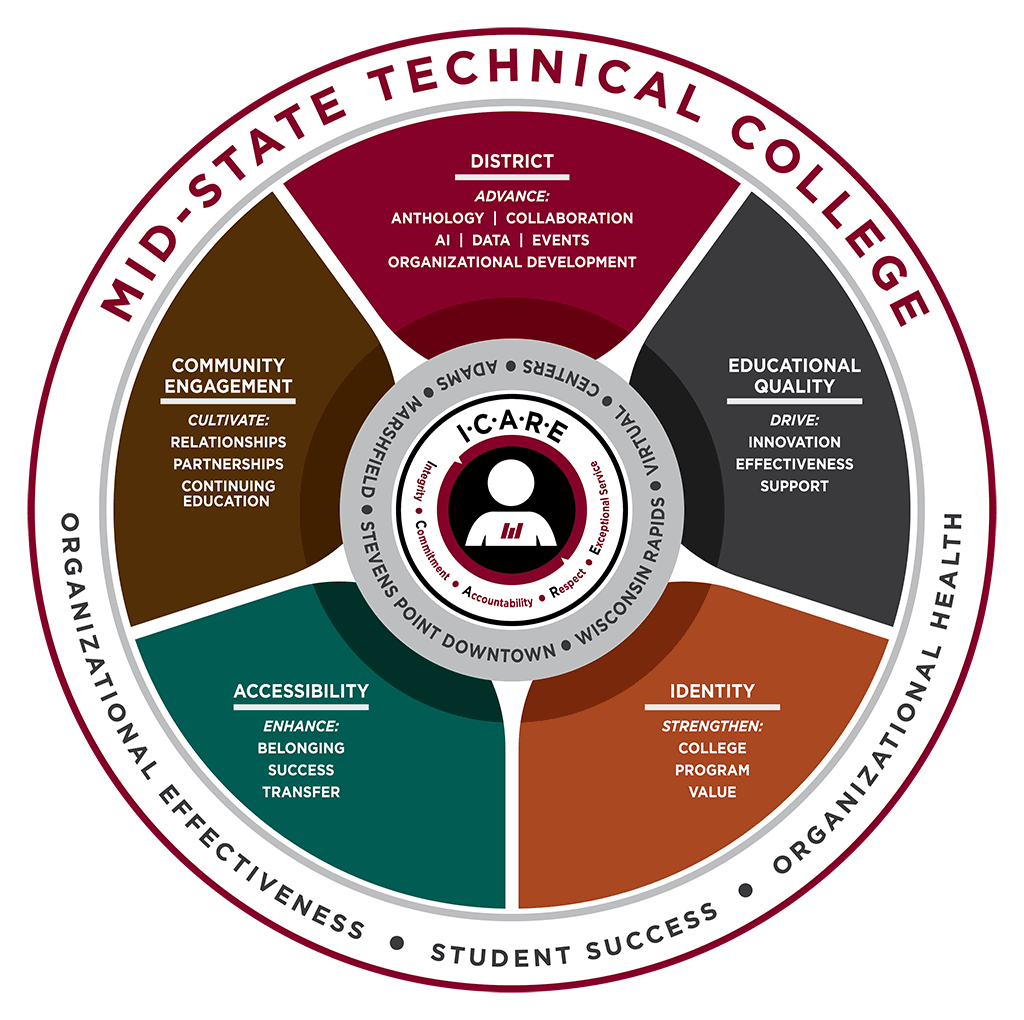
Mid-State’s Strategic Plan is grounded in four intentional focus areas known as our Pillars of Opportunity. These pillars guide our efforts and drive measurable results across Student Success, Organizational Effectiveness, and Organizational Health.
- Educational Quality: Mid-State continuously evaluates its product development plan to ensure we meet industry needs and equip students with relevant workforce skills. Explore our current and coming-soon programs.
- Identity: Mid-State will strengthen awareness of how its educational offerings align with employer needs and support seamless transfer to university partners. A recent economic impact study demonstrates Mid-State's its return on investment to students, the district and society at large.
- Accessibility: Mid-State intentionally designs programs at our campuses and centers to meet employer needs and facilitate reskilling. Streamlined admissions processes—including pathways like HSED/GED and dual credit—enhance accessibility. We are enhancing our transfer pathways for incoming and outgoing students.
- Community Engagement: Our division of Workforce & Economic Development continues to see increases in contract training requests from district stakeholders, as well as apprenticeship students and sponsors. Lifelong learning opportunities provide more than professional benefits for career-oriented citizens—they offer the personal and professional enrichment essential to strong communities.
With A College for Our Communities 2025–2030, Mid-State is advancing innovative, student-centered approaches to meet the evolving needs of learners, employers, and communities across central Wisconsin.


Dr. Shelly Mondeik, President
715-422-5319