Precision Machining Technician
Why Precision Machining Technician?
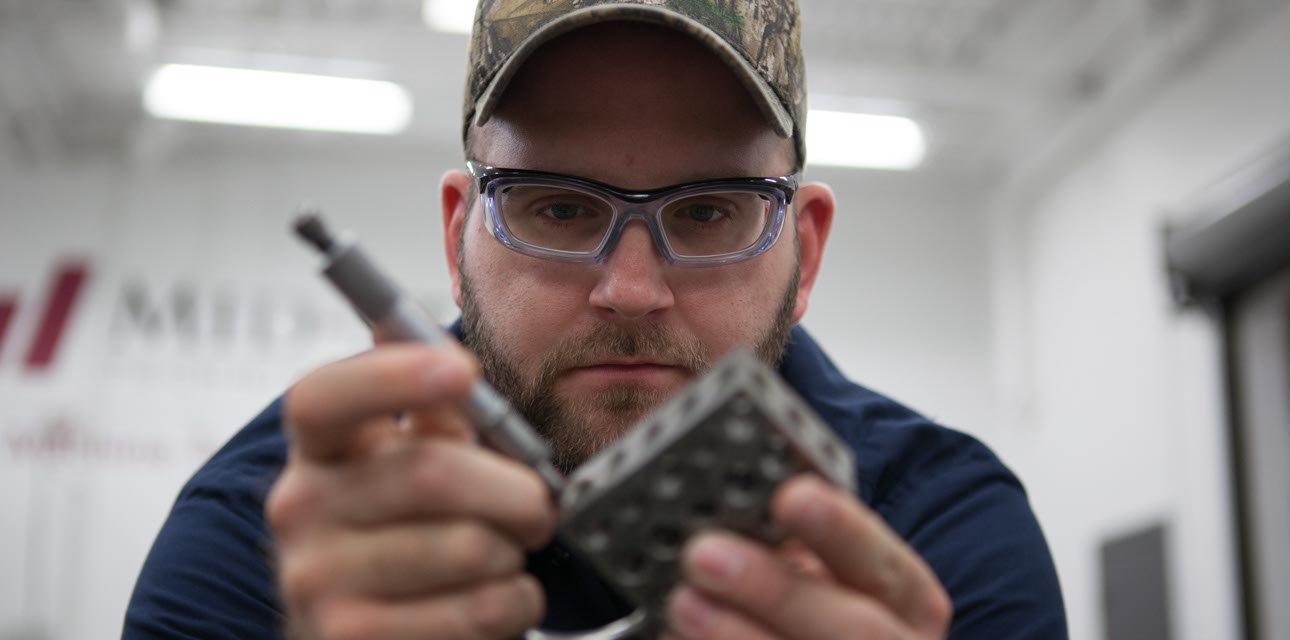
Machinists transform raw material into precise, highly engineered components used across aerospace, medical, military, and manufacturing industries. In this program, you’ll learn to shape materials into intricate, functional parts using a range of tools and technologies. You’ll gain experience reading blueprints, selecting tools, planning sequences of operation, and working with both manual and computer numerical control (CNC) equipment.
At Mid-State, you will train in the Advanced Manufacturing, Engineering, Technology and Apprenticeship (AMETA®) Center, learning directly from instructors with industry experience. You’ll work with lathes, mills, grinders, and CNC machines while developing the accuracy, craftsmanship, and technical skill employers demand. This program prepares you for entry-level machining roles and builds a solid foundation for advancement into quality assurance, tool making, or supervisory positions.
Program Facts
Program Outcomes
Graduates leave ready to succeed in their careers. Each year, data from Mid-State's Graduate Survey and statewide reports show consistently high satisfaction and strong starting salaries. Here's a snapshot of what success looks like after graduation.
Career Opportunities
Program Details
Take a closer look at what the program offers and what to expect.
Following is the list of courses within the program. Your course plan may vary, and you'll get a recommended sequence once you're enrolled. See the program information guide below for full course details or talk with your advisor.
Program Information Guide (PDF)
Full-Time Curriculum (53-54 Total Credits)
Credit for Prior Learning (CPL) options are available for some courses.
Term 1: (15-16)
Course Number | Course Name | CPL | Credits |
|---|---|---|---|
31804305 or 10804107 | No or Yes 2 | or 3 | |
32420311 | No | 1 | |
32420326 | No | 2 | |
32420329 | No | 5 | |
32420331 | No | 2 | |
32420373 | Yes | 2 | |
10890102 | Yes | 1 |
Term 2: (12 Credits)
Course Number | Course Name | CPL | Credits |
|---|---|---|---|
31801368 | No | 1 | |
32420310 | No | 2 | |
32420337 | No | 2 | |
32420340 | No | 5 | |
32420374 | Yes | 2 |
Term 3: (12 Credits)
Course Number | Course Name | CPL | Credits |
|---|---|---|---|
32420325 | No | 2 | |
32420330 | No | 3 | |
32420332 | No | 2 | |
32420362 | Yes | 2 | |
32444377 | No | 2 | |
32623301 | No | 1 |
Term 4: (14 Credits)
Course Number | Course Name | CPL | Credits |
|---|---|---|---|
32420341 | No | 3 | |
32420364 | No | 2 | |
32420380 | No | 3 | |
32444378 | No | 3 | |
32444379 | No | 3 |
Meet our full-time instructors.
Mike Berry, BS
Mike earned his bachelor’s degree from UW–Stout and is a certified journey worker machinist. He has worked for local manufacturers and maintains constant contact with industry leaders, giving him a real-life understanding of what they need from their employees.
“Teaching at Mid-State allows me to give back to a trade I have found so much satisfaction in being a part of.”
Joe Byczynski
Joe earned his Journeyman Machinist license from Northcentral Technical College and his technical diploma in machine tool operations from Mid-State Technical College. His extensive experience includes working in the metal manufacturing sector since 1987, where his roles included everything from project manager to shop owner.
“Being a Precision Machining Technician instructor is a great way for me to utilize my unique experiences and pass my knowledge on to the future generation of machinists.”
Kerry Duckart, BS
Kerry earned his Machine Tool Technician technical diploma from Mid-State Technical College in 2002. He also holds a bachelor’s degree from UW-Stout in business management with emphasis in operations management. His 17 years of industry experience include five years in a local machine job and 12 years working for an OEM company where he advanced to machine shop manager.
“I love having the opportunity to teach skills that have allowed me a successful career as a machinist.”
Employers will expect graduates of this program to be able to:
- Apply basic safety practices in the machine shop.
- Interpret industrial/engineering drawings.
- Apply precision measuring methods to parts inspection.
- Perform basic machine tool equipment setup and operation.
- Perform programming, setup, and operation of CNC machine tools.
- Perform advanced CNC machining operations.
Alongside your career training, you'll develop key workplace strengths. Explore the additional skills you'll build.
To succeed in this program, you'll need to meet certain technical standards. These are the key skills and abilities needed for the program and future career success—with or without reasonable accommodations. Be sure to review them carefully before you apply.





Explore Other Options
Other Programs
Explore more Mid-State programs and find your path to success.

Workforce Training
Not ready for a full degree? Learn job-ready skills with our workforce training options.

Continuing Education
Add a new skill, explore a hobby, or take the next step in your career with our lifelong learning options.