Utility Tree Trimmer

Technical Degree

Why Utility Tree Trimmer?

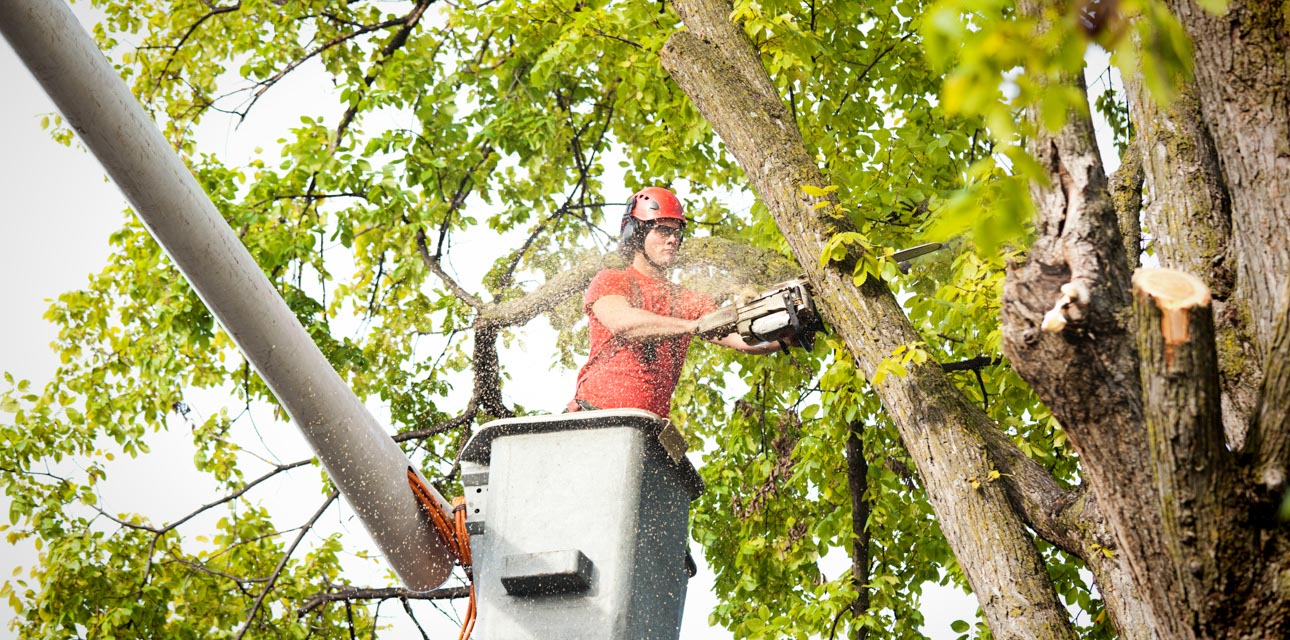
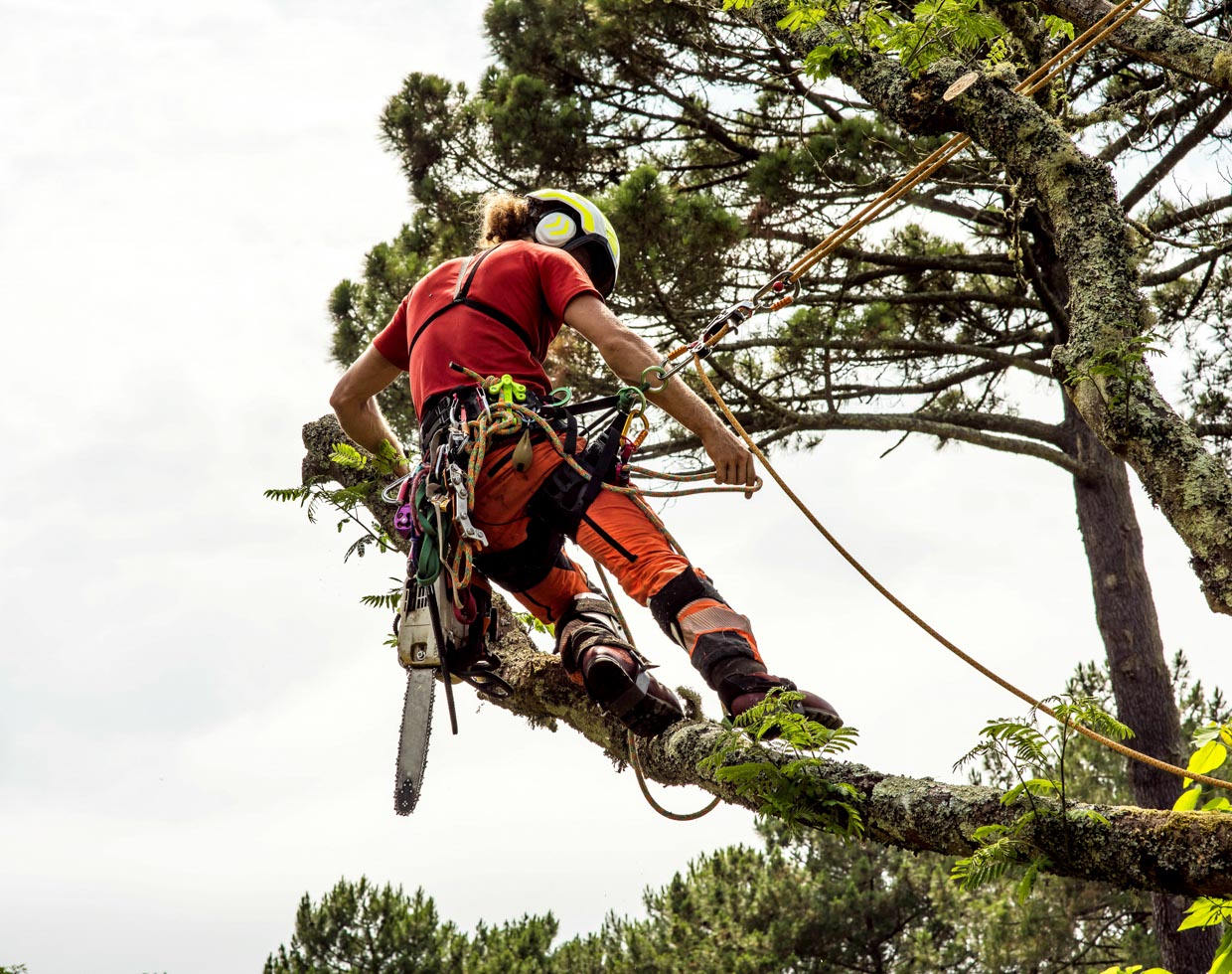
Utility tree trimmers play a vital role in keeping essential services running safely and reliably. In this program, you’ll learn how vegetation management supports electric lines, railroads, gas lines, and other critical infrastructure. It’s active, outdoor work that combines technical skill, environmental awareness, and teamwork to protect communities and maintain uninterrupted service.

At Mid-State, this one-year technical diploma is embedded within the Arborist Technician associate degree and emphasizes hands-on learning in outdoor environments. You’ll train in electrical safety, tree pruning, chainsaw operation, climbing and aerial work, tree identification, pesticide application, and crew leadership. A unique aerial component ensures you gain real-world experience working safely in trees while building confidence and skill.
Program Facts

Total Credits
17 Credits
Degree Type
Technical Degree
Program Length
One Year
Estimated Program Cost
$3,228.98
Financial Aid Eligibility
Partially Eligible

Program Outcomes

Graduates leave ready to succeed in their careers. Each year, data from Mid-State's Graduate Survey and statewide reports show consistently high satisfaction and strong starting salaries. Here's a snapshot of what success looks like after graduation.

Career Opportunities

Right of Way Vegetation Management Specialist
Tree Climber
Tree Trimmer
Utility Arborist
Utility Vegetation Management
$65,571
Median Annual Salary
Recent program grads in Wisconsin earned a starting salary of $65,571. Source: Lightcast Data Set
23
Average Monthly Hires
23 of recent Wisconsin program grads landed jobs within six months of graduation. Source: Lightcast Data Set

Program Details

Take a closer look at what the program offers and what to expect.

Following is the list of courses within the program. Your course plan may vary, and you'll get a recommended sequence once you're enrolled. See the program information guide below for full course details or talk with your advisor.

Program Information Guide (PDF)

Full-Time Curriculum (17 Total Credits)

Credit for Prior Learning (CPL) options are available for some courses.

Term 1: (10 Credits)

Course Number

Course Name

CPL

Credits

10001118

Landscape Plant Identification

Yes

2

10001124

Arborist Skills Introduction

No

2

10001133

Chainsaw Safety and Operation

No

2

10001173

Pruning for Structure

Yes

2

10001108

Electric Systems & Safety in Arboriculture

Yes

1

10890102

GPS for Student Success

Yes

1

Term 2: (7 Credits)

Course Number

Course Name

CPL

Credits

10001102

Plant Health Care Applicator

Yes

2

10001110

Tree Biology

No

2

10001125

Arboriculture Operations 1

No

2

10001150

Workplace Communications in Arboriculture

No

1

Meet our full-time instructors.

Joe Hoffman, BS, MF
To students and apprentices pursuing rewarding careers in arboriculture, Joe brings the experience of 15+ years in the field and over two decades of teaching and training. The joy he derives from serving students is evidenced by several years of bringing students to industry conferences and leading student clubs. Joe is also an ISA Certified Arborist®, earned his bachelor’s in urban forestry from UW-Stevens Point, and holds a master of forestry degree from Virginia Tech.

“There’s great joy in walking alongside people and helping them experience their curiosities blossoming into discovery and learning.”

Luke Scheberl, MS
Luke earned his MS in soil science from UW–Stevens Point. He also holds a BS in urban forestry. He is an ISA Certified Arborist® and a Wisconsin Certified Pesticide Applicator (3.0). His experience includes over 10 years in landscape/turf management, commercial tree care (climbing, lift, planting, and treating), tree inventories, soil assessment, and research. He taught for three years at Gateway Technical College in Kenosha before joining Mid-State Technical College full-time in 2021.

“Arboriculture isn’t just another job. It is a passionate industry where outside is your daily office and trees are your clients! We do have fun here!”

Employers will expect graduates of this program to be able to:

  • Identify woody plants by common and scientific name.
  • Apply tree biology for arboricultural maintenance practices.
  • Adhere to industry safety standards.

Alongside your career training, you'll develop key workplace strengths. Explore the additional skills you'll build.

Employability Skills (PDF)

To succeed in this program, you'll need to meet certain technical standards. These are the key skills and abilities needed for the program and future career success—with or without reasonable accommodations. Be sure to review them carefully before you apply.

Technical Standards (PDF)

Career Pathways

Career pathways help you build your education step by step. Each stage offers one or more credentials that are recognized by employers and lead to real jobs—and you can keep building toward your career goals as you go.

Prior Learning

Certificate

Technical Degree

Associate Degree

Bachelor's Degree

Get credit for what you already know. You may be able to earn college credit for prior learning through skills you’ve gained through high school classes, previous college work, self-study, military training, jobs, or volunteer experience.

  1. Credit for Prior Learning
  2. High School Dual Credit
  3. Mid-State Fast-Track – Open to high school students

Explore Other Options

Other Programs

Explore more Mid-State programs and find your path to success.

Workforce Training

Not ready for a full degree? Learn job-ready skills with our workforce training options.

Continuing Education

Add a new skill, explore a hobby, or take the next step in your career with our lifelong learning options.

Agronomy Technician

Technical Degree

Why Agronomy Technician?

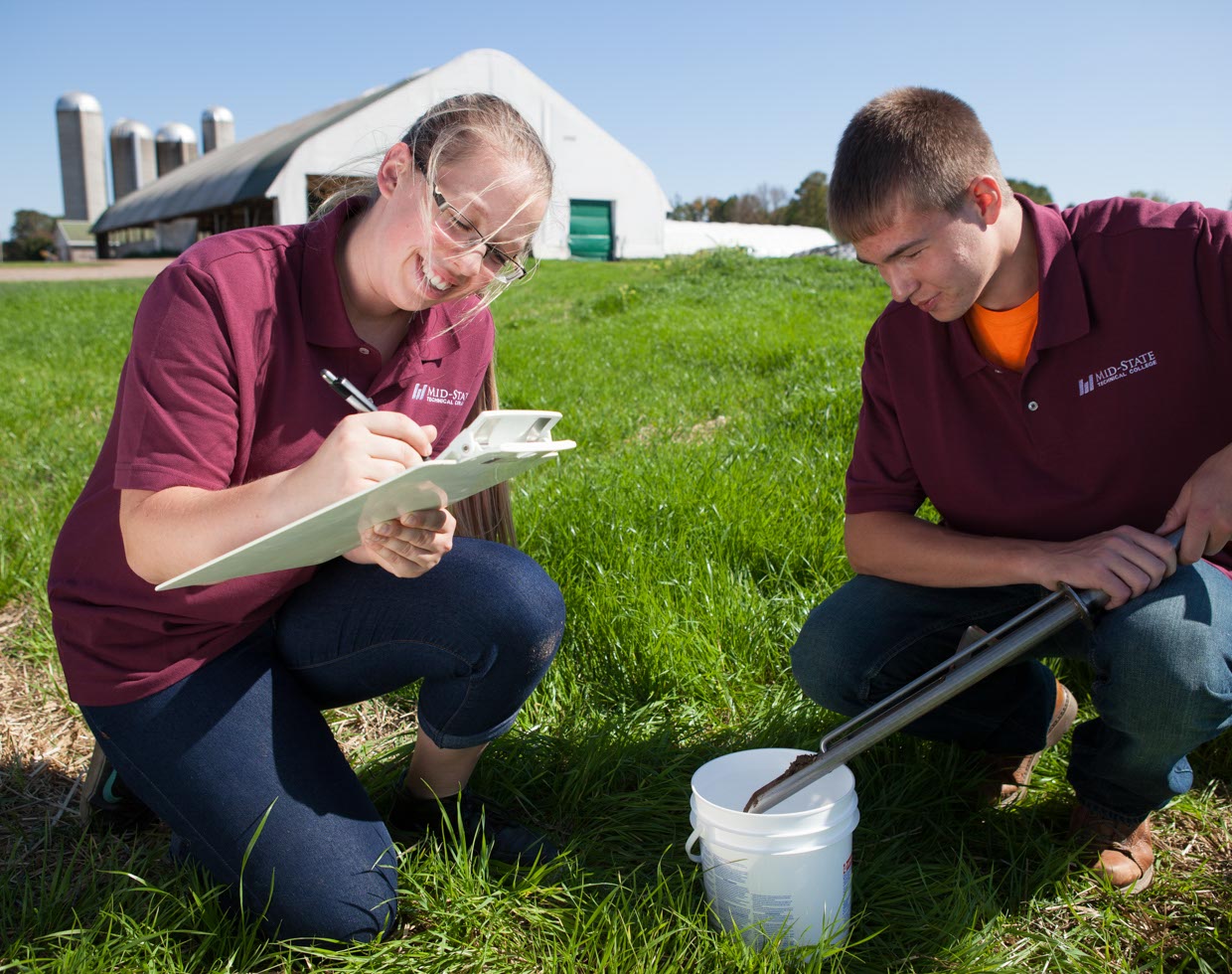
Modern agriculture depends on innovation, technology, and skilled professionals who understand how to get the most from the land. In this program, you will learn how to use agronomy principles and precision agriculture tools to improve crop yield, manage soil health, and support sustainable farming practices. You will build a strong foundation in crop science, soil fertility, and pest management to prepare for a wide range of agribusiness careers.

At Mid-State, you will learn directly from industry experts and gain valuable experience in the field. You’ll graduate ready to contribute to Wisconsin’s thriving agriculture industry or continue your education in related programs.

Program Facts

Total Credits
28 Credits
Degree Type
Technical Degree
Program Length
One Year
Estimated Program Cost
$4,911.49
Financial Aid Eligibility
Fully Eligible

Program Outcomes

Graduates leave ready to succeed in their careers. Each year, data from Mid-State's Graduate Survey and statewide reports show consistently high satisfaction and strong starting salaries. Here's a snapshot of what success looks like after graduation.

Career Opportunities

Crop Scout
Grower
Irrigator
$32,117
Median Annual Salary
Recent program grads in Wisconsin earned a starting salary of $32,117. Source: Lightcast Data Set
1,577
Average Monthly Hires
1,577 of recent Wisconsin program grads landed jobs within six months of graduation. Source: Lightcast Data Set
100%
Mid-State Graduate Satisfaction Rate
Students leave proud, prepared, and confident in what comes next. Source: Mid-State Graduate Survey Results

Program Details

Take a closer look at what the program offers and what to expect.

Following is the list of courses within the program. Your course plan may vary, and you'll get a recommended sequence once you're enrolled. See the program information guide below for full course details or talk with your advisor.

Program Information Guide (PDF)

Full-Time Curriculum (28 Total Credits)

Credit for Prior Learning (CPL) options are available for some courses.

Term 1: (15 Credits)

Course Number

Course Name

CPL

Credits

10093101

Integrated Pest Management

Yes

2

10093102

Intro to Precision Agriculture

No

3

10103106

Microsoft Office-Introduction

Yes

3

10093104

Principles of Crop Management

No

3

10080105

Intro to Soil Science

No

3

10890102

GPS for Student Success

Yes

1

Term 2: (13 Credits)

Course Number

Course Name

CPL

Credits

10006102

Agribusiness Equipment and Facilities

No

2

10006107

Agriculture Commodities & Marketing

No

3

10040104

Basic Agriculture Mechanics and Technology

No

3

10006007

Agriculture Internship

No

2

10040103

Agriculture Electrical and Irrigation

No

3

Meet our full-time instructors.

Teri Raatz, BS, MS
Teri holds a BS in agricultural education from UW-River Falls and a master’s in agriculture/ag sustainability from Murray State University. Her love agriculture started in childhood—she grew up on a diversified livestock farm and showed/owned registered dairy cattle. Prior to her 15 years of teaching at Mid-State, Teri taught middle school and high school agriculture for six years. She has also worked at Wisconsin's first ethanol plant in Stanley, Wisconsin, where she was involved in grading and purchasing corn. Teri is actively involved in the Colby FFA Alumni and Supporters, volunteers with the Clark County 4-H, and serves as advisor for the Clark County Jr Holstein Association, and her family owns a small herd of registered dairy cattle that her kids show across the state. She also serves as a member of the City of Colby Board of Appeals. 

“I am passionate about all areas of agriculture and bring vast experience in agriculture into the classroom. I enjoy teaching students about the many opportunities available today in the world of agriculture.”

Employers will expect graduates of this program to be able to:

  • Create a crop management plan.
  • Apply relevant technologies.
  • Interact as a professional in agribusiness.

Alongside your career training, you'll develop key workplace strengths. Explore the additional skills you'll build.

Employability Skills (PDF)

To succeed in this program, you'll need to meet certain technical standards. These are the key skills and abilities needed for the program and future career success—with or without reasonable accommodations. Be sure to review them carefully before you apply.

Technical Standards (PDF)

Career Pathways

Career pathways help you build your education step by step. Each stage offers one or more credentials that are recognized by employers and lead to real jobs—and you can keep building toward your career goals as you go.

Prior Learning

Certificate

Technical Degree

Associate Degree

Bachelor's Degree

Get credit for what you already know. You may be able to earn college credit for prior learning through skills you’ve gained through high school classes, previous college work, self-study, military training, jobs, or volunteer experience.

  1. Credit for Prior Learning
  2. High School Dual Credit
  3. Mid-State Fast-Track – Open to high school students

Explore Other Options

Other Programs

Explore more Mid-State programs and find your path to success.

Workforce Training

Not ready for a full degree? Learn job-ready skills with our workforce training options.

Continuing Education

Add a new skill, explore a hobby, or take the next step in your career with our lifelong learning options.

Livestock Technician

Technical Degree

Why Livestock Technician?

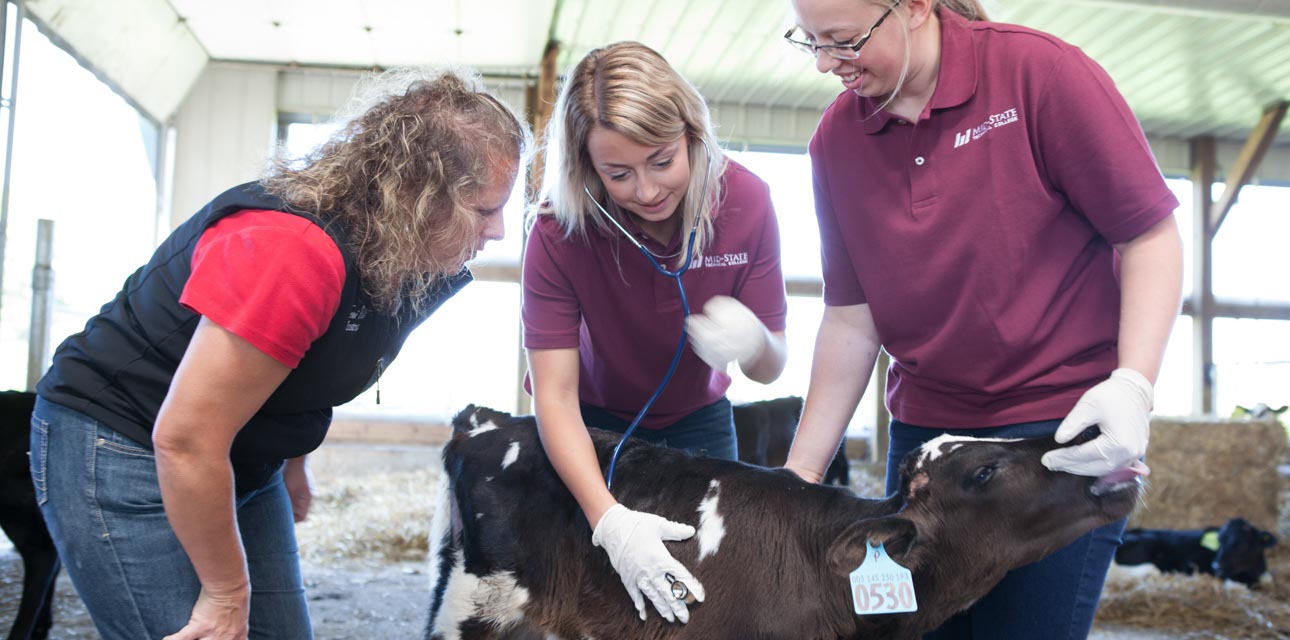
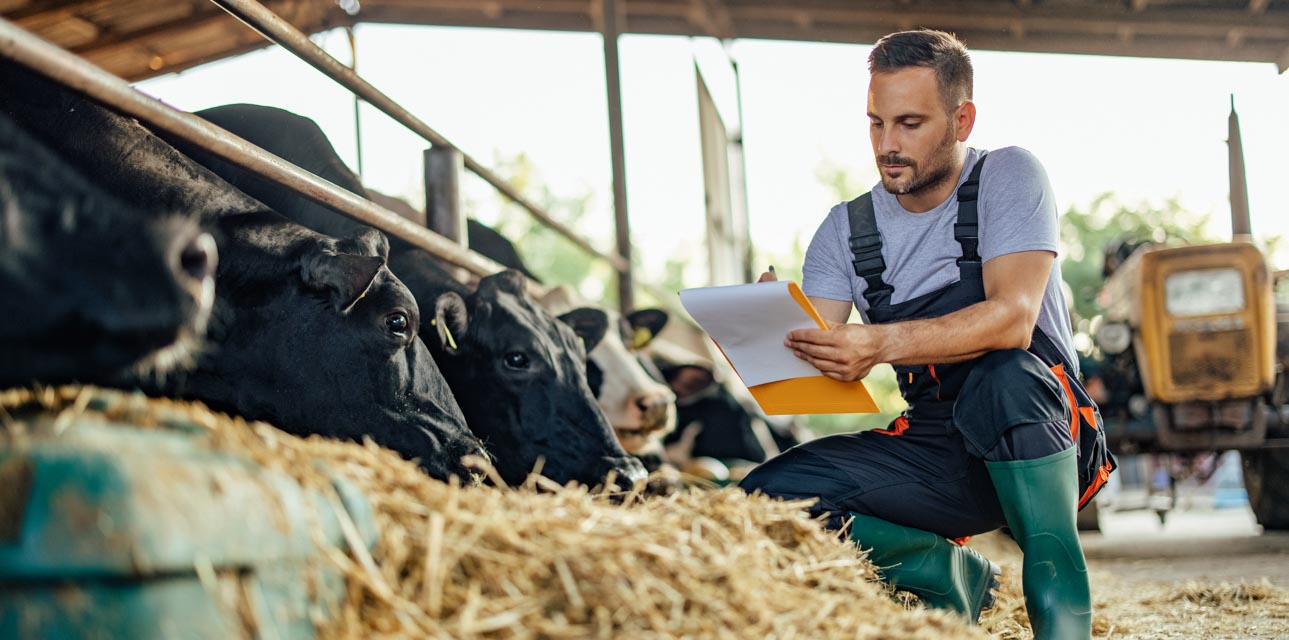
Livestock professionals play an important role in modern agriculture by helping animals stay healthy, productive, and well cared for. In this program, you will build hands-on skills in animal care, herd health, feeding practices, and livestock management while learning how data and technology support today’s farms.

At Mid-State, you will gain real-world experience working with livestock and industry tools used in dairy, beef, hog, and sheep operations. You’ll learn from instructors with agricultural experience while developing the technical knowledge and problem-solving skills needed to support successful farm operations and animal wellness.

Program Facts

Total Credits
28 Credits
Degree Type
Technical Degree
Program Length
One Year
Estimated Program Cost
$5,160.61
Financial Aid Eligibility
Fully Eligible

Program Outcomes

Graduates leave ready to succeed in their careers. Each year, data from Mid-State's Graduate Survey and statewide reports show consistently high satisfaction and strong starting salaries. Here's a snapshot of what success looks like after graduation.

Career Opportunities

Herdsperson
Livestock Technician
Animal Care Technician
$32,117
Median Annual Salary
Recent program grads in Wisconsin earned a starting salary of $32,117. Source: Lightcast Data Set
1,577
Average Monthly Hires
1,577 of recent Wisconsin program grads landed jobs within six months of graduation. Source: Lightcast Data Set

Program Details

Take a closer look at what the program offers and what to expect.

Following is the list of courses within the program. Your course plan may vary, and you'll get a recommended sequence once you're enrolled. See the program information guide below for full course details or talk with your advisor.

Program Information Guide (PDF)

Full-Time Curriculum (28 Total Credits)

Credit for Prior Learning (CPL) options are available for some courses.

Term 1: (16 Credits)

Course Number

Course Name

CPL

Credits

10091102

Intro to Animal Science

No

3

10091106

Applied Animal Nutrition

No

3

10091105

Animal Health

No

3

10103106

Microsoft Office-Introduction

Yes

3

10093104

Principles of Crop Management

No

3

10890102

GPS for Student Success

Yes

1

Term 2: (12 Credits)

Course Number

Course Name

CPL

Credits

10006102

Agribusiness Equipment and Facilities

No

2

10090101

Agriculture Business Management

No

3

10006107

Agriculture Commodities & Marketing

No

3

10091014

Intro to Animal Genetics

No

2

10006007

Agriculture Internship

No

2

Meet our full-time instructors.

Teri Raatz, BS, MS
Teri holds a BS in agricultural education from UW-River Falls and a master’s in agriculture/ag sustainability from Murray State University. Her love agriculture started in childhood—she grew up on a diversified livestock farm and showed/owned registered dairy cattle. Prior to her 15 years of teaching at Mid-State, Teri taught middle school and high school agriculture for six years. She has also worked at Wisconsin's first ethanol plant in Stanley, Wisconsin, where she was involved in grading and purchasing corn. Teri is actively involved in the Colby FFA Alumni and Supporters, volunteers with the Clark County 4-H, and serves as advisor for the Clark County Jr Holstein Association, and her family owns a small herd of registered dairy cattle that her kids show across the state. She also serves as a member of the City of Colby Board of Appeals. 

“I am passionate about all areas of agriculture and bring vast experience in agriculture into the classroom. I enjoy teaching students about the many opportunities available today in the world of agriculture.”

Employers will expect graduates of this program to be able to:

  • Apply principles of animal anatomy, physiology, behavior, and welfare to support safe and effective livestock care.
  • Evaluate livestock health, identify signs of disease or stress, and implement preventive herd health and biosecurity practices.
  • Demonstrate foundational knowledge of animal nutrition, including nutrient functions, feed classification, deficiency signs, and species differences.
  • Analyze genetic and production data to support breeding, selection, and herd improvement decisions.
  • Develop and communicate integrated livestock management plans that support productivity, sustainability, and sound on-farm decision making.

Alongside your career training, you'll develop key workplace strengths. Explore the additional skills you'll build.

Employability Skills (PDF)

To succeed in this program, you'll need to meet certain technical standards. These are the key skills and abilities needed for the program and future career success—with or without reasonable accommodations. Be sure to review them carefully before you apply.

Technical Standards (PDF)

Career Pathways

Career pathways help you build your education step by step. Each stage offers one or more credentials that are recognized by employers and lead to real jobs—and you can keep building toward your career goals as you go.

Prior Learning

Certificate

Technical Degree

Associate Degree

Bachelor's Degree

Get credit for what you already know. You may be able to earn college credit for prior learning through skills you’ve gained through high school classes, previous college work, self-study, military training, jobs, or volunteer experience.

  1. Credit for Prior Learning
  2. High School Dual Credit
  3. Mid-State Fast-Track – Open to high school students

Explore Other Options

Other Programs

Explore more Mid-State programs and find your path to success.

Workforce Training

Not ready for a full degree? Learn job-ready skills with our workforce training options.

Continuing Education

Add a new skill, explore a hobby, or take the next step in your career with our lifelong learning options.

Advanced Meat Cutting and Butchery

Technical Degree

Why Advanced Meat Cutting and Butchery?

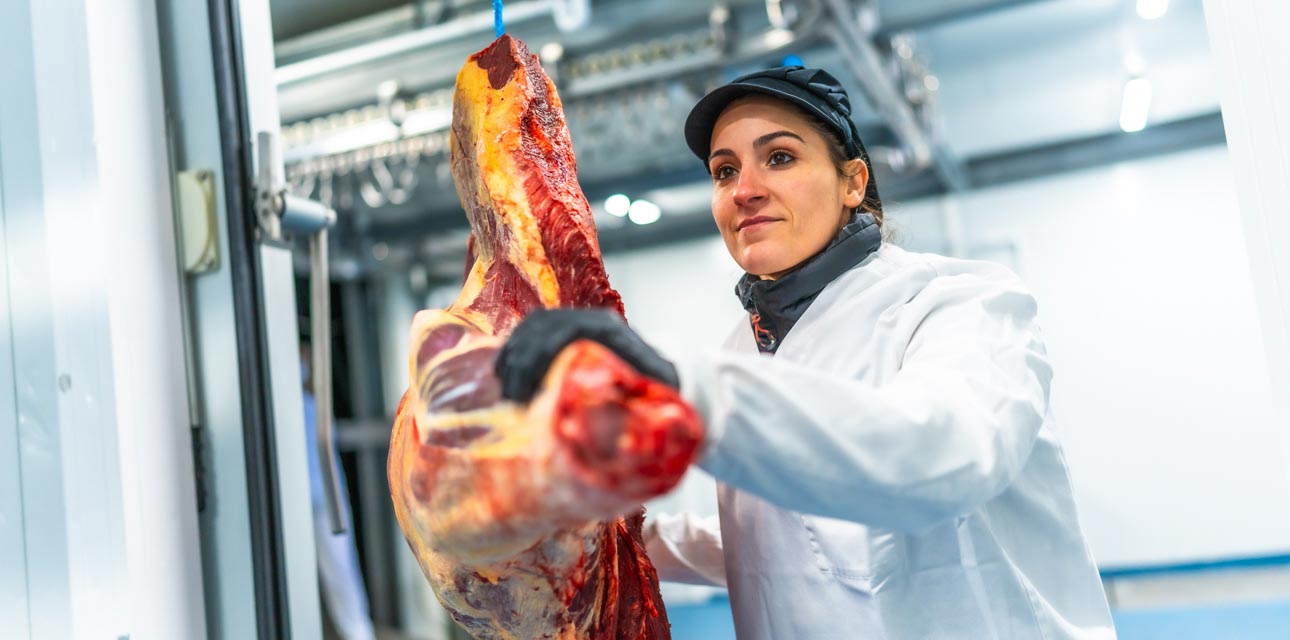
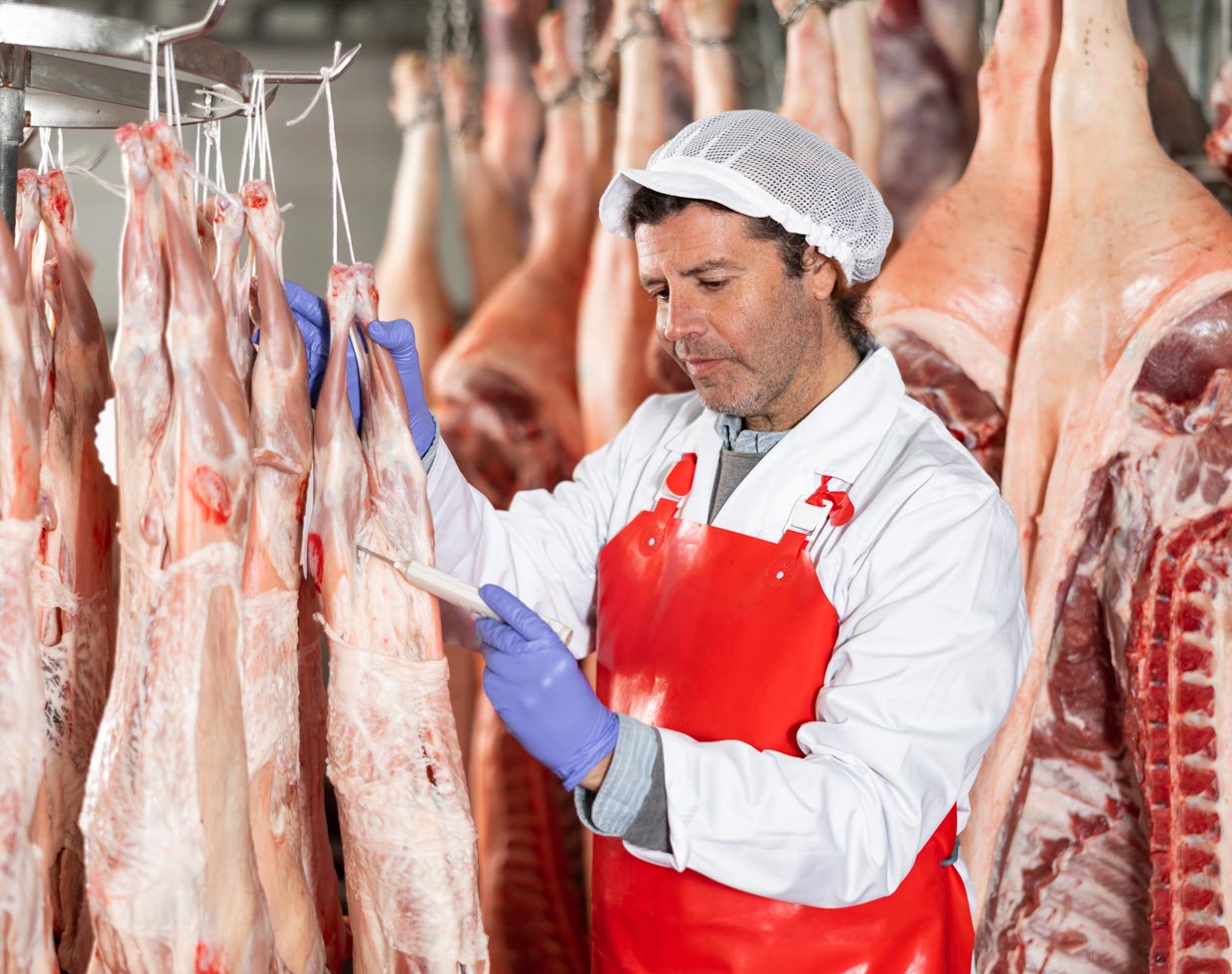
Butchery is both a craft and a science—where skill, precision, and creativity come together to produce quality meat products. In this program, you will learn to process, prepare, and present meats with an emphasis on safety, sustainability, and craftsmanship. You will gain the expertise to work confidently with beef, pork, lamb, poultry, game, and specialty meats while understanding every step of the farm-to-fork process.

At Mid-State, you will apply your skills by processing meats and preparing products that are sold directly to customers. Students complete 950 hours of intensive hands-on training in a fully equipped meat processing environment at Auburndale High School. Guided by experienced instructors, including a Master Meat Crafter and successful business owners, you’ll gain the confidence, technical skills, and experience needed to succeed in this growing field.

Program Facts

Total Credits
28 Credits
Degree Type
Technical Degree
Program Length
One Year
Estimated Program Cost
$6,157.45
Financial Aid Eligibility
Fully Eligible

Program Outcomes

Graduates leave ready to succeed in their careers. Each year, data from Mid-State's Graduate Survey and statewide reports show consistently high satisfaction and strong starting salaries. Here's a snapshot of what success looks like after graduation.

Career Opportunities

Butcher
Meat Cutter
Meat Clerk
Meat Processor/Owner
$38,200
Median Annual Salary
Recent program grads in Wisconsin earned a starting salary of $38,200. Source: Lightcast Data Set
185
Average Monthly Hires
185 of recent Wisconsin program grads landed jobs within six months of graduation. Source: Lightcast Data Set

Program Details

Take a closer look at what the program offers and what to expect.

Following is the list of courses within the program. Your course plan may vary, and you'll get a recommended sequence once you're enrolled. See the program information guide below for full course details or talk with your advisor.

Program Information Guide (PDF)

Full-Time Curriculum (28 Total Credits)

Credit for Prior Learning (CPL) options are available for some courses.

Term 1: (14 Credits)

Course Number

Course Name

CPL

Credits

10316112

Sanitation for Foodservice Operations

Yes

1

10316195

Hazard Analysis Critical Control Point (HACCP) for Business

No

2

30008164

Introduction to Retail Meat Sales

No

2

30008161

Protein Fabrication and Utilization: Lamb and Hog

No

3

30008169

Protein Fabrication and Utilization: Specialty Meats

No

1

30008163

Protein Fabrication and Utilization: Beef

No

3

30008160

Livestock Harvesting: Ethics and Best Practices

No

1

10890102

GPS for Student Success

Yes

1

Term 2: (4 Credits)

Course Number

Course Name

CPL

Credits

30008165

Introduction to State Licensure & Regulations

No

2

30008166

Meat Cutting Technology and Equipment

No

2

Term 3: (10 Credits)

Course Number

Course Name

CPL

Credits

10008167

Principles of Meat Microbiology

No

2

30008168

Retail Meat Sales Management

No

2

30008170

Cultured and Fermented Meats

No

2

30008171

Advanced Sausage Making

No

2

30008172

Wet and Dry Curing

No

2

Employers will expect graduates of this program to be able to:

  • Fabricate beef, pork, lamb, poultry, and specialty meats using safe and efficient methods.
  • Apply sanitation standards and HACCP principles to meat processing.
  • Operate and maintain meat cutting and processing equipment.
  • Understand and apply microbial principles to meat safety and preservation.
  • Manage retail meat sales, including packaging, labeling, and customer service.
  • Create value-added meat products, including sausages, cured, and fermented meats.
  • Navigate state and county regulations for meat licensure and production compliance.

Alongside your career training, you'll develop key workplace strengths. Explore the additional skills you'll build.

Employability Skills (PDF)

To succeed in this program, you'll need to meet certain technical standards. These are the key skills and abilities needed for the program and future career success—with or without reasonable accommodations. Be sure to review them carefully before you apply.

Technical Standards (PDF)

Career Pathways

Career pathways help you build your education step by step. Each stage offers one or more credentials that are recognized by employers and lead to real jobs—and you can keep building toward your career goals as you go.

Prior Learning

Certificate

Technical Degree

Associate Degree

Bachelor's Degree

Get credit for what you already know. You may be able to earn college credit for prior learning through skills you’ve gained through high school classes, previous college work, self-study, military training, jobs, or volunteer experience.

  1. Credit for Prior Learning
  2. High School Dual Credit
  3. Mid-State Fast-Track – Open to high school students

Explore Other Options

Other Programs

Explore more Mid-State programs and find your path to success.

Workforce Training

Not ready for a full degree? Learn job-ready skills with our workforce training options.

Continuing Education

Add a new skill, explore a hobby, or take the next step in your career with our lifelong learning options.

Advanced Emergency Medical Technician

Technical Degree

Why Advanced Emergency Medical Technician?

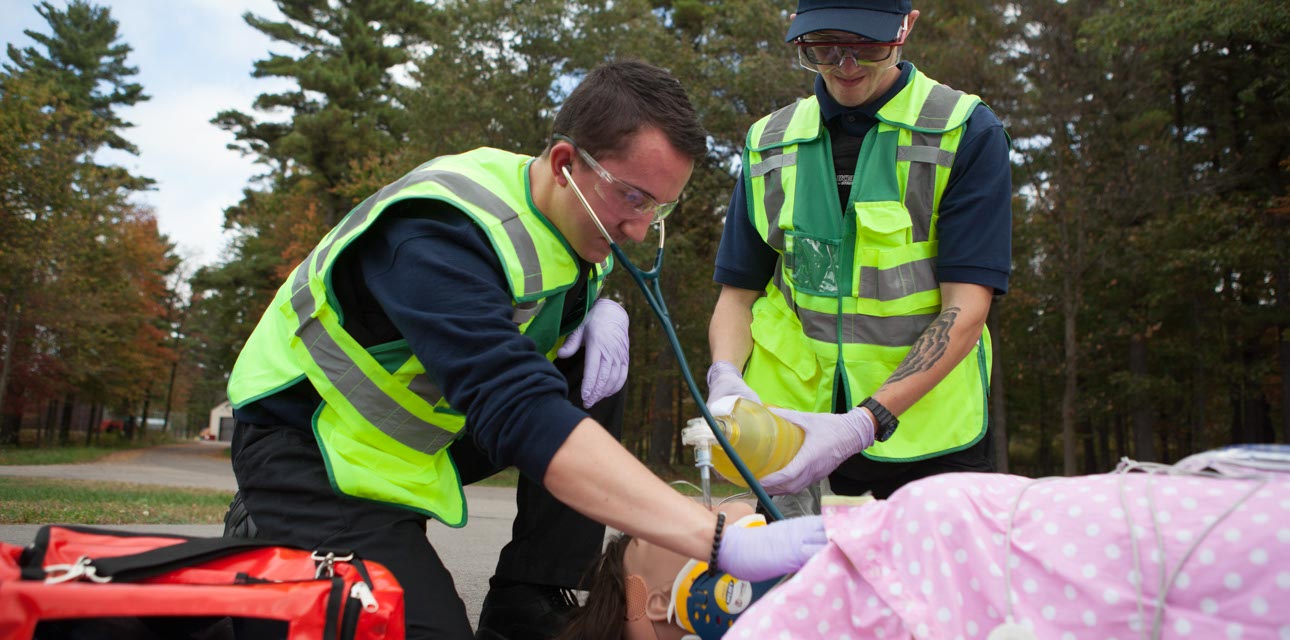
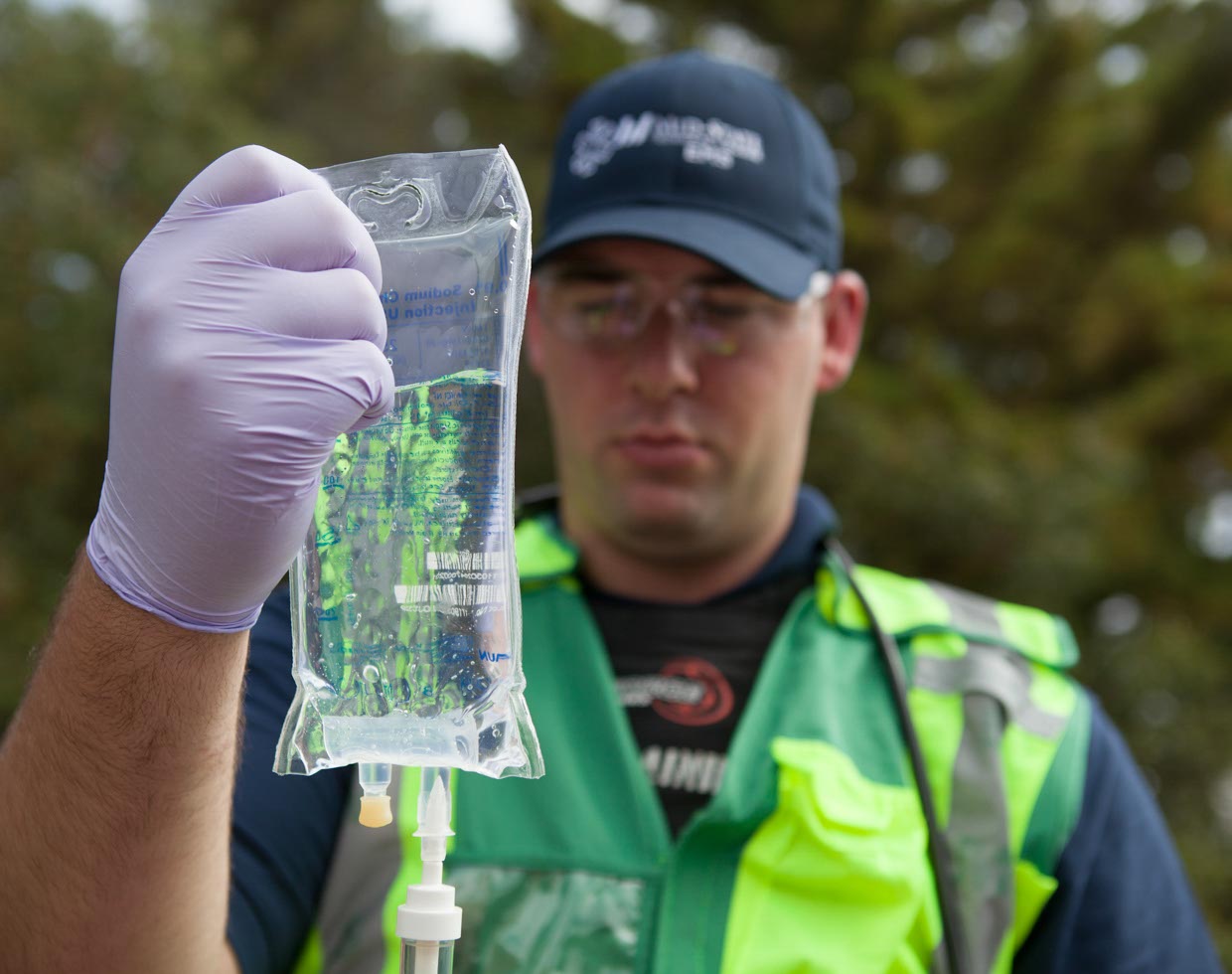
Advanced Emergency Medical Technicians provide life-saving care in critical moments, bridging the gap between basic and advanced emergency response. In this program, you will learn to assess patients, perform advanced procedures, and deliver the rapid prehospital care that makes a vital difference in medical emergencies.

At Mid-State, you will train through hands-on skill labs and clinical experiences that prepare you for real-world challenges. Students benefit from hands-on simulation experiences in the Healthcare Simulation Center that enhance and support their clinical training. The Advanced Emergency Medical Technician program prepares students to obtain the required licensure to be employed or practice in the state of Wisconsin.

Program Facts

Total Credits
5 Credits
Degree Type
Technical Degree
Program Length
Less Than One Year
Estimated Program Cost
$1,399.85
Financial Aid Eligibility
Not Eligible

Program Outcomes

Graduates leave ready to succeed in their careers. Each year, data from Mid-State's Graduate Survey and statewide reports show consistently high satisfaction and strong starting salaries. Here's a snapshot of what success looks like after graduation.

Career Opportunities

Advanced Emergency Medical Technician
Emergency Department Technician
Urgent Care Technician
$43,346
Median Annual Salary
Recent program grads in Wisconsin earned a starting salary of $43,346. Source: Lightcast Data Set
196
Average Monthly Hires
196 of recent Wisconsin program grads landed jobs within six months of graduation. Source: Lightcast Data Set
100%
Mid-State Graduate Satisfaction Rate
Students leave proud, prepared, and confident in what comes next. Source: Mid-State Graduate Survey Results

Program Details

Take a closer look at what the program offers and what to expect.

Following is the list of courses within the program. Your course plan may vary, and you'll get a recommended sequence once you're enrolled. See the program information guide below for full course details or talk with your advisor.

Program Information Guide (PDF)

Curriculum (5 Total Credits)

Credit for Prior Learning (CPL) options are available for some courses.

Term 1: (5 Credits)

Course Number

Course Name

CPL

Credits

30531103

Advanced EMT

No

4

30531104

Advanced EMT Clinical

No

1

Meet our full-time instructors.

Alyssa Larsen, AAS
Alyssa holds paramedic technician and fire protection technician associate degrees from Mid-State Technical College. She is also pursuing a BAS in leadership and organizational studies from UW–Oshkosh. She is a registered paramedic with the National Registry of Emergency Medical Technicians and a Wisconsin state licensed paramedic with critical care endorsement. Prior to teaching for Mid-State, Alyssa worked as a part-time EMT and full-time paramedic. She continues to work part-time as a paramedic.

“Being an EMS instructor is very gratifying. It means so much to share my passion and to watch students acquire new skills and knowledge as they become professionals who will go out and help within our communities. It is one career that keeps giving back.”

Employers will expect graduates of this program to be able to:

  • Meet state competencies for AEMT certification.
  • Demonstrate professional behavior.
  • Communicate effectively with others.
  • Demonstrate AEMT skills associated with established standards and procedures for a variety of patient encounters.
  • Integrate pathophysiological principles and assessment findings to provide appropriate patient care.
  • Prepare for incident response and EMS operations.

Alongside your career training, you'll develop key workplace strengths. Explore the additional skills you'll build.

Employability Skills (PDF)

To succeed in this program, you'll need to meet certain technical standards. These are the key skills and abilities needed for the program and future career success—with or without reasonable accommodations. Be sure to review them carefully before you apply.
Technical Standards (PDF)

This program prepares you for licensure to work in Wisconsin. If you plan to work in another state, be sure to check that state's licensure requirements—Mid-State's program may not meet them all. If you've applied to the program and have any questions about this information, talk to your advisor.

Licensure Information (PDF)

Career Pathways

Career pathways help you build your education step by step. Each stage offers one or more credentials that are recognized by employers and lead to real jobs—and you can keep building toward your career goals as you go.

Prior Learning

Certificate

Technical Degree

Associate Degree

Bachelor's Degree

Get credit for what you already know. You may be able to earn college credit for prior learning through skills you’ve gained through high school classes, previous college work, self-study, military training, jobs, or volunteer experience.

  1. Credit for Prior Learning
  2. High School Dual Credit
  3. Mid-State Fast-Track – Open to high school students

Explore Other Options

Other Programs

Explore more Mid-State programs and find your path to success.

Workforce Training

Not ready for a full degree? Learn job-ready skills with our workforce training options.

Continuing Education

Add a new skill, explore a hobby, or take the next step in your career with our lifelong learning options.

Digital Marketing Promotions

Technical Degree

Why Digital Marketing Promotions?

Digital marketing professionals combine creativity and strategy to inspire action in today’s connected world. In this program, you will learn to create, manage, and measure digital campaigns that effectively communicate with audiences across multiple platforms. You will gain hands-on experience using technology, media, and design tools that prepare you for success in a variety of marketing roles.

At Mid-State, you’ll learn in small classes led by instructors with real-world experience and opportunities to collaborate on projects that mirror industry work. You’ll graduate ready to produce engaging content, design digital materials, and apply professional communication techniques used by marketers every day.

Program Facts

Total Credits
19 Credits
Degree Type
Technical Degree
Program Length
Less Than One Year
Estimated Program Cost
$3,512.50
Financial Aid Eligibility
Partially Eligible

Program Outcomes

Graduates leave ready to succeed in their careers. Each year, data from Mid-State's Graduate Survey and statewide reports show consistently high satisfaction and strong starting salaries. Here's a snapshot of what success looks like after graduation.

Career Opportunities

Advertising Assistant
Digital Marketing Coordinator
Marketing Assistant
Search Engine Optimization Specialist
Social Media Specialist
$64,815
Median Annual Salary
Recent program grads in Wisconsin earned a starting salary of $64,815. Source: Lightcast Data Set
781
Average Monthly Hires
781 of recent Wisconsin program grads landed jobs within six months of graduation. Source: Lightcast Data Set
100%
Mid-State Graduate Satisfaction Rate
Students leave proud, prepared, and confident in what comes next. Source: Mid-State Graduate Survey Results

Program Details

Take a closer look at what the program offers and what to expect.

Following is the list of courses within the program. Your course plan may vary, and you'll get a recommended sequence once you're enrolled. See the program information guide below for full course details or talk with your advisor.

Program Information Guide (PDF)

Part-Time Curriculum (19 Total Credits)

Credit for Prior Learning (CPL) options are available for some courses.

Term 1: (10 Credits)

Course Number

Course Name

CPL

Credits

10104102

Marketing Principles

Yes

3

10104108

Adobe Visual Design

No

3

10104180

Internet and Mobile Marketing

No

3

10890102

GPS for Student Success

Yes

1

Term 2: (9 Credits)

Course Number

Course Name

CPL

Credits

10104107

Social Media Marketing

No

3

10104109

Adobe Video Design

No

3

10104121

Fundamentals of Marketing Communications

Yes

3

Employers will expect graduates of this program to be able to:

  • Apply digital marketing principles.
  • Create digital marketing content.
  • Promote products and services.
  • Create digital marketing content for product, services, images, and ideas.
  • Integrate tools and technology for digital marketing initiatives.

Alongside your career training, you'll develop key workplace strengths. Explore the additional skills you'll build.

Employability Skills (PDF)

To succeed in this program, you'll need to meet certain technical standards. These are the key skills and abilities needed for the program and future career success—with or without reasonable accommodations. Be sure to review them carefully before you apply.
Technical Standards (PDF)

Career Pathways

Career pathways help you build your education step by step. Each stage offers one or more credentials that are recognized by employers and lead to real jobs—and you can keep building toward your career goals as you go.

Prior Learning

Certificate

Technical Degree

Associate Degree

Bachelor's Degree

Get credit for what you already know. You may be able to earn college credit for prior learning through skills you’ve gained through high school classes, previous college work, self-study, military training, jobs, or volunteer experience.

  1. Credit for Prior Learning
  2. High School Dual Credit
  3. Mid-State Fast-Track – Open to high school students

Explore Other Options

Other Programs

Explore more Mid-State programs and find your path to success.

Workforce Training

Not ready for a full degree? Learn job-ready skills with our workforce training options.

Continuing Education

Add a new skill, explore a hobby, or take the next step in your career with our lifelong learning options.

Accounting Assistant

Technical Degree

Why Accounting Assistant?

Accounting is an essential part of every organization, supporting financial accuracy and decision-making across all industries. In this program, you will learn to record transactions, reconcile accounts, and prepare financial information that keeps businesses running smoothly. You will develop the attention to detail and critical thinking needed to succeed in entry-level accounting roles.

At Mid-State, you will learn from professionals who bring real-world experience into the classroom. You’ll gain the skills and confidence to begin your career immediately or continue into Mid-State’s Accounting associate degree program.
 

Program Facts

Total Credits
28 Credits
Degree Type
Technical Degree
Program Length
One Year
Estimated Program Cost
$5,217.29
Financial Aid Eligibility
Fully Eligible

Program Outcomes

Graduates leave ready to succeed in their careers. Each year, data from Mid-State's Graduate Survey and statewide reports show consistently high satisfaction and strong starting salaries. Here's a snapshot of what success looks like after graduation.

Career Opportunities

Accounting Assistant
Accounting Technician
Accounts Payable Clerk
Payroll Assistant
Tax Assistant
$48,627
Median Annual Salary
Recent program grads in Wisconsin earned a starting salary of $48,627. Source: Lightcast Data Set
1,317
Average Monthly Hires
1,317 of recent Wisconsin program grads landed jobs within six months of graduation. Source: Lightcast Data Set
92%
Mid-State Graduate Satisfaction Rate
Students leave proud, prepared, and confident in what comes next. Source: Mid-State Graduate Survey Results

Program Details

Take a closer look at what the program offers and what to expect.

Following is the list of courses within the program. Your course plan may vary, and you'll get a recommended sequence once you're enrolled. See the program information guide below for full course details or talk with your advisor.

Program Information Guide (PDF)

Full-Time Curriculum (28 Total Credits)

Credit for Prior Learning (CPL) options are available for some courses.

Term 1: (13 Credits)

Course Number

Course Name

CPL

Credits

10101120

Payroll Accounting

Yes

3

10101140

Accounting 1

Yes

3

10103106

Microsoft Office-Introduction

Yes

3

10804107

College Mathematics

Yes

3

10890102

GPS for Student Success

Yes

1

Term 2: (15 Credits)

Course Number

Course Name

CPL

Credits

10101106

Excel for Accounting

No

3

10101123

Income Tax Accounting

Yes

3

10101129

QuickBooks Applications

No

3

10101142

Accounting 2

Yes

3

10801195

Written Communication

Yes

3

Meet our full-time instructors.

Bob Smith, BS, MBA
Bob is a CPA and holds a master's degree from Upper Iowa University. He is an experienced tax and financial accountant. A lifelong learner, Bob has earned expert certification in Excel. He graduated from the Wisconsin Leadership Development Institute in 2017.

“Accounting is a proud, challenging, and endlessly interesting profession. Graduates of our program have many career paths open to them Accounting is the language of business, which means that accountants are needed by most business organizations.”

Employers will expect graduates of this program to be able to:

  • Process financial transactions throughout the accounting cycle.
  • Evaluate financial information to support decision making.
  • Process payroll.

Alongside your career training, you'll develop key workplace strengths. Explore the additional skills you'll build.

Employability Skills (PDF)

To succeed in this program, you'll need to meet certain technical standards. These are the key skills and abilities needed for the program and future career success—with or without reasonable accommodations. Be sure to review them carefully before you apply.

Technical Standards (PDF)

Career Pathways

Career pathways help you build your education step by step. Each stage offers one or more credentials that are recognized by employers and lead to real jobs—and you can keep building toward your career goals as you go.

Prior Learning

Certificate

Technical Degree

Associate Degree

Bachelor's Degree

Get credit for what you already know. You may be able to earn college credit for prior learning through skills you’ve gained through high school classes, previous college work, self-study, military training, jobs, or volunteer experience.

  1. Credit for Prior Learning
  2. High School Dual Credit
  3. Mid-State Fast-Track – Open to high school students

Explore Other Options

Other Programs

Explore more Mid-State programs and find your path to success.

Workforce Training

Not ready for a full degree? Learn job-ready skills with our workforce training options.

Continuing Education

Add a new skill, explore a hobby, or take the next step in your career with our lifelong learning options.