Heating, Ventilation, & Air Conditioning (HVAC) Installer
Technical Degree

Why Heating, Ventilation, & Air Conditioning (HVAC) Installer?

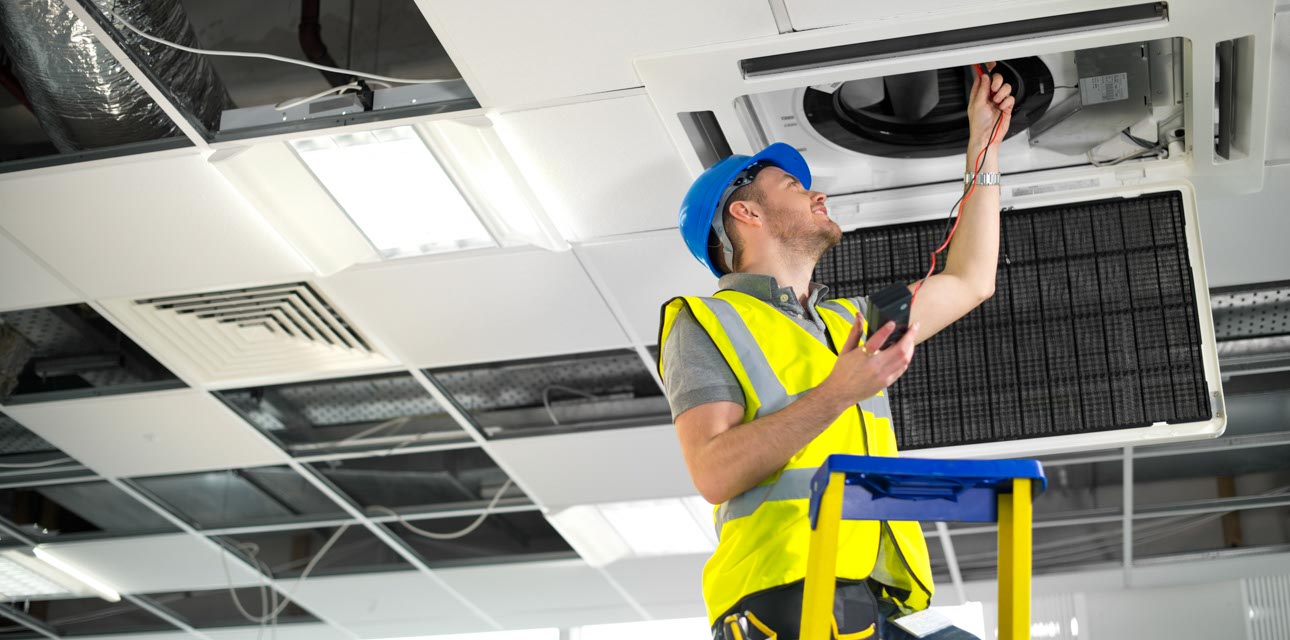
HVAC professionals create comfortable, efficient, and healthy indoor environments in homes and businesses. In this program, you will learn to design, install, and service heating, cooling, and ventilation systems while gaining the electrical and mechanical skills needed to keep them running safely and efficiently. You’ll build the foundation for a rewarding career in this high-demand skilled trade.

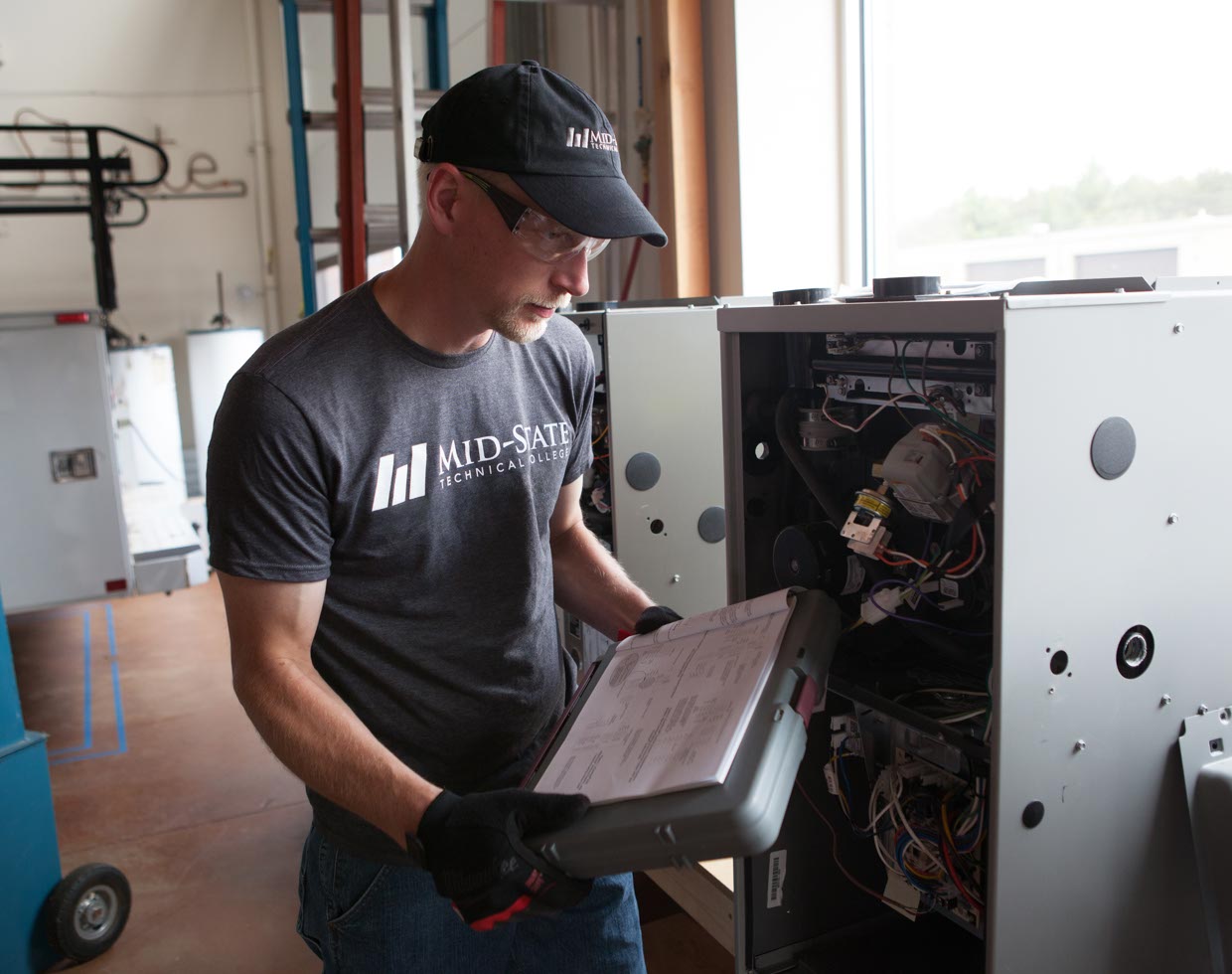
At Mid-State, you’ll complete hands-on training just two days per week over nine months, combining classroom instruction with real lab experience. You will graduate prepared for entry-level employment and ready to sit for the EPA 608 Technician Certification exam.
Program Facts

Total Credits
25 Credits
Degree Type
Technical Degree
Program Length
Less Than One Year
Estimated Program Cost
$6,220.23
Financial Aid Eligibility
Fully Eligible

Program Outcomes

Graduates leave ready to succeed in their careers. Each year, data from Mid-State's Graduate Survey and statewide reports show consistently high satisfaction and strong starting salaries. Here's a snapshot of what success looks like after graduation.

Career Opportunities

Heating, Ventilation, and Air Conditioning Installer
Heating, Ventilation, and Air Conditioning Sales Representative
Residential Heating, Ventilation, and Air Conditioning Technician
$61,310
Median Annual Salary
Recent program grads in Wisconsin earned a starting salary of $61,310. Source: Lightcast Data Set
222
Average Monthly Hires
222 of recent Wisconsin program grads landed jobs within six months of graduation. Source: Lightcast Data Set
100%
Mid-State Graduate Satisfaction Rate
Students leave proud, prepared, and confident in what comes next. Source: Mid-State Graduate Survey Results

Program Details

Take a closer look at what the program offers and what to expect.

Following is the list of courses within the program. Your course plan may vary, and you'll get a recommended sequence once you're enrolled. See the program information guide below for full course details or talk with your advisor.

Program Information Guide (PDF)

Full-Time Curriculum (25 Total Credits)

Credit for Prior Learning (CPL) options are available for some courses.

Term 1: (15 Credits)

Course Number

Course Name

CPL

Credits

10476171

Safety for Construction Trades

Yes

1

10482107

Construction Fundamentals

No

2

10483123

Piping Installation

No

2

10601130

Blueprint Reading for Construction Trades

No

2

10601140

Electricity for the Construction Trades

No

2

10601150

Fundamentals of HVAC

No

2

31442320

Welding Foundations 1

No

1

10601110

HVAC Heating Fundamentals

No

2

10890102

GPS for Student Success

Yes

1

Term 2: (10 Credits)

Course Number

Course Name

CPL

Credits

10482103

Electrical Components & Control Circuits 1

No

2

10483113

Hydronics

No

3

10601121

Intro to HVAC Installation

No

2

10601123

Foundations of Air Conditioning & Refrigeration

No

3

Meet our full-time instructors.

Mark Haferman, AD
Mark earned his associate degree in industrial mechanical technologies from Mid-State Technical College. He is also a licensed Journeyman Steamfitter and Journeyman Plumber with EPA 608 certification. His teaching at Mid-State draws on 12 years of experience in HVAC, plumbing, and mechanical field service.

“Being a trades instructor is very fulfilling for me. I love to pour into students, share what I have learned through experience, work alongside them, and help them pursue their career in the trades.”

Karl Schwingel, BS
Karl graduated from Northland College with a bachelor of science in environmental science. His certifications include Solar Thermal Installer by the North American Board of Certified Energy Practitioners® (NABCEP®) and EPA 608. Karl’s teaching is informed by 25 years of experience installing and servicing renewable energy systems and doing general residential construction as well as 15 years specializing in hydronic heating system design, construction, and service.

“I really enjoy developing in my students the skill to ask the right questions, in the right way. If you learn to ask the right questions, the answers will yield actionable knowledge.”

Employers will expect graduates of this program to be able to:

  • Join pipes or tubing to equipment and to fuel, water, or refrigerant source to form complete circuit.
  • Test pipe or tubing joints or connections for leaks, using pressure gauge or soap-and-water solution.
  • Lay out and connect electrical wiring between controls and equipment, according to wiring diagrams, using electrician’s hand tools.
  • Install, connect, and adjust thermostats, humidistats, and timers using hand tools.
  • Test electrical circuits or components for continuity using electrical test equipment.
  • Repair or replace defective equipment, components, or wiring.
  • Obtain and maintain required certifications.
  • Install ductwork and test for leaks.
  • Size and lay out ductwork.
  • Comply with all applicable standards, policies, and procedures, including safety procedures and the maintenance of a clean work area.
  • Inspect and test systems to verify system compliance with plans and specifications or to detect and locate malfunctions.

Alongside your career training, you'll develop key workplace strengths. Explore the additional skills you'll build.

Employability Skills (PDF)

To succeed in this program, you'll need to meet certain technical standards. These are the key skills and abilities needed for the program and future career success—with or without reasonable accommodations. Be sure to review them carefully before you apply.

Technical Standards (PDF)

Career Pathways

Career pathways help you build your education step by step. Each stage offers one or more credentials that are recognized by employers and lead to real jobs—and you can keep building toward your career goals as you go.

Prior Learning

Certificate

Technical Degree

Associate Degree

Bachelor's Degree

Get credit for what you already know. You may be able to earn college credit for prior learning through skills you’ve gained through high school classes, previous college work, self-study, military training, jobs, or volunteer experience.

  1. Credit for Prior Learning
  2. High School Dual Credit
  3. Mid-State Fast-Track – Open to high school students

Explore Other Options

Other Programs

Explore more Mid-State programs and find your path to success.

Workforce Training

Not ready for a full degree? Learn job-ready skills with our workforce training options.

Continuing Education

Add a new skill, explore a hobby, or take the next step in your career with our lifelong learning options.

Catering Specialist

Technical Degree

Why Catering Specialist?

Catering specialists create memorable experiences through food, service, and hospitality. In this program, you will develop the culinary, customer service, and event planning skills needed to support weddings, business events, celebrations, and other special occasions. You'll learn how to prepare quality food, coordinate service, and deliver experiences that keep guests coming back.

At Mid-State, you will gain hands-on experience in professional kitchens and event settings while building skills in food preparation, baking, menu planning, and event service. Through live events, labs, and an industry internship, you'll learn from experienced chefs and hospitality professionals while preparing for careers in catering, hospitality, and event production.

Program Facts

Total Credits
31 Credits
Degree Type
Technical Degree
Program Length
One Year
Estimated Program Cost
$5,300.79
Financial Aid Eligibility
Partially Eligible

Program Outcomes

Graduates leave ready to succeed in their careers. Each year, data from Mid-State's Graduate Survey and statewide reports show consistently high satisfaction and strong starting salaries. Here's a snapshot of what success looks like after graduation.

Career Opportunities

Independent Caterer
Catering Coordinator
Banquet Server or Assistant
Nutrition or Menu Specialist
$36,678
Median Annual Salary
Recent program grads in Wisconsin earned a starting salary of $36,678. Source: Lightcast Data Set
2,890
Average Monthly Hires
2,890 of recent Wisconsin program grads landed jobs within six months of graduation. Source: Lightcast Data Set

Program Details

Take a closer look at what the program offers and what to expect.

Following is the list of courses within the program. Your course plan may vary, and you'll get a recommended sequence once you're enrolled. See the program information guide below for full course details or talk with your advisor.

Program Information Guide (PDF)

Part-Time Curriculum (31 Total Credits)

Credit for Prior Learning (CPL) options are available for some courses.

Term 1: (10 Credits)

Course Number

Course Name

CPL

Credits

10316112

Sanitation for Foodservice Operations

Yes

1

10316121

Food Science

No

2

10316125

Introduction to Food Production

No

3

10316146

Culinary Calculations

No

3

10890102

GPS for Student Success

Yes

1

Term 2: (10 Credits)

Course Number

Course Name

CPL

Credits

10316128

Introduction to Foodservice

No

3

10102232

Entrepreneurial Foundations

No

1

10316130

Introduction to Baking

No

2

10316138

Garde Manager

No

3

10316137

Beverage Management

No

1

Term 3: (11 Credits)

Course Number

Course Name

CPL

Credits

10316131

Nutrition

Yes

2

10316133

Dining Room Customer Service

No

1

10316113

Catering Operations

No

3

10316127

Menu Planning

No

3

10316129

Culinary Internship

No

2

Meet our full-time instructors.

Ryan Petrouske, AAS
Chef Ryan graduated Phi Theta Kappa with his culinary arts associate degree from Nicolet College. He holds certifications in culinary assistant, hospitality and restaurant management, controlling foodservice, and baking. Ryan has spent most of his working life in the restaurant industry, having progressed up the ranks in both kitchens and dining rooms to ultimately owning and running a successful restaurant in northern Wisconsin. He has a continued passion for the industry, which he is excited to instill in his students. Prior to teaching full-time for Mid-State he also taught part-time at Nicolet College.

“Knowledge is much like working in the hospitality industry—it doesn’t do us any good to hold it just for ourselves. Sharing our experience and talent with others makes the world a better place. This is my reward for being an educator. I not only get to share my knowledge but also get pushed to grow and learn from my students and other industry professionals. I am always pleased to see where our graduates end up after their training!”

Employers will expect graduates of this program to be able to:

  • Apply principles of safety, sanitation, and nutrition in professional catering and food service operations to ensure compliance with industry standards and promote health-conscious menu design. 
  • Apply foundational culinary techniques in food preparation, baking, garde manger, and beverage management to produce high-quality presentations for catered events. 
  • Create innovative, balanced menus and catering plans that incorporate client preferences, nutritional guidelines, cost controls, and seasonal ingredients to deliver memorable event experiences. 
  • Evaluate food production processes, event execution, and client feedback to identify improvements in efficiency, quality, and customer satisfaction during catering operations. 
  • Create entrepreneurial strategies for catering ventures, including budgeting, marketing, and operational logistics, to support independent or small-business success in the hospitality industry. 
  • Apply professional customer service and communication skills in event coordination and service delivery to build positive client relationships.

Alongside your career training, you'll develop key workplace strengths. Explore the additional skills you'll build.

Employability Skills (PDF)

To succeed in this program, you'll need to meet certain technical standards. These are the key skills and abilities needed for the program and future career success—with or without reasonable accommodations. Be sure to review them carefully before you apply.

Technical Standards (PDF)

Career Pathways

Career pathways help you build your education step by step. Each stage offers one or more credentials that are recognized by employers and lead to real jobs—and you can keep building toward your career goals as you go.

Prior Learning

Certificate

Technical Degree

Associate Degree

Bachelor's Degree

Get credit for what you already know. You may be able to earn college credit for prior learning through skills you’ve gained through high school classes, previous college work, self-study, military training, jobs, or volunteer experience.

  1. Credit for Prior Learning
  2. High School Dual Credit
  3. Mid-State Fast-Track – Open to high school students (age requirements apply)

Explore Other Options

Other Programs

Explore more Mid-State programs and find your path to success.

Workforce Training

Not ready for a full degree? Learn job-ready skills with our workforce training options.

Continuing Education

Add a new skill, explore a hobby, or take the next step in your career with our lifelong learning options.

Office Support Specialist

Technical Degree

Why Office Support Specialist?

Office support specialists keep workplaces organized, managing details and connecting people through strong communication and technology skills. In this program, you’ll learn to perform clerical and administrative tasks using modern software tools for word processing, spreadsheets, databases, presentations, and email management. It’s the ideal starting point for those who enjoy helping others and keeping operations running smoothly.

At Mid-State, you’ll gain hands-on experience with the latest office technology while developing skills that transfer to a wide range of careers. The program can be completed entirely online and also fulfills coursework toward the Business Management associate degree, allowing you to work and advance your education at the same time.

Program Facts

Total Credits
33 Credits
Degree Type
Technical Degree
Program Length
One Year
Estimated Program Cost
$5,992.07
Financial Aid Eligibility
Fully Eligible

Program Outcomes

Graduates leave ready to succeed in their careers. Each year, data from Mid-State's Graduate Survey and statewide reports show consistently high satisfaction and strong starting salaries. Here's a snapshot of what success looks like after graduation.

Career Opportunities

Administrative Assistant
Office Assistant
Office Support Specialist
Program Assistant
Secretary
$43,450
Median Annual Salary
Recent program grads in Wisconsin earned a starting salary of $43,450. Source: Lightcast Data Set
2,529
Average Monthly Hires
2,529 of recent Wisconsin program grads landed jobs within six months of graduation. Source: Lightcast Data Set
100%
Mid-State Graduate Satisfaction Rate
Students leave proud, prepared, and confident in what comes next. Source: Mid-State Graduate Survey Results

Program Details

Take a closer look at what the program offers and what to expect.

Following is the list of courses within the program. Your course plan may vary, and you'll get a recommended sequence once you're enrolled. See the program information guide below for full course details or talk with your advisor.

Program Information Guide (PDF)

Full-Time Curriculum (33 Total Credits)

Credit for Prior Learning (CPL) options are available for some courses.

Term 1: (17 Credits)

Course Number

Course Name

CPL

Credits

10102101

Introduction to Business

Yes

3

10196190

Leadership Development

Yes

3

10102231

Business Networking

No

1

10106106

Quality Customer Service

Yes

3

10801195

Written Communication

Yes

3

10801196

Oral/Interpersonal Communication

Yes

3

10890102

GPS for Student Success

Yes

1

Term 2: (16 Credits)

Course Number

Course Name

CPL

Credits

10101140

Accounting 1

Yes

3

10102230

Business Communities

No

1

10103106

Microsoft Office-Introduction

Yes

3

10104102

Marketing Principles

Yes

3

10106190

Professional Business Skills

Yes

3

10196189

Team Building & Problem Solving

No

3

Employers will expect graduates of this program to be able to:

  • Perform accurate workplace communications.
  • Use technology skills for business tasks.
  • Perform routine office procedures.      
  • Demonstrate professionalism and effective workplace relationships.

Alongside your career training, you'll develop key workplace strengths. Explore the additional skills you'll build.

Employability Skills (PDF)

To succeed in this program, you'll need to meet certain technical standards. These are the key skills and abilities needed for the program and future career success—with or without reasonable accommodations. Be sure to review them carefully before you apply.

Technical Standards (PDF)

Career Pathways

Career pathways help you build your education step by step. Each stage offers one or more credentials that are recognized by employers and lead to real jobs—and you can keep building toward your career goals as you go.

Prior Learning

Certificate

Technical Degree

Associate Degree

Bachelor's Degree

Get credit for what you already know. You may be able to earn college credit for prior learning through skills you’ve gained through high school classes, previous college work, self-study, military training, jobs, or volunteer experience.

  1. Credit for Prior Learning
  2. High School Dual Credit
  3. Mid-State Fast-Track – Open to high school students

Explore Other Options

Other Programs

Explore more Mid-State programs and find your path to success.

Workforce Training

Not ready for a full degree? Learn job-ready skills with our workforce training options.

Continuing Education

Add a new skill, explore a hobby, or take the next step in your career with our lifelong learning options.

Human Resources Assistant

Technical Degree

Why Human Resources Assistant?

Human resources assistants help organizations operate smoothly by supporting hiring, training, and employee relations. In this program, you will learn to handle essential HR responsibilities such as maintaining employee records, assisting with recruitment, and supporting onboarding and training processes. You’ll develop communication, organization, and problem-solving skills that help create positive, productive workplaces.

At Mid-State, you’ll learn through practical experiences that mirror real HR environments. You’ll graduate ready to enter the workforce as an HR professional or continue your studies in the Human Resources associate degree program.

Program Facts

Total Credits
33 Credits
Degree Type
Technical Degree
Program Length
One Year
Estimated Program Cost
$6,004.99
Financial Aid Eligibility
Fully Eligible

Program Outcomes

Graduates leave ready to succeed in their careers. Each year, data from Mid-State's Graduate Survey and statewide reports show consistently high satisfaction and strong starting salaries. Here's a snapshot of what success looks like after graduation.

Career Opportunities

Human Resources Generalist
Human Resources Recruitment Coordinator
Job Analyst
$67,339
Median Annual Salary
Recent program grads in Wisconsin earned a starting salary of $67,339. Source: Lightcast Data Set
1,717
Average Monthly Hires
1,717 of recent Wisconsin program grads landed jobs within six months of graduation. Source: Lightcast Data Set
100%
Mid-State Graduate Satisfaction Rate
Students leave proud, prepared, and confident in what comes next. Source: Mid-State Graduate Survey Results

Program Details

Take a closer look at what the program offers and what to expect.

Following is the list of courses within the program. Your course plan may vary, and you'll get a recommended sequence once you're enrolled. See the program information guide below for full course details or talk with your advisor.

Program Information Guide (PDF)

Full-Time Curriculum (33 Total Credits)

Credit for Prior Learning (CPL) options are available for some courses.

Term 1: (17 Credits)

Course Number

Course Name

CPL

Credits

10196190

Leadership Development

Yes

3

10102231

Business Networking

No

1

10103106

Microsoft Office-Introduction

Yes

3

10106106

Quality Customer Service

Yes

3

10801195

Written Communication

Yes

3

10801196

Oral/Interpersonal Communication

Yes

3

10890102

GPS for Student Success

Yes

1

Term 2: (16 Credits)

Course Number

Course Name

CPL

Credits

10101140

Accounting 1

Yes

3

10102110

Employment Law

No

3

10102230

Business Communities

No

1

10196191

Supervision

Yes

3

10196193

Human Resource Management

Yes

3

10809172

Introduction to Diversity Studies

Yes

3

Meet our full-time instructors.

Brian Bartel, BS, MS, EdD
Dr. Bartel received his doctorate from the University of Wisconsin–Stout. His professional experience includes twenty plus years working within the financial, Investment, and insurance industries in a variety of managerial roles and for a number of well-known and local companies, including Sentry Insurance, Thrivent Financial, and American Express.

“Learning is a lifelong journey—investing in yourself will be, by far, the best investment you may ever make!”

Employers will expect graduates of this program to be able to:

  • Create an organizational workforce plan.
  • Assist with developing training programs.
  • Complete an employee review process.
  • Apply the selection process.
  • Incorporate employment law into business practices.

Alongside your career training, you'll develop key workplace strengths. Explore the additional skills you'll build.

Employability Skills (PDF)

To succeed in this program, you'll need to meet certain technical standards. These are the key skills and abilities needed for the program and future career success—with or without reasonable accommodations. Be sure to review them carefully before you apply.

Technical Standards (PDF)

Career Pathways

Career pathways help you build your education step by step. Each stage offers one or more credentials that are recognized by employers and lead to real jobs—and you can keep building toward your career goals as you go.

Prior Learning

Certificate

Technical Degree

Associate Degree

Bachelor's Degree

Get credit for what you already know. You may be able to earn college credit for prior learning through skills you’ve gained through high school classes, previous college work, self-study, military training, jobs, or volunteer experience.

  1. Credit for Prior Learning
  2. High School Dual Credit
  3. Mid-State Fast-Track – Open to high school students

Explore Other Options

Other Programs

Explore more Mid-State programs and find your path to success.

Workforce Training

Not ready for a full degree? Learn job-ready skills with our workforce training options.

Continuing Education

Add a new skill, explore a hobby, or take the next step in your career with our lifelong learning options.

Entrepreneur

Technical Degree

Why Entrepreneur?

Entrepreneurs turn ideas into reality through creativity, strategy, and determination. In this program, you will learn how to start, manage, and grow a successful business by developing essential skills in planning, leadership, and innovation. You will gain the confidence to take charge of your own venture or bring entrepreneurial thinking into any organization.

At Mid-State, you’ll work alongside small business professionals and mentors who guide you through the process of building a business plan from concept to presentation. You’ll graduate ready to launch your own enterprise or apply your entrepreneurial mindset in a variety of career paths.

Program Facts

Total Credits
17 Credits
Degree Type
Technical Degree
Program Length
One Year
Estimated Program Cost
$3,260.55
Financial Aid Eligibility
Fully Eligible

Program Outcomes

Graduates leave ready to succeed in their careers. Each year, data from Mid-State's Graduate Survey and statewide reports show consistently high satisfaction and strong starting salaries. Here's a snapshot of what success looks like after graduation.

Career Opportunities

Business Owner
Entrepreneur
Founder/CEO
$108,807
Median Annual Salary
Recent program grads in Wisconsin earned a starting salary of $108,807. Source: Lightcast Data Set
1,798
Average Monthly Hires
1,798 of recent Wisconsin program grads landed jobs within six months of graduation. Source: Lightcast Data Set
100%
Mid-State Graduate Satisfaction Rate
Students leave proud, prepared, and confident in what comes next. Source: Mid-State Graduate Survey Results

Program Details

Take a closer look at what the program offers and what to expect.

Following is the list of courses within the program. Your course plan may vary, and you'll get a recommended sequence once you're enrolled. See the program information guide below for full course details or talk with your advisor.

Program Information Guide (PDF)

Full-Time Curriculum (17 Total Credits)

Credit for Prior Learning (CPL) options are available for some courses.

Term 1: (17 Credits)

Course Number

Course Name

CPL

Credits

10101140

Accounting 1

Yes

3

10102101

Introduction to Business

Yes

3

10102104

Business Law

Yes

3

10102232

Entrepreneurial Foundations

Yes

1

10104102

Marketing Principles

Yes

3

10106106

Quality Customer Service

Yes

3

10890102

GPS for Student Success

Yes

1

Meet our full-time instructors.

Brian Bartel, BS, MS, EdD
Dr. Bartel received his doctorate from the University of Wisconsin–Stout. His professional experience includes twenty plus years working within the financial, Investment, and insurance industries in a variety of managerial roles and for a number of well-known and local companies, including Sentry Insurance, Thrivent Financial, and American Express.

“Learning is a lifelong journey—investing in yourself will be, by far, the best investment you may ever make!”

Employers will expect graduates of this program to be able to:

  • Demonstrate an entrepreneurial mindset.
  • Develop a business canvas and/or plan. 
  • Outline business operational plan. 
  • Develop a business marketing plan.

Alongside your career training, you'll develop key workplace strengths. Explore the additional skills you'll build.

Employability Skills (PDF)

To succeed in this program, you'll need to meet certain technical standards. These are the key skills and abilities needed for the program and future career success—with or without reasonable accommodations. Be sure to review them carefully before you apply.
Technical Standards (PDF)

Career Pathways

Career pathways help you build your education step by step. Each stage offers one or more credentials that are recognized by employers and lead to real jobs—and you can keep building toward your career goals as you go.

Prior Learning

Certificate

Technical Degree

Associate Degree

Bachelor's Degree

Get credit for what you already know. You may be able to earn college credit for prior learning through skills you’ve gained through high school classes, previous college work, self-study, military training, jobs, or volunteer experience.

  1. Credit for Prior Learning
  2. High School Dual Credit
  3. Mid-State Fast-Track – Open to high school students

Explore Other Options

Other Programs

Explore more Mid-State programs and find your path to success.

Workforce Training

Not ready for a full degree? Learn job-ready skills with our workforce training options.

Continuing Education

Add a new skill, explore a hobby, or take the next step in your career with our lifelong learning options.

Customer Relationship Professional

Technical Degree

Why Customer Relationship Professional?

Strong communication and problem-solving skills are at the heart of great customer service. In this program, you will learn how to manage customer interactions, resolve issues effectively, and build relationships that strengthen an organization’s reputation and success. You will gain confidence and professionalism that prepare you for entry-level roles in business and customer support.

At Mid-State, you can complete this program entirely online in just one semester, allowing you to continue working while advancing your education. Your coursework also applies directly toward the Business Management associate degree for those who wish to continue their studies.

Program Facts

Total Credits
13 Credits
Degree Type
Technical Degree
Program Length
Less Than One Year
Estimated Program Cost
$2,464.09
Financial Aid Eligibility
Not Eligible

Program Outcomes

Graduates leave ready to succeed in their careers. Each year, data from Mid-State's Graduate Survey and statewide reports show consistently high satisfaction and strong starting salaries. Here's a snapshot of what success looks like after graduation.

Career Opportunities

Account Representative
Call Center Agent
Client Services Specialist
Customer Service Representative
$45,912
Median Annual Salary
Recent program grads in Wisconsin earned a starting salary of $45,912. Source: Lightcast Data Set
2,846
Average Monthly Hires
2,846 of recent Wisconsin program grads landed jobs within six months of graduation. Source: Lightcast Data Set
100%
Mid-State Graduate Satisfaction Rate
Students leave proud, prepared, and confident in what comes next. Source: Mid-State Graduate Survey Results

Program Details

Take a closer look at what the program offers and what to expect.

Following is the list of courses within the program. Your course plan may vary, and you'll get a recommended sequence once you're enrolled. See the program information guide below for full course details or talk with your advisor.

Program Information Guide (PDF)

Full-Time Curriculum (13 Total Credits)

Credit for Prior Learning (CPL) options are available for some courses.

Term 1: (13 Credits)

Course Number

Course Name

CPL

Credits

10102101

Introduction to Business

Yes

3

10106106

Quality Customer Service

Yes

3

10801195

Written Communication

Yes

3

10801196

Oral/Interpersonal Communication

Yes

3

10890102

GPS for Student Success

Yes

1

Employers will expect graduates of this program to be able to:

  • Demonstrate effective workplace communications.
  • Model professionalism in the workplace.
  • Apply technology skills to business and administrative tasks.

Alongside your career training, you'll develop key workplace strengths. Explore the additional skills you'll build.

Employability Skills (PDF)

To succeed in this program, you'll need to meet certain technical standards. These are the key skills and abilities needed for the program and future career success—with or without reasonable accommodations. Be sure to review them carefully before you apply.
Technical Standards (PDF)

Career Pathways

Career pathways help you build your education step by step. Each stage offers one or more credentials that are recognized by employers and lead to real jobs—and you can keep building toward your career goals as you go.

Prior Learning

Certificate

Technical Degree

Associate Degree

Bachelor's Degree

Get credit for what you already know. You may be able to earn college credit for prior learning through skills you’ve gained through high school classes, previous college work, self-study, military training, jobs, or volunteer experience.

  1. Credit for Prior Learning
  2. High School Dual Credit
  3. Mid-State Fast-Track – Open to high school students

Explore Other Options

Other Programs

Explore more Mid-State programs and find your path to success.

Workforce Training

Not ready for a full degree? Learn job-ready skills with our workforce training options.

Continuing Education

Add a new skill, explore a hobby, or take the next step in your career with our lifelong learning options.

Barber Technologist

Technical Degree

Why Barber Technologist?

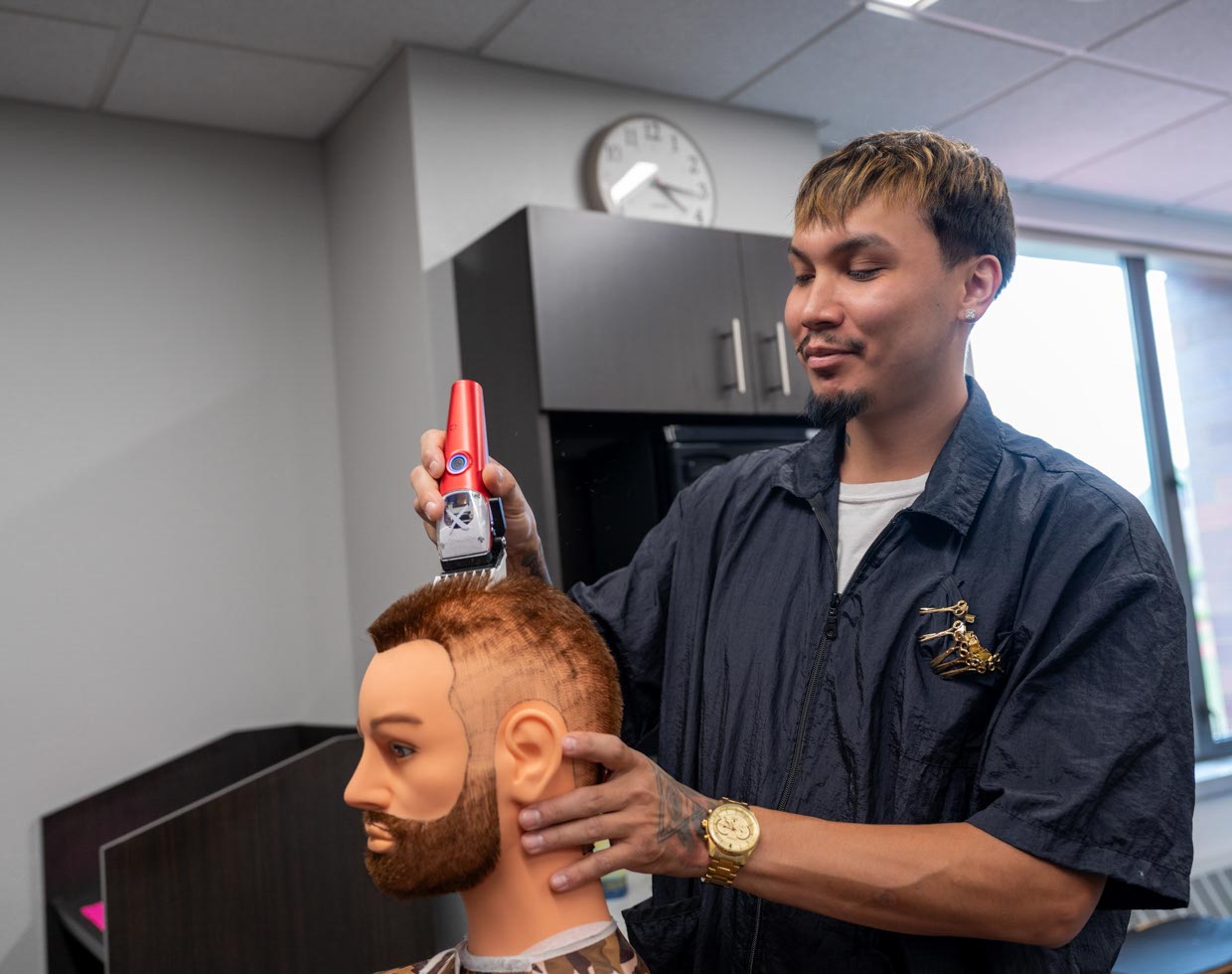
Barbering is experiencing a modern revival, blending timeless craftsmanship with today’s style and culture. In this program, you will learn the techniques and artistry behind cutting, styling, and grooming while developing the business and people skills that define successful barbers. You will gain the confidence to deliver professional services and build lasting client relationships in this growing personal care industry.

At Mid-State, you will receive a blend of classroom instruction and hands-on training that meets Wisconsin’s 1,000-hour state requirement for barbering. You’ll learn in a real salon setting and graduate prepared to join the workforce or open your own barbershop.

Program Facts

Total Credits
25 Credits
Degree Type
Technical Degree
Program Length
Less Than One Year
Estimated Program Cost
$6,558.64
Financial Aid Eligibility
Fully Eligible

Program Outcomes

Graduates leave ready to succeed in their careers. Each year, data from Mid-State's Graduate Survey and statewide reports show consistently high satisfaction and strong starting salaries. Here's a snapshot of what success looks like after graduation.

Career Opportunities

Barber
Barber Sales (Retail/Wholesale)
Barbershop Owner
Barber Stylist
Men's Grooming Specialist
$35,391
Median Annual Salary
Recent program grads in Wisconsin earned a starting salary of $35,391. Source: Lightcast Data Set
258
Average Monthly Hires
258 of recent Wisconsin program grads landed jobs within six months of graduation. Source: Lightcast Data Set
100%
Mid-State Graduate Satisfaction Rate
Students leave proud, prepared, and confident in what comes next. Source: Mid-State Graduate Survey Results

Program Details

Take a closer look at what the program offers and what to expect.

Following is the list of courses within the program. Your course plan may vary, and you'll get a recommended sequence once you're enrolled. See the program information guide below for full course details or talk with your advisor.

Program Information Guide (PDF)

Part-Time Curriculum (25 Total Credits)

Credit for Prior Learning (CPL) options are available for some courses.

Term 1: (12 Credits)

Course Number

Course Name

CPL

Credits

30502340

Haircutting Techniques for Barbers

No

3

30502341

Facial Hair and Skin Care Techniques for Barbers

No

4

30502342

Barbershop Operations

No

1

30502707

Introduction to Barber Technologist

No

1

30502706

Hairstyling for Barbers

No

2

10890102

GPS for Student Success

Yes

1

Term 2: (3 Credits)

Course Number

Course Name

CPL

Credits

30502343

Barbershop Service Skills

No

1

30502344

Basic Barber Client Services

No

2

Term 3: (10 Credits)

Course Number

Course Name

CPL

Credits

30502345

Advanced Barber Client Services

No

2

30502346

Barber Capstone Experience

No

2

30502704

Haircoloring for Barbers

No

2

30502705

Chemical Texturing for Barbers

No

2

30502734

Master Barber Client Services

No

2

Meet our full-time instructors.

Stacy Brock, BA
Stacy received a bachelor of arts degree in 2014 from Concordia University Wisconsin. She also received her technical diploma for Cosmetology in 1997. Stacy worked for a corporate salon in addition to owning her own salon before pursuing her teaching career. She is currently a full-time instructor and program director at Mid-State for the Cosmetology and Barber Technologist programs. She believes in hard work and is very dedicated to the cosmetology industry. She enjoys sharing her passion for the industry in the classroom.

“Work hard in silence and let your success make the noise.”

Hollie Van De Loop, AAS
Hollie earned her technical certificates in Cosmetology and Barbering from Mid-State in 2017 and holds Wisconsin state licensure for both. Previously she completed her associate in applied science at Northcentral Technical College. She started out teaching part-time in Mid-State’s Cosmetology and Barbering Technology programs before transitioning into a full-time role.  

“I loved my experience here at Mid-State as a student and am very excited that I now get to teach here and share my passion for the beauty industry with all the students to come.”

Employers will expect graduates of this program to be able to:

  • Apply safety and infection control procedures. 
  • Identify hair and scalp disorders. 
  • Perform haircutting services. 
  • Demonstrate shaving and other facial hair removal techniques. 
  • Perform male facial procedures. 
  • Perform texture services. 
  • Perform hair color services. 
  • Demonstrate hairstyling and finishing techniques. 
  • Adhere to the current Wisconsin administrative codes and statutes for barbers. 
  • Demonstrate interpersonal skills for success.

Alongside your career training, you'll develop key workplace strengths. Explore the additional skills you'll build.

Employability Skills (PDF)

To succeed in this program, you'll need to meet certain technical standards. These are the key skills and abilities needed for the program and future career success—with or without reasonable accommodations. Be sure to review them carefully before you apply.

Technical Standards (PDF)

This program prepares you for licensure to work in Wisconsin. If you plan to work in another state, be sure to check that state's licensure requirements—Mid-State's program may not meet them all. If you've applied to the program and have any questions about this information, talk to your advisor.

Licensure Information (PDF)

Career Pathways

Career pathways help you build your education step by step. Each stage offers one or more credentials that are recognized by employers and lead to real jobs—and you can keep building toward your career goals as you go.

Prior Learning

Certificate

Technical Degree

Associate Degree

Bachelor's Degree

Get credit for what you already know. You may be able to earn college credit for prior learning through skills you’ve gained through high school classes, previous college work, self-study, military training, jobs, or volunteer experience.

  1. Credit for Prior Learning
  2. High School Dual Credit
  3. Mid-State Fast-Track – Open to high school students

Explore Other Options

Other Programs

Explore more Mid-State programs and find your path to success.

Workforce Training

Not ready for a full degree? Learn job-ready skills with our workforce training options.

Continuing Education

Add a new skill, explore a hobby, or take the next step in your career with our lifelong learning options.

Automotive Maintenance Technician

Technical Degree

Why Automotive Maintenance Technician?

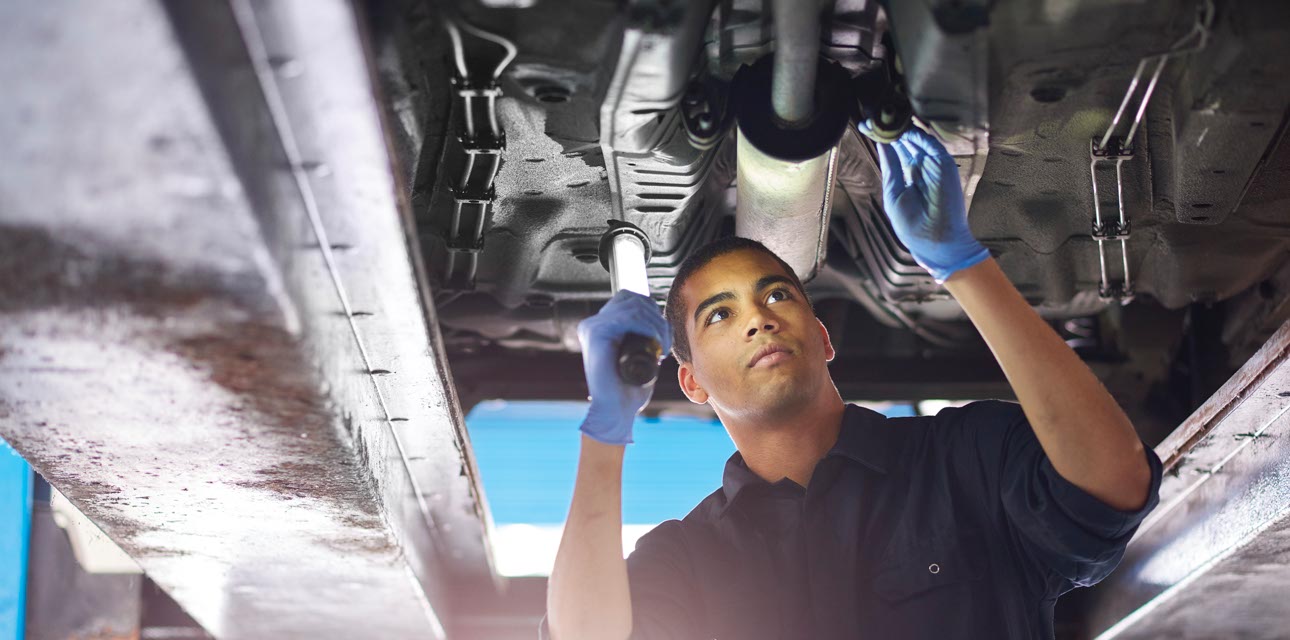
Automotive maintenance technicians keep vehicles running safely and efficiently in a fast-paced, ever-evolving industry. In this program, you will learn to inspect, diagnose, and repair common vehicle systems, including tires, brakes, and suspension. You will develop technical skills and mechanical confidence to become a trusted problem solver in the automotive service field.

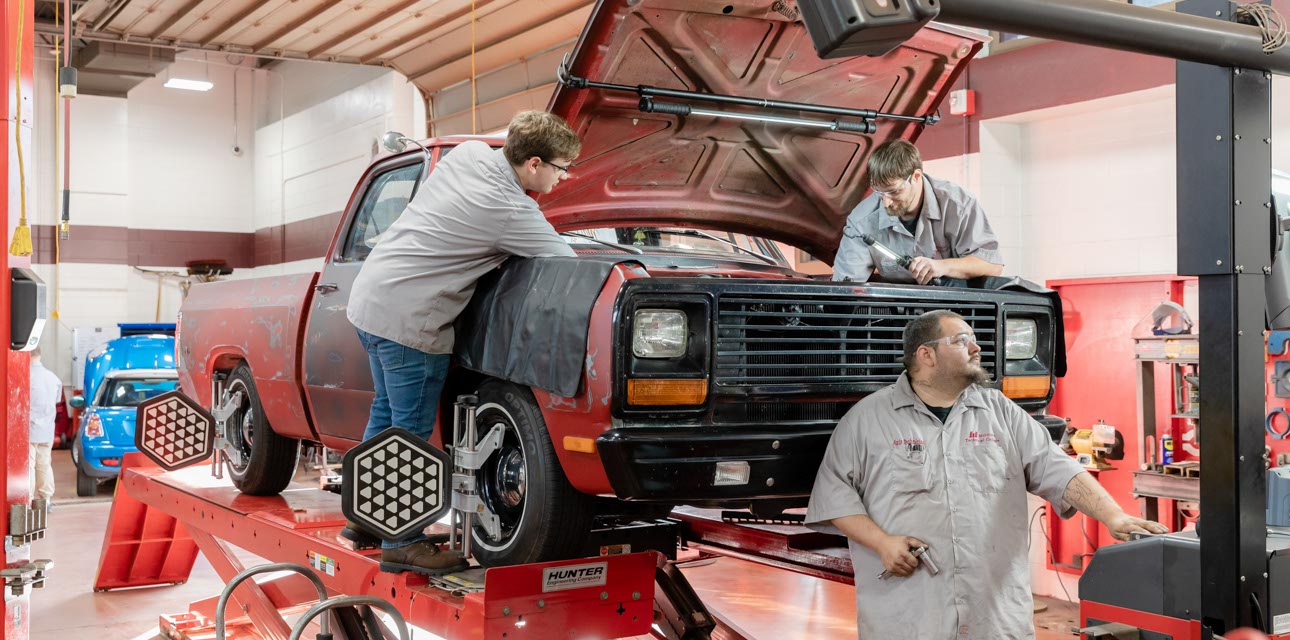
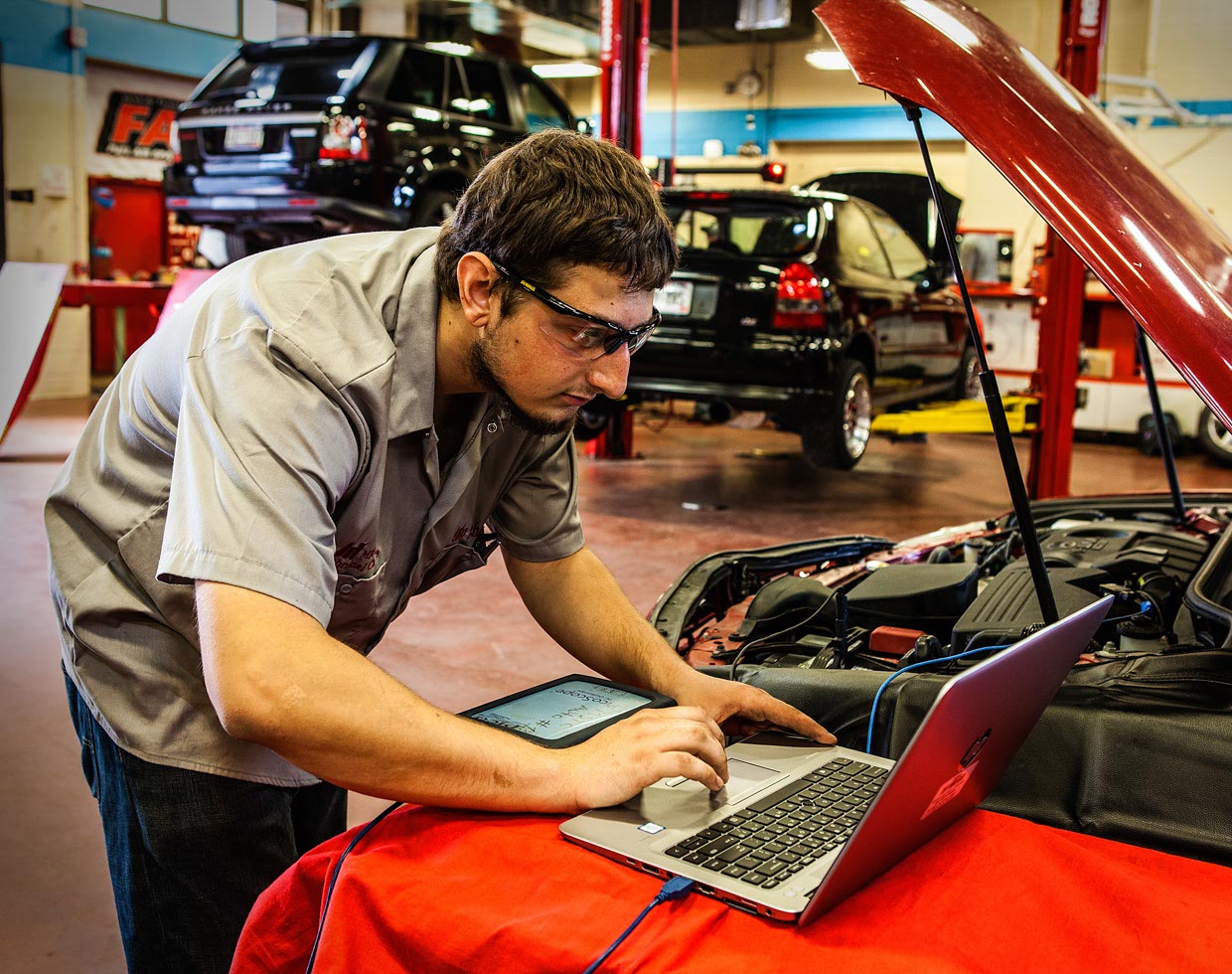
At Mid-State, you will train with ASE Master-certified instructors in fully equipped automotive labs, gaining experience through hands-on work on real vehicles. You’ll graduate ready for entry-level employment or to continue your education in the Automotive Technician technical degree program.

Program Facts

Total Credits
27 Credits
Degree Type
Technical Degree
Program Length
One Year
Estimated Program Cost
$5,586.99
Financial Aid Eligibility
Fully Eligible

Program Outcomes

Graduates leave ready to succeed in their careers. Each year, data from Mid-State's Graduate Survey and statewide reports show consistently high satisfaction and strong starting salaries. Here's a snapshot of what success looks like after graduation.

Career Opportunities

Automotive Apprentice
Automotive Parts Sales/Service
Automotive Service Attendant
Parts Associate
Tire and Lube Technician
$45,803
Median Annual Salary
Recent program grads in Wisconsin earned a starting salary of $45,803. Source: Lightcast Data Set
773
Average Monthly Hires
773 of recent Wisconsin program grads landed jobs within six months of graduation. Source: Lightcast Data Set
100%
Mid-State Graduate Satisfaction Rate
Students leave proud, prepared, and confident in what comes next. Source: Mid-State Graduate Survey Results

Program Details

Take a closer look at what the program offers and what to expect.

Following is the list of courses within the program. Your course plan may vary, and you'll get a recommended sequence once you're enrolled. See the program information guide below for full course details or talk with your advisor.

Program Information Guide (PDF)

Full-Time Curriculum (27 Total Credits)

Credit for Prior Learning (CPL) options are available for some courses.

Term 1: (15 Credits)

Course Number

Course Name

CPL

Credits

10457119

Fabrication Fundamentals 1

No

1

31442320

Welding Foundations 1

Yes

1

31442321

Welding Foundations 2

No

1

32404307

Suspension & Steering Systems

Yes

5

32404308

Braking Systems-Automotive

Yes

5

32404340

Intro to Electricity for the Automotive Industry

Yes

1

32404375

Service Practices in Automotive Industry

Yes

1

Term 2: (12 Credits)

Course Number

Course Name

CPL

Credits

32404311

Electrical Systems-Auto

No

5

32404324

Engine Repair

No

5

32404330

Applied Fluid Power

Yes

2

Meet our full-time instructors.

Curt Andres, BS, MS
Curt earned his master’s degree from Iowa State University. He holds several ASE certifications, including Master Auto Technician. To keep up to date on industry trends, he attends several training events yearly and takes science and technology courses from Massachusetts Institute of Technology.

“I enjoy seeing the growth of my students’ abilities throughout the year.”

Matt Manicki, BS
Matt holds a bachelor’s degree from UW–Stout. Prior to Mid-State, he was assistant director at Tuner School, where he taught high-performance modifications and driving. Most of his experience is from the performance and exotic car market. Matt stays current on today’s vehicles by attending several training sessions each year and owning and operating a repair business.

“I love teaching at Mid-State because our small class sizes allow me to talk with students rather than at them. They also promote better student-to-student interaction.”

Employers will expect graduates of this program to be able to:

  • Diagnose, repair, and service brake systems
  • Diagnose, repair, and service electrical/electronic systems
  • Diagnose, repair, and service drivetrain systems

Alongside your career training, you'll develop key workplace strengths. Explore the additional skills you'll build.

Employability Skills (PDF)

To succeed in this program, you'll need to meet certain technical standards. These are the key skills and abilities needed for the program and future career success—with or without reasonable accommodations. Be sure to review them carefully before you apply.

Technical Standards (PDF)

Career Pathways

Career pathways help you build your education step by step. Each stage offers one or more credentials that are recognized by employers and lead to real jobs—and you can keep building toward your career goals as you go.

Prior Learning

Certificate

Technical Degree

Associate Degree

Bachelor's Degree

Get credit for what you already know. You may be able to earn college credit for prior learning through skills you’ve gained through high school classes, previous college work, self-study, military training, jobs, or volunteer experience.

  1. Credit for Prior Learning
  2. High School Dual Credit
  3. Mid-State Fast-Track – Open to high school students

Explore Other Options

Other Programs

Explore more Mid-State programs and find your path to success.

Workforce Training

Not ready for a full degree? Learn job-ready skills with our workforce training options.

Continuing Education

Add a new skill, explore a hobby, or take the next step in your career with our lifelong learning options.

Automotive Technician

Technical Degree

Why Automotive Technician?

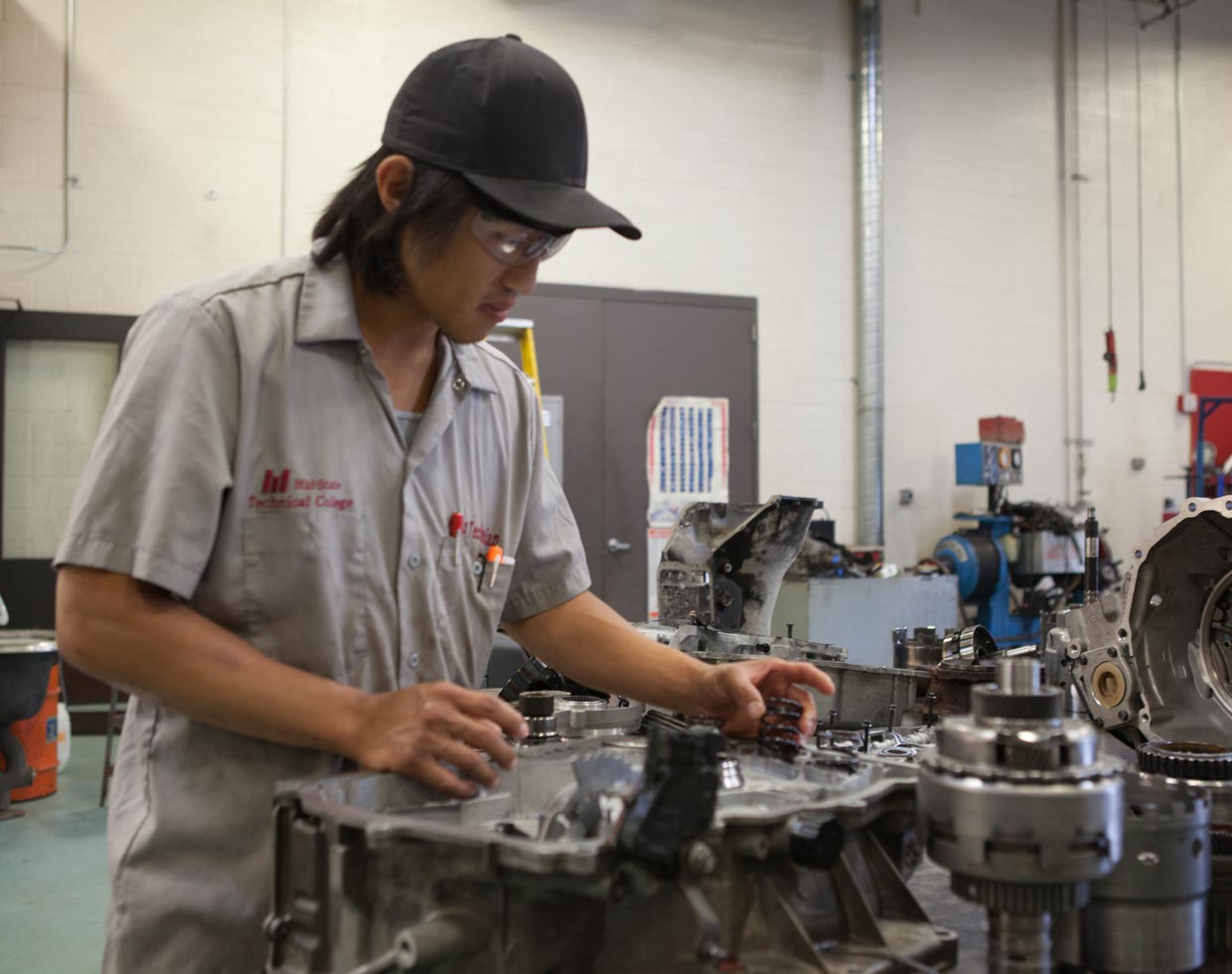
Modern vehicles are advanced machines that blend precision engineering with cutting-edge technology. In this program, you will learn to inspect, maintain, and repair cars and light trucks—working on both traditional mechanical systems and complex electronic components controlled by computers. You will build technical and problem-solving skills to diagnose issues and keep drivers safely on the road.

At Mid-State, you will train in industry-standard labs under ASE Master-certified instructors who bring real-world experience into every lesson. You’ll graduate ready for high-demand positions in automotive service and repair, with credits toward ASE work experience and certification.

Program Facts

Total Credits
59 Credits
Degree Type
Technical Degree
Program Length
Two Years
Estimated Program Cost
$11,743.73
Financial Aid Eligibility
Fully Eligible

Program Outcomes

Graduates leave ready to succeed in their careers. Each year, data from Mid-State's Graduate Survey and statewide reports show consistently high satisfaction and strong starting salaries. Here's a snapshot of what success looks like after graduation.

Career Opportunities

Automotive and Light Truck Technician
Automotive Machine Shop Technician
Automotive Master Mechanic
Automotive Parts Salesperson
Engine Technician
$45,803
Median Annual Salary
Recent program grads in Wisconsin earned a starting salary of $45,803. Source: Lightcast Data Set
773
Average Monthly Hires
773 of recent Wisconsin program grads landed jobs within six months of graduation. Source: Lightcast Data Set
83%
Mid-State Graduate Satisfaction Rate
Students leave proud, prepared, and confident in what comes next. Source: Mid-State Graduate Survey Results

Program Details

Take a closer look at what the program offers and what to expect.

Following is the list of courses within the program. Your course plan may vary, and you'll get a recommended sequence once you're enrolled. See the program information guide below for full course details or talk with your advisor.

Program Information Guide (PDF)

Full-Time Curriculum (59 Total Credits)

Credit for Prior Learning (CPL) options are available for some courses.

Term 1: (17 Credits)

Course Number

Course Name

CPL

Credits

10457119

Fabrication Fundamentals 1

No

1

31442320

Welding Foundations 1

Yes

1

31804305

Applied Mathematics

No

2

31442321

Welding Foundations 2

No

1

32404307

Suspension & Steering Systems

Yes

5

32404308

Braking Systems-Automotive

Yes

5

32404340

Intro to Electricity for the Automotive Industry

Yes

1

32404375

Service Practices in Automotive Industry

Yes

1

Term 2: (12 Credits)

Course Number

Course Name

CPL

Credits

32404311

Electrical Systems-Auto

No

5

32404324

Engine Repair

No

5

32404330

Applied Fluid Power

Yes

2

Term 3: (15 Credits)

Course Number

Course Name

CPL

Credits

32404313

Electric Control Systems

No

2

31801368

Workplace Communication

No

1

32404323

Automatic Transmissions

No

5

32404325

Manual Transmissions

No

5

32806351

Applied Science

No

2

Term 4: (15 Credits)

Course Number

Course Name

CPL

Credits

32404312

Advanced Electrical Systems-Auto

No

5

32404320

Hybrid Systems-Auto

No

1

32404322

Heating/Air Conditioning

No

3

32404326

Fuel Control System-Auto

No

5

32404377

Business Practices in the Transportation Industry

No

1

Meet our full-time instructors.

Curt Andres, BS, MS
Curt earned his master’s degree from Iowa State University. He holds several ASE certifications, including Master Auto Technician. To keep up to date on industry trends, he attends several training events yearly and takes science and technology courses from Massachusetts Institute of Technology.

“I enjoy seeing the growth of my students’ abilities throughout the year.”

Matt Manicki, BS
Matt holds a bachelor’s degree from UW–Stout. Prior to Mid-State, he was assistant director at Tuner School, where he taught high-performance modifications and driving. Most of his experience is from the performance and exotic car market. Matt stays current on today’s vehicles by attending several training sessions each year and owning and operating a repair business.

“I love teaching at Mid-State because our small class sizes allow me to talk with students rather than at them. They also promote better student-to-student interaction.”

Employers will expect graduates of this program to be able to:

  • Demonstrate professionalism appropriate for the auto service industry.
  • Perform diagnosis, service, and repair of automotive internal combustion engines.
  • Perform diagnosis, service, and repair of automotive automatic transmission/transaxle systems.
  • Perform diagnosis, service, and repair of automotive manual drive train and axle systems.
  • Perform diagnosis, service, and repair of automotive steering and suspension systems.
  • Perform diagnosis, service, and repair of automotive brake systems.
  • Perform diagnosis, service, and repair of automotive electrical and electronic systems.
  • Perform diagnosis, service, and repair of automotive heating and air conditioning systems.
  • Perform diagnosis, service, and repair of automotive engine performance systems.

Alongside your career training, you'll develop key workplace strengths. Explore the additional skills you'll build.

Employability Skills (PDF)

To succeed in this program, you'll need to meet certain technical standards. These are the key skills and abilities needed for the program and future career success—with or without reasonable accommodations. Be sure to review them carefully before you apply.
Technical Standards (PDF)

Career Pathways

Career pathways help you build your education step by step. Each stage offers one or more credentials that are recognized by employers and lead to real jobs—and you can keep building toward your career goals as you go.

Prior Learning

Certificate

Technical Degree

Associate Degree

Bachelor's Degree

Get credit for what you already know. You may be able to earn college credit for prior learning through skills you’ve gained through high school classes, previous college work, self-study, military training, jobs, or volunteer experience.

  1. Credit for Prior Learning
  2. High School Dual Credit
  3. Mid-State Fast-Track – Open to high school students

Explore Other Options

Other Programs

Explore more Mid-State programs and find your path to success.

Workforce Training

Not ready for a full degree? Learn job-ready skills with our workforce training options.

Continuing Education

Add a new skill, explore a hobby, or take the next step in your career with our lifelong learning options.

Auto Collision Repair & Refinish Technician

Technical Degree

Why Auto Collision Repair & Refinish Technician?

Auto collision repair technicians restore vehicles damaged in collisions and help return them to safe, road-ready condition. In this program, you will develop the technical skills needed to repair, refinish, and restore vehicles using industry-standard tools, equipment, and repair procedures. From structural repairs to paint refinishing, you'll learn how to deliver quality workmanship that meets industry standards.

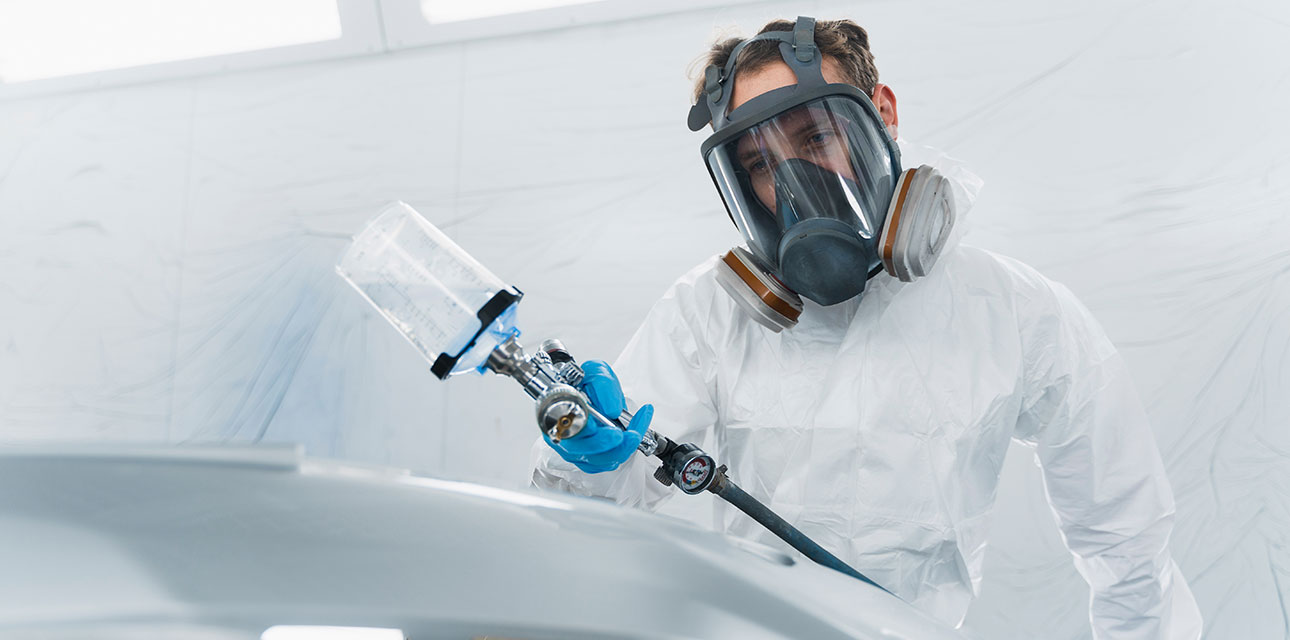
At Mid-State, you will gain hands-on experience in a real shop environment working with damaged vehicle components, professional-grade equipment, and modern repair technology. You'll practice welding, panel repair, surface preparation, and refinishing techniques while learning the workflow, safety practices, and teamwork required in today's collision repair industry.

Program Facts

Total Credits
17 Credits
Degree Type
Technical Degree
Program Length
One Year
Estimated Program Cost
$4,208.52
Financial Aid Eligibility
Partially Eligible

Program Outcomes

Graduates leave ready to succeed in their careers. Each year, data from Mid-State's Graduate Survey and statewide reports show consistently high satisfaction and strong starting salaries. Here's a snapshot of what success looks like after graduation.

Career Opportunities

Auto Body Repair Technician
Automotive Refinishing/Paint Technician
Collision Estimator/Appraiser
$45,803
Median Annual Salary
Recent program grads in Wisconsin earned a starting salary of $45,803. Source: Lightcast Data Set
773
Average Monthly Hires
773 of recent Wisconsin program grads landed jobs within six months of graduation. Source: Lightcast Data Set

Program Details

Take a closer look at what the program offers and what to expect.

Following is the list of courses within the program. Your course plan may vary, and you'll get a recommended sequence once you're enrolled. See the program information guide below for full course details or talk with your advisor.

Program Information Guide (PDF)

Full-Time Curriculum (17 Total Credits)

Credit for Prior Learning (CPL) options are available for some courses.

Term 1: (10 Credits)

Course Number

Course Name

CPL

Credits

30405322

Auto Body Mechanics

No

1

32404340

Intro to Electricity for the Automotive Industry

Yes

1

30405323

Foundations of Painting

No

2

31804305

Applied Mathematics

No

2

30405324

Dent Repair

No

2

32404375

Service Practices in Automotive Industry

Yes

1

10890102

GPS for Student Success

Yes

1

Term 2: (7 Credits)

Course Number

Course Name

CPL

Credits

31442320

Welding Foundations 1

Yes

1

30405326

Advanced Painting

No

2

30405327

Damage Analysis & Estimating

No

2

32806351

Applied Science

No

2

Employers will expect graduates of this program to be able to:

  • Repair structural and non-structural vehicle damage using industry-standard tools and techniques.
  • Perform welding and basic metal fabrication processes used in collision repair.
  • Prepare vehicle surfaces for refinishing through sanding, masking, and priming procedures.
  • Apply automotive paint and refinishing materials using professional spray equipment.
  • Interpret repair estimates and manufacturer repair information.
  • Follow industry safety standards and environmental regulations.
  • Demonstrate professional communication and teamwork skills in a service center environment.

Alongside your career training, you'll develop key workplace strengths. Explore the additional skills you'll build.

Employability Skills (PDF)

To succeed in this program, you'll need to meet certain technical standards. These are the key skills and abilities needed for the program and future career success—with or without reasonable accommodations. Be sure to review them carefully before you apply.
Technical Standards (PDF)

Career Pathways

Career pathways help you build your education step by step. Each stage offers one or more credentials that are recognized by employers and lead to real jobs—and you can keep building toward your career goals as you go.

Prior Learning

Certificate

Technical Degree

Associate Degree

Bachelor's Degree

Get credit for what you already know. You may be able to earn college credit for prior learning through skills you’ve gained through high school classes, previous college work, self-study, military training, jobs, or volunteer experience.

  1. Credit for Prior Learning
  2. High School Dual Credit
  3. Mid-State Fast-Track – (age requirements apply)

Explore Other Options

Other Programs

Explore more Mid-State programs and find your path to success.

Workforce Training

Not ready for a full degree? Learn job-ready skills with our workforce training options.

Continuing Education

Add a new skill, explore a hobby, or take the next step in your career with our lifelong learning options.