Project Management

Technical Degree

Why Project Management?

Project managers bring structure, clarity, and momentum to the most important work happening inside an organization. In this program, you’ll learn how to define goals, plan timelines, organize resources, and guide teams through project completion. Whether coordinating a new product release or managing a major business initiative, you’ll gain the confidence and strategies needed to keep complex work on track.

At Mid-State, you’ll build practical skills in budgeting, scheduling, communication, and leadership through hands-on project experiences. You’ll also learn how to solve problems, analyze workflow needs, and use industry tools to keep teams aligned and moving forward. Graduates enter a flexible, high-demand field where effective project managers are valued in every industry.

Program Facts

Total Credits
33 Credits
Degree Type
Technical Degree
Program Length
Less Than One Year
Estimated Program Cost
$5,984.99
Financial Aid Eligibility
Fully Eligible

Program Outcomes

Graduates leave ready to succeed in their careers. Each year, data from Mid-State's Graduate Survey and statewide reports show consistently high satisfaction and strong starting salaries. Here's a snapshot of what success looks like after graduation.

Career Opportunities

Implementation Manager
Project Leader
Project Manager
$87,934
Median Annual Salary
Recent program grads in Wisconsin earned a starting salary of $87,934. Source: Lightcast Data Set
730
Average Monthly Hires
730 of recent Wisconsin program grads landed jobs within six months of graduation. Source: Lightcast Data Set
100%
Mid-State Graduate Satisfaction Rate
Students leave proud, prepared, and confident in what comes next. Source: Mid-State Graduate Survey Results

Program Details

Take a closer look at what the program offers and what to expect.

Following is the list of courses within the program. Your course plan may vary, and you'll get a recommended sequence once you're enrolled. See the program information guide below for full course details or talk with your advisor.

Program Information Guide (PDF)

Full-Time Curriculum (33 Total Credits)

Credit for Prior Learning (CPL) options are available for some courses.

Term 1: (17 Credits)

Course Number

Course Name

CPL

Credits

10101140

Accounting 1

Yes

3

10102231

Business Networking

No

1

10196189

Team Building & Problem Solving

No

3

10196190

Leadership Development

Yes

3

10801195

Written Communication

Yes

3

10801196

Oral/Interpersonal Communication

Yes

3

10890102

GPS for Student Success

Yes

1

Term 2: (16-17)

Course Number

Course Name

CPL

Credits

10102230

Business Communities

No

1

10103106

Microsoft Office-Introduction

Yes

3

10196152

Strategic Leadership

No

3

10196188

Project Management

No

3

10196192

Managing for Quality

No

3

10804107

College Mathematics

Yes

3

Meet our full-time instructors.

Brian Bartel, BS, MS, EdD
Dr. Bartel received his doctorate from the University of Wisconsin–Stout. His professional experience includes twenty plus years working within the financial, Investment, and insurance industries in a variety of managerial roles and for a number of well-known and local companies, including Sentry Insurance, Thrivent Financial, and American Express.

“Learning is a lifelong journey—investing in yourself will be, by far, the best investment you may ever make!”

Employers will expect graduates of this program to be able to:

  • Identify the different stages involved in project planning.
  • Employ common project management tools.
  • Utilize relevant milestones in monitoring and measuring progress taking account of budget, expenditure, and risk management.
  • Demonstrate effective interpersonal communications and conflict management techniques.
  • Employ common software tools for project management.

Alongside your career training, you'll develop key workplace strengths. Explore the additional skills you'll build.

Employability Skills (PDF)

To succeed in this program, you'll need to meet certain technical standards. These are the key skills and abilities needed for the program and future career success—with or without reasonable accommodations. Be sure to review them carefully before you apply.

Technical Standards (PDF)

Career Pathways

Career pathways help you build your education step by step. Each stage offers one or more credentials that are recognized by employers and lead to real jobs—and you can keep building toward your career goals as you go.

Prior Learning

Certificate

Technical Degree

Associate Degree

Bachelor's Degree

Get credit for what you already know. You may be able to earn college credit for prior learning through skills you’ve gained through high school classes, previous college work, self-study, military training, jobs, or volunteer experience.

  1. Credit for Prior Learning
  2. High School Dual Credit
  3. Mid-State Fast-Track – Open to high school students

Explore Other Options

Other Programs

Explore more Mid-State programs and find your path to success.

Workforce Training

Not ready for a full degree? Learn job-ready skills with our workforce training options.

Continuing Education

Add a new skill, explore a hobby, or take the next step in your career with our lifelong learning options.

IT Web Developer

Technical Degree

Program Facts

Total Credits
29 Credits
Degree Type
Technical Degree
Program Length
Less Than One Year

Program Outcomes

Graduates leave ready to succeed in their careers. Each year, data from Mid-State's Graduate Survey [Link to Facts & Figures page] and statewide reports show consistently high satisfaction and strong starting salaries. Here's a snapshot of what success looks like after graduation.

Career Opportunities

Web Developer; Front-End Developer, Application Support Specialist, E-Commerce Developer

Program Details

Take a closer look at what the program offers and what to expect.

Your course plan may vary, and you'll get a recommended sequence once you're enrolled. See below for full course details, see the program information guide, or talk with your advisor.

[Program Name] Program Information Guide (PDF)

Meet our full-time instructors.

Employers will expect graduates of this program to be able to:

Alongside your career training, you'll develop key workplace strengths. Explore the additional skills you'll build.

Employability Skills (PDF)

To succeed in this program, you'll need to meet certain technical standards. These are the key skills and abilities needed for the program and future career success—with or without reasonable accommodations. Be sure to review them carefully before you apply.

Technical Standards (PDF)

This program prepares you for licensure to work in Wisconsin. If you plan to work in another state, be sure to check that state's licensure requirements—Mid-State's program may not meet them all. If you've applied to the program and have any questions about this information, talk to your advisor.

Licensure Information (PDF)

Explore these helpful resources as you consider or apply to the [Program Name] program. Already applied and have questions? Your advisor is here to help.

Career Pathways

Career pathways help you build your education step by step. Each stage offers one or more credentials that are recognized by employers and lead to real jobs—and you can keep building toward your career goals as you go.

Prior Learning

Certificate

Technical Degree

Associate Degree

Bachelor's Degree

Get credit for what you already know. You may be able to earn college credit for prior learning through skills you’ve gained through high school classes, previous college work, self-study, military training, jobs, or volunteer experience.

  1. Credit for Prior Learning
  2. High School Dual Credit
  3. Mid-State Fast-Track – Open to high school students

IT User Support Technician

Technical Degree

Why IT User Support Technician?

User support technicians are essential to keeping technology running smoothly in every industry. In this program, you’ll learn to assist users, troubleshoot hardware and software issues, and maintain computer systems with confidence and professionalism. You’ll develop the technical and communication skills needed to be the first line of support in today’s technology-driven workplaces.

At Mid-State, you’ll gain hands-on training through interactive labs and industry-aligned coursework. This program can be completed quickly and serves as a strong foundation for continuing your education in IT.

Program Facts

Total Credits
25 Credits
Degree Type
Technical Degree
Program Length
Less Than One Year
Estimated Program Cost
$5,037.44
Financial Aid Eligibility
Fully Eligible

Program Outcomes

Graduates leave ready to succeed in their careers. Each year, data from Mid-State's Graduate Survey and statewide reports show consistently high satisfaction and strong starting salaries. Here's a snapshot of what success looks like after graduation.

Career Opportunities

IT Customer Support Technician
IT Field Technician
IT Operations Support Technician
System Support Technician
Technical Support Analyst
$60,435
Median Annual Salary
Recent program grads in Wisconsin earned a starting salary of $60,435. Source: Lightcast Data Set
539
Average Monthly Hires
539 of recent Wisconsin program grads landed jobs within six months of graduation. Source: Lightcast Data Set
100%
Mid-State Graduate Satisfaction Rate
Students leave proud, prepared, and confident in what comes next. Source: Mid-State Graduate Survey Results

Program Details

Take a closer look at what the program offers and what to expect.

Following is the list of courses within the program. Your course plan may vary, and you'll get a recommended sequence once you're enrolled. See the program information guide below for full course details or talk with your advisor.

Program Information Guide (PDF)

Full-Time Curriculum (25 Total Credits)

Credit for Prior Learning (CPL) options are available for some courses.

Term 1: (13 Credits)

Course Number

Course Name

CPL

Credits

10150110

Networking I

Yes

3

10151105

Linux

No

3

10154102

IT Essentials

Yes

3

10152101

Intro to Programming

Yes

3

10890102

GPS for Student Success

Yes

1

Term 2: (12 Credits)

Course Number

Course Name

CPL

Credits

10150120

Server Administration-Beginning

No

3

10150165

Network Server Scripting

No

3

10151110

Information Security 1

Yes

3

10801196

Oral/Interpersonal Communication

Yes

3

Meet our full-time instructors.

Brian Krause, BA
Brian Krause holds a bachelor of arts degree from Lakeland College and brings over 20 years of experience working in the IT industry in central Wisconsin to his teaching at Mid-State. He continues to stay current with modern technology through a variety of volunteer activities, research, and seminars.

“I enjoy being able to pass along knowledge and skills to eager learners and bring in real-world business examples for better understanding of the content beyond book theory and examples. Doing so creates a fun learning environment that adds value to the program.”

Troy Krezine, AAS
Troy earned his associate in applied science from Northcentral Technical College and holds national certification in CompTIA Security+. His work experience spans 25 years in the IT field in a variety of roles, including help desk, server administration, project management. He has also held multiple management roles in a Fortune 500 company and local government.

“Teaching at Mid-State allows me to combine my passion for IT management with my love of mentorship. The most rewarding part of my career has always been helping others grow—giving people the tools, confidence, and knowledge they need to succeed. Teaching is simply the next step in that same mission.”

Employers will expect graduates of this program to be able to:

  • Develop technical documentation. 
  • Troubleshoot network systems.

Alongside your career training, you'll develop key workplace strengths. Explore the additional skills you'll build.

Employability Skills (PDF)

To succeed in this program, you'll need to meet certain technical standards. These are the key skills and abilities needed for the program and future career success—with or without reasonable accommodations. Be sure to review them carefully before you apply.

Technical Standards (PDF)

Career Pathways

Career pathways help you build your education step by step. Each stage offers one or more credentials that are recognized by employers and lead to real jobs—and you can keep building toward your career goals as you go.

Prior Learning

Certificate

Technical Degree

Associate Degree

Bachelor's Degree

Get credit for what you already know. You may be able to earn college credit for prior learning through skills you’ve gained through high school classes, previous college work, self-study, military training, jobs, or volunteer experience.

  1. Credit for Prior Learning
  2. High School Dual Credit
  3. Mid-State Fast-Track – Open to high school students

Explore Other Options

Other Programs

Explore more Mid-State programs and find your path to success.

Workforce Training

Not ready for a full degree? Learn job-ready skills with our workforce training options.

Continuing Education

Add a new skill, explore a hobby, or take the next step in your career with our lifelong learning options.

Hospitality Specialist

Technical Degree

Why Hospitality Specialist?

The hospitality industry offers a world of opportunities in tourism, food service, lodging, and event management. In this program, you will learn the skills needed to provide exceptional guest experiences while gaining the business and communication abilities that open doors to a wide range of careers. You’ll build a strong foundation for success in one of the fastest-growing industries worldwide.

At Mid-State, you can complete this fully online program on a part-time or full-time schedule that fits your lifestyle. You’ll earn the Customer Relationship Professional technical diploma on your way to completing the Hospitality Specialist credential—and can continue another year to achieve the full Hospitality Management associate degree.

Program Facts

Total Credits
27 Credits
Degree Type
Technical Degree
Program Length
Less Than One Year
Estimated Program Cost
$4,995.82
Financial Aid Eligibility
Fully Eligible

Program Outcomes

Graduates leave ready to succeed in their careers. Each year, data from Mid-State's Graduate Survey and statewide reports show consistently high satisfaction and strong starting salaries. Here's a snapshot of what success looks like after graduation.

Career Opportunities

Customer Service Representative
Food & Beverage Server
Host and Hostess
Hotel/Resort Front Desk Representative
$56,184
Median Annual Salary
Recent program grads in Wisconsin earned a starting salary of $56,184. Source: Lightcast Data Set
339
Average Monthly Hires
339 of recent Wisconsin program grads landed jobs within six months of graduation. Source: Lightcast Data Set

Program Details

Take a closer look at what the program offers and what to expect.

Following is the list of courses within the program. Your course plan may vary, and you'll get a recommended sequence once you're enrolled. See the program information guide below for full course details or talk with your advisor.

Program Information Guide (PDF)

Full-Time Curriculum (27 Total Credits)

Credit for Prior Learning (CPL) options are available for some courses.

Term 1: (14 Credits)

Course Number

Course Name

CPL

Credits

10102101

Introduction to Business

Yes

3

10102231

Business Networking

No

1

10106106

Quality Customer Service

Yes

3

10109101

Exploring Hospitality

No

3

10801196

Oral/Interpersonal Communication

Yes

3

10890102

GPS for Student Success

Yes

1

Term 2: (13 Credits)

Course Number

Course Name

CPL

Credits

10102230

Business Communities

No

1

10103106

Microsoft Office-Introduction

Yes

3

10109110

Room Operations Division

No

3

10109160

Hospitality Internship

Yes

2

10316112

Sanitation for Foodservice Operations

Yes

1

10801195

Written Communication

Yes

3

Meet our full-time instructors.

Angela Steinhauer, AAS, BS, MBA
In addition to an MBA with management emphasis, Angela holds a bachelor of science in hotel, restaurant, and tourism management from University of Wisconsin–Stout. She has taught hospitality, business, and leadership courses for several years and brings over 20 years of hospitality industry experience in everything from entry level to senior-level management positions.

“Being a hospitality professional and mentor is the essence of my character—I thrive on creating an authentic, memorable, and supportive learning environment for all those who enter this dynamic industry!”

Employers will expect graduates of this program to be able to:

  • Distinguish the varying components of the hospitality industry.
  • Apply business concepts to the industry.
  • Communicate as a hospitality professional.

Alongside your career training, you'll develop key workplace strengths. Explore the additional skills you'll build.

Employability Skills (PDF)

To succeed in this program, you'll need to meet certain technical standards. These are the key skills and abilities needed for the program and future career success—with or without reasonable accommodations. Be sure to review them carefully before you apply.

Technical Standards (PDF)

Career Pathways

Career pathways help you build your education step by step. Each stage offers one or more credentials that are recognized by employers and lead to real jobs—and you can keep building toward your career goals as you go.

Prior Learning

Certificate

Technical Degree

Associate Degree

Bachelor's Degree

Get credit for what you already know. You may be able to earn college credit for prior learning through skills you’ve gained through high school classes, previous college work, self-study, military training, jobs, or volunteer experience.

  1. Credit for Prior Learning
  2. High School Dual Credit
  3. Mid-State Fast-Track – Open to high school students

Explore Other Options

Other Programs

Explore more Mid-State programs and find your path to success.

Workforce Training

Not ready for a full degree? Learn job-ready skills with our workforce training options.

Continuing Education

Add a new skill, explore a hobby, or take the next step in your career with our lifelong learning options.

Medical Assistant

Technical Degree

Why Medical Assistant?

Medical assistants are at the heart of healthcare, performing a wide variety of clinical and administrative duties that keep medical offices running efficiently. This profession calls for compassion, organization, and strong communication skills that make it deeply meaningful for those who choose to serve patients and providers alike.

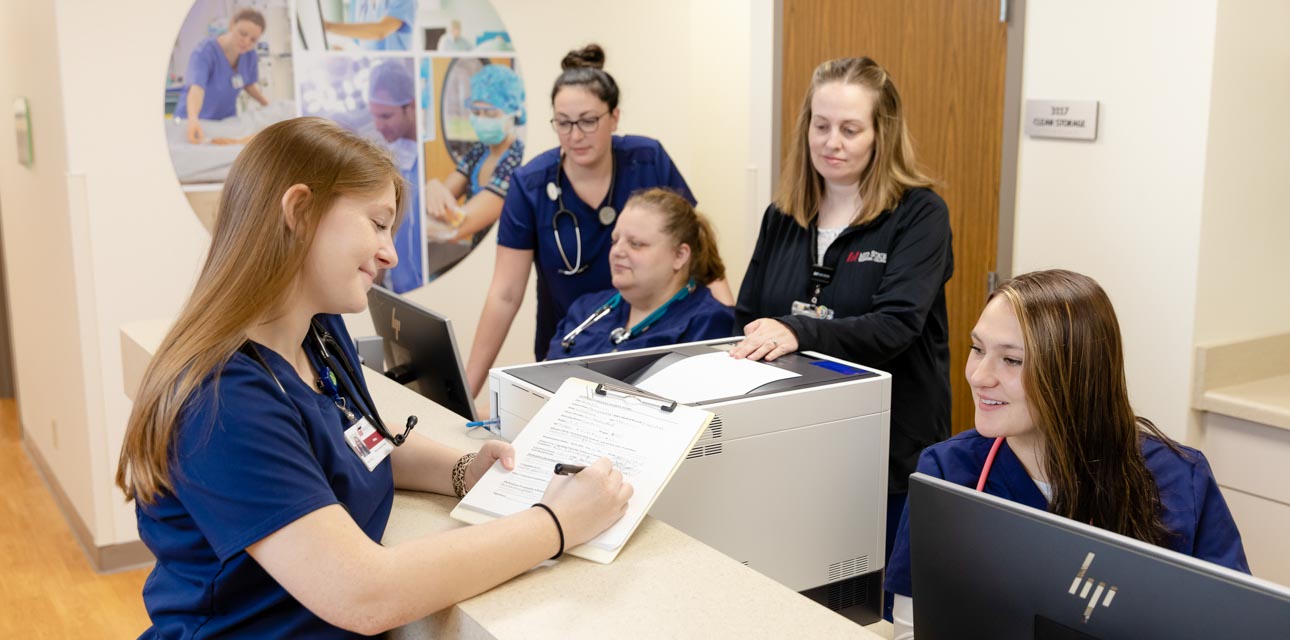
At Mid-State, you’ll learn in both classroom and clinical settings, gaining hands-on experience in area medical offices and clinics. Students benefit from hands-on simulation experiences in the Healthcare Simulation Center that enhance and support their clinical training. The program builds your administrative and clinical expertise, preparing you for national certification exams and long-term career success. Graduates consistently achieve above-average pass rates and enter the workforce ready to make a difference.

Program Facts

Total Credits
29-31 Credits
Degree Type
Technical Degree
Program Length
One Year
Estimated Program Cost
$6,285.67
Financial Aid Eligibility
Fully Eligible

Program Outcomes

Graduates leave ready to succeed in their careers. Each year, data from Mid-State's Graduate Survey and statewide reports show consistently high satisfaction and strong starting salaries. Here's a snapshot of what success looks like after graduation.

Career Opportunities

Appointment Clerk (Medical/Dental)
Medical Administrative Assistant
Medical Assistant
Medical Records Clerk
Patient Services Representative
$47,587
Median Annual Salary
Recent program grads in Wisconsin earned a starting salary of $47,587. Source: Lightcast Data Set
510
Average Monthly Hires
510 of recent Wisconsin program grads landed jobs within six months of graduation. Source: Lightcast Data Set
100%
Mid-State Graduate Satisfaction Rate
Students leave proud, prepared, and confident in what comes next. Source: Mid-State Graduate Survey Results

Program Details

Take a closer look at what the program offers and what to expect.

Following is the list of courses within the program. Your course plan may vary, and you'll get a recommended sequence once you're enrolled. See the program information guide below for full course details or talk with your advisor.

Program Information Guide (PDF)

Full-Time Curriculum (29-31 Total Credits)

Credit for Prior Learning (CPL) options are available for some courses.

Term 1: (15-17)

Course Number

Course Name

CPL

Credits

31801368

Workplace Communication

No

1

31509301

Medical Assistant Administrative Procedures 

No

2

31509302 or 10806177

Human Body in Health & Disease or General Anatomy & Physiology

No

3 or 4

31509303

Medical Assistant Laboratory Procedures 1

No

2

31509304

Medical Assistant Clinical Procedures 1

No

4

31509320 or 10501101

Medical Terminology for Medical Assistant or Medical Terminology

No or Yes

2 or 3

10890102

GPS for Student Success

Yes

1

Term 2: (14 Credits)

Course Number

Course Name

CPL

Credits

31509305

Medical Assistant Laboratory Procedures 2

No

2

31509306

Medical Assistant Clinical Procedures 2

No

3

31509307

Medical Office Insurance and Finance

No

2

31509308

Pharmacology for Allied Health

Yes

2

31509309

Medical Laws, Ethics, and Professionalism

No

2

31509310

Medical Assistant Practicum

No

3

Meet our full-time instructors.

Nichol Soik, BS, CMA (AAMA)
Nichol earned her BS in health science with an emphasis in public health from Excelsior University and her medical assistant technical diploma from Fox Valley Technical College. She also holds a CMA (AAMA) credential. Her CMA experience includes family practice and mentoring students during their clinical rotation. She has also worked for the VA as a health tech performing phlebotomy and preparing specimens for transportation and testing. Nichol regularly attends continuing education through the American Association of Medical Assistants to keep up with the educational demands of the ever-changing medical field. 

“I enjoy providing an enriching environment for students to flourish through education and hands-on experience in a field I am very passionate about.”

Employers will expect graduates of this program to be able to:

  • Perform medical office administrative functions.
  • Provide patient care in accordance with regulations, policies, laws, and patient rights.
  • Perform medical laboratory procedures.
  • Demonstrate professionalism in a health care setting.
  • Demonstrate safety and emergency practices in a health care setting.

Alongside your career training, you'll develop key workplace strengths. Explore the additional skills you'll build.

Employability Skills (PDF)

To succeed in this program, you'll need to meet certain technical standards. These are the key skills and abilities needed for the program and future career success—with or without reasonable accommodations. Be sure to review them carefully before you apply.

Technical Standards (PDF)

Explore the resources and next steps below. Your academic advisor will help you know what to complete and when.

Criminal Background Form

Medical Assistant Program Handbook (PDF)

Occupational Risks for Medical Assistants (PDF)

Career Pathways

Career pathways help you build your education step by step. Each stage offers one or more credentials that are recognized by employers and lead to real jobs—and you can keep building toward your career goals as you go.

Prior Learning

Certificate

Technical Degree

Associate Degree

Bachelor's Degree

Get credit for what you already know. You may be able to earn college credit for prior learning through skills you’ve gained through high school classes, previous college work, self-study, military training, jobs, or volunteer experience.

  1. Credit for Prior Learning
  2. High School Dual Credit
  3. Mid-State Fast-Track – Open to high school students

Explore Other Options

Other Programs

Explore more Mid-State programs and find your path to success.

Workforce Training

Not ready for a full degree? Learn job-ready skills with our workforce training options.

Continuing Education

Add a new skill, explore a hobby, or take the next step in your career with our lifelong learning options.

Medical Coder

Technical Degree

Why Medical Coder?

Medical coders play a vital role in modern healthcare by transforming patient information into standardized digital codes for billing, research, and quality reporting. In this program, you’ll gain the technical knowledge and attention to detail needed to ensure medical records are accurate, confidential, and compliant with healthcare standards.

At Mid-State, you’ll train with current coding systems and healthcare software while developing analytical and critical-thinking skills. Upon graduation, you’ll be prepared for entry-level employment and eligible to take the Certified Coding Associate (CCA) exam—or continue your studies in the Health Information Management associate degree program.

Program Facts

Total Credits
31-32 Credits
Degree Type
Technical Degree
Program Length
One Year
Estimated Program Cost
$7,212.78
Financial Aid Eligibility
Fully Eligible

Program Outcomes

Graduates leave ready to succeed in their careers. Each year, data from Mid-State's Graduate Survey and statewide reports show consistently high satisfaction and strong starting salaries. Here's a snapshot of what success looks like after graduation.

Career Opportunities

Financial Services Specialist
Medical Biller
Medical Claims Reviewer
Medical Coder/Specialist
Medical Records Technician
$48,393
Median Annual Salary
Recent program grads in Wisconsin earned a starting salary of $48,393. Source: Lightcast Data Set
265
Average Monthly Hires
265 of recent Wisconsin program grads landed jobs within six months of graduation. Source: Lightcast Data Set
92%
Mid-State Graduate Satisfaction Rate
Students leave proud, prepared, and confident in what comes next. Source: Mid-State Graduate Survey Results

Program Details

Take a closer look at what the program offers and what to expect.

Following is the list of courses within the program. Your course plan may vary, and you'll get a recommended sequence once you're enrolled. See the program information guide below for full course details or talk with your advisor.

Program Information Guide (PDF)

Full-Time Curriculum (31-32 Total Credits)

Credit for Prior Learning (CPL) options are available for some courses.

Term 1: (13-14)

Course Number

Course Name

CPL

Credits

10103106

Microsoft Office-Introduction

Yes

3

10501101

Medical Terminology

Yes

3

10530123

Introduction to Digital Information in Healthcare

No

3

10806189 or 10806177

Basic Anatomy or General Anatomy & Physiology

No or Yes

3 or 4

10890102

GPS for Student Success

Yes

1

Term 2: (9 Credits)

Course Number

Course Name

CPL

Credits

10530144

CPT Coding for HIM

No

3

10530117

Human Disease for the Health Professions

No

3

10530197

ICD Diagnosis Coding

No

3

Term 3: (9 Credits)

Course Number

Course Name

CPL

Credits

10530146

Private and Government Reimbursement

No

3

10530147

HIM Advanced Coding

No

3

10530115

Inpatient Procedure Coding

No

3

Meet our full-time instructors.

Kari Bjorge, BS, RHIA, CCS
Kari Bjorge holds a BS in health information management from Herzing University as well as RHIA and CCS certifications. With over a decade of experience as a medical coder, Kari has worked in most areas of coding, including inpatient, professional fee, and physician education. To keep her professional skills current, she serves as a volunteer on the Wisconsin Health Information Management Association (WHIMA) board of directors and many WHIMA teams.

“I have a deep passion for health information (HI) and I want to share my passion with our future HI professionals!”

Angela Voight, AAS, BS
Angie Voight is a highly skilled healthcare professional with a diverse educational and professional background. She holds an AAS in biomedical informatics, also known as health information management, from Mid-State Technical College and a BS in career and technical education and training from UW-Stout. With her extensive knowledge and expertise, Angie is a Registered Health Information Technician (RHIT) and a Certified Professional Coder (CPC) with numerous years of experience in medical coding for local hospitals. Angie prioritizes her continuing education credits to help students stay updated with the latest developments and trends in the field. She understands that the healthcare industry is constantly evolving, and it is crucial for professionals to keep themselves informed and knowledgeable. She brings a wealth of knowledge and expertise to her role as an educator and is committed to helping her students.

“I love teaching because of the satisfaction of witnessing students have those ‘aha’ moments.”

Employers will expect graduates of this program to be able to:

  • Apply clinical documentation and diagnostic results to ensure accurate diagnostic and procedural coding.
  • Validate completeness and accuracy of health data for coding, billing, and statistical purposes.
  • Evaluate components of revenue cycle management and clinical documentation improvement.

Alongside your career training, you'll develop key workplace strengths. Explore the additional skills you'll build.

Employability Skills (PDF)

To succeed in this program, you'll need to meet certain technical standards. These are the key skills and abilities needed for the program and future career success—with or without reasonable accommodations. Be sure to review them carefully before you apply.

Technical Standards (PDF)

Career Pathways

Career pathways help you build your education step by step. Each stage offers one or more credentials that are recognized by employers and lead to real jobs—and you can keep building toward your career goals as you go.

Prior Learning

Certificate

Technical Degree

Associate Degree

Bachelor's Degree

Get credit for what you already know. You may be able to earn college credit for prior learning through skills you’ve gained through high school classes, previous college work, self-study, military training, jobs, or volunteer experience.

  1. Credit for Prior Learning
  2. High School Dual Credit
  3. Mid-State Fast-Track – Open to high school students

Explore Other Options

Other Programs

Explore more Mid-State programs and find your path to success.

Workforce Training

Not ready for a full degree? Learn job-ready skills with our workforce training options.

Continuing Education

Add a new skill, explore a hobby, or take the next step in your career with our lifelong learning options.

Welding

Technical Degree

Why Welding?

Welding is a foundational skill behind nearly everything built with metal, from everyday products to massive infrastructure projects. In this program, you’ll explore welding as both a skilled trade and an increasingly technical field, learning how modern welders work with advanced tools, automation, and precision systems to shape the world around us. It’s an ideal path for those who enjoy building, creating, and working with metal.

At Mid-State, you’ll gain extensive hands-on experience across multiple welding processes while learning to work with a variety of metals and fabrication techniques. The program prepares you for employment in production, construction, manufacturing, and maintenance environments and positions you to pursue industry-recognized certification testing upon completion.

Program Facts

Total Credits
28-30 Credits
Degree Type
Technical Degree
Program Length
One Year
Estimated Program Cost
$7,032.95
Financial Aid Eligibility
Fully Eligible

Program Outcomes

Graduates leave ready to succeed in their careers. Each year, data from Mid-State's Graduate Survey and statewide reports show consistently high satisfaction and strong starting salaries. Here's a snapshot of what success looks like after graduation.

Career Opportunities

Fabricator Maintenance Welder
Production Line Welder
Welder
$55,272
Median Annual Salary
Recent program grads in Wisconsin earned a starting salary of $55,272. Source: Lightcast Data Set
644
Average Monthly Hires
644 of recent Wisconsin program grads landed jobs within six months of graduation. Source: Lightcast Data Set
100%
Mid-State Graduate Satisfaction Rate
Students leave proud, prepared, and confident in what comes next. Source: Mid-State Graduate Survey Results

Program Details

Take a closer look at what the program offers and what to expect.

Your course plan may vary, and you'll get a recommended sequence once you're enrolled. See below for full course details, see the program information guide, or talk with your advisor.

Program Information Guide (PDF)

Full-Time Curriculum (28-30 Total Credits)

Credit for Prior Learning (CPL) options are available for some courses. 

Term 1: 14-16 Credits

Course Number

Course Name

CPL

Credits

10457119

Fabrication Fundamentals 1

No

1

31442311

Weld Testing for GMAW & FCAW

No

1

31442315

Inspections and Testing in Welding

No

1

31442317

Print Reading for Welding

No

1

31442320

Welding Foundations 1

Yes

1

31442323

GMAW: Introduction

No

2

31442324

GMAW: Stainless & Aluminum

No

2

31442325

FCAW: Introduction

No

2

31442413 or 10804107

Technical Math for Welding or Fabrication or College Mathematics

No or Yes

1 or 3

31462318

Safety for Industrial Trades

Yes

1

10890102

GPS for Student Success

Yes

1

Term 2: 14 Credits

Course Number

Course Name

CPL

Credits

10442102 or 30442105

Intermediate GTAW (TIG) or Intermediate TIG (Stainless)

No

2

10442103 or 30442106 or 10442115

Advanced GTAW (TIG) or Advanced TIG (Stainless) or Welding Fabrication Techniques

No

2

10457120

Fabrication Fundamentals 2

No

1

31442314 or 30442104

Gas Tungsten Arc Welding: Introduction or Basic TIG (Stainless)

No

2

31442316

Metallurgy for Welding

No

1

31442319

Shielded Metal Arc Welding: Introduction

No

2

31442321

Welding Foundations 2

No

1

31442322

Robotic Welding

No

2

31442412

Weld Testing for SMAW & GTAW

No

1

Meet our full-time instructors.

Ashley Borski, TD
Ashley completed her technical diploma in welding from Mid-State Technical College and is a Certified Associate Welding Inspector. Her background includes five years of welding experience building structural racking and bridges and two years in quality control inspection and testing, in addition to weld training. She has also served as a welding mentor for youth apprentices during her time in industry.

“I’ve always believed teaching welding is more than helping students earn a degree—it’s about watching them grow. Every day, I get to see their confidence build alongside their technical skill. I love seeing when hard work turns into pride in what they’ve created. My goal is to prepare my students not just for a job, but for whatever path they choose—whether that’s building a career here in central Wisconsin or taking their skills across the country or around the world. Being part of that journey is what makes teaching welding so rewarding.”

Russell Moore, AAS, BS
Russell earned his bachelor’s degree from Bellevue University and also has an associate degree in welding technology. He has over 25 years of experience working in the welding and metal fabrication industries along with eight years of postsecondary education experience.

“Skilled welders are in very high demand around the world. I enjoy providing my students with the skills they need to gain employment and be successful in this rewarding career field.”

Employers will expect graduates of this program to be able to:

  • Demonstrate industry-recognized safety practices.
  • Interpret welding drawings.
  • Produce shielded metal arc welds (SMAW).
  • Produce gas metal arc welds (GMAW).
  • Produce flux core welds.
  • Produce gas tungsten arc welds (GTAW).
  • Perform cutting operations.

Alongside your career training, you'll develop key workplace strengths. Explore the additional skills you'll build.

Employability Skills (PDF)

To succeed in this program, you'll need to meet certain technical standards. These are the key skills and abilities needed for the program and future career success—with or without reasonable accommodations. Be sure to review them carefully before you apply.

Technical Standards (PDF)

This program prepares you for licensure to work in Wisconsin. If you plan to work in another state, be sure to check that state's licensure requirements—Mid-State's program may not meet them all. If you've applied to the program and have any questions about this information, talk to your advisor.

Licensure Information (PDF)

Career Pathways

Career pathways help you build your education step by step. Each stage offers one or more credentials that are recognized by employers and lead to real jobs—and you can keep building toward your career goals as you go.

Prior Learning

Certificate

Technical Degree

Associate Degree

Bachelor's Degree

Get credit for what you already know. You may be able to earn college credit for prior learning through skills you’ve gained through high school classes, previous college work, self-study, military training, jobs, or volunteer experience.

  1. Credit for Prior Learning
  2. High School Dual Credit
  3. Mid-State Fast-Track – Open to high school students

Explore Other Options

Other Programs

Explore more Mid-State programs and find your path to success.

Workforce Training

Not ready for a full degree? Learn job-ready skills with our workforce training options.

Continuing Education

Add a new skill, explore a hobby, or take the next step in your career with our lifelong learning options.

Fire Service Certification

Technical Degree

Why Fire Service Certification?

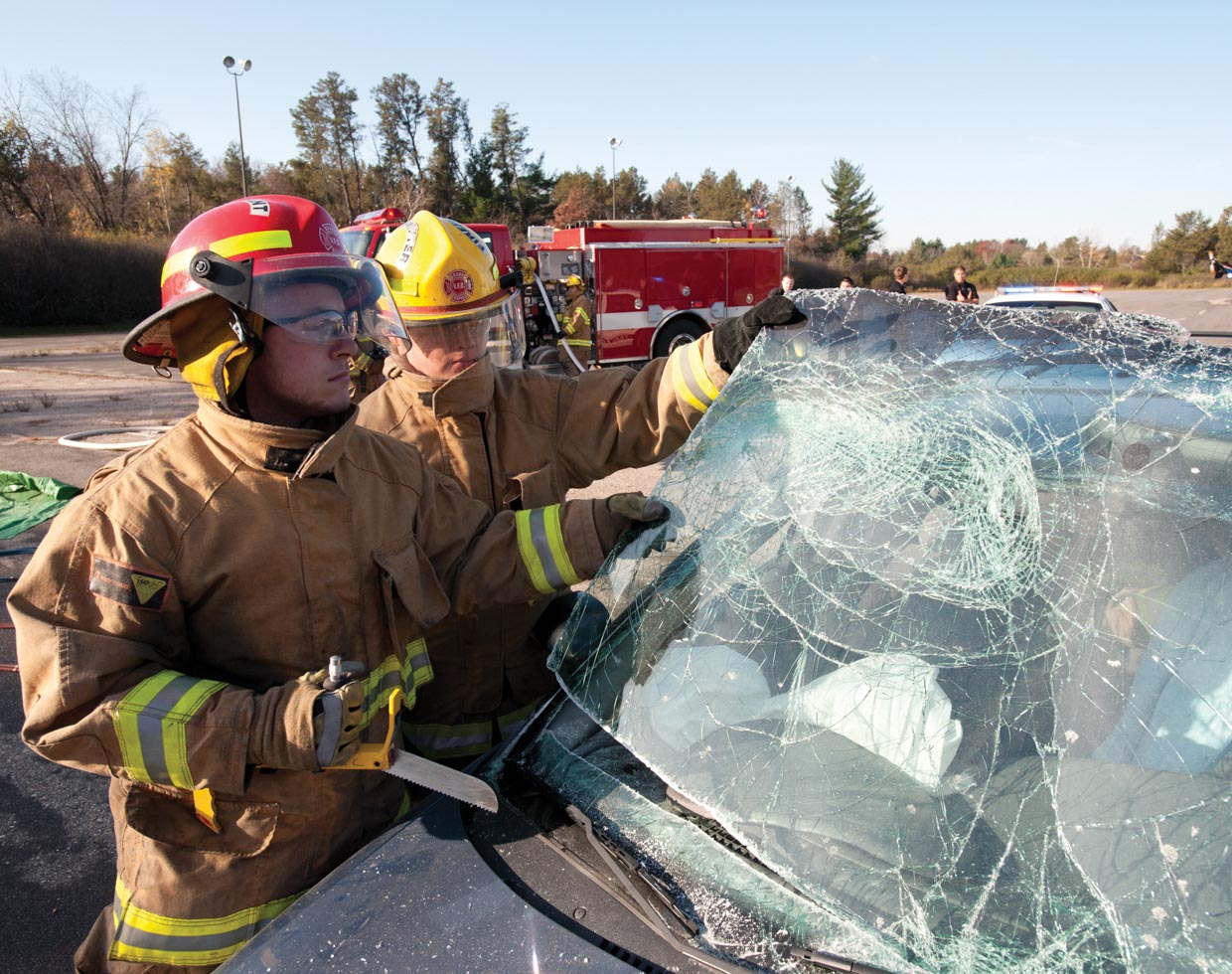
Firefighters are trusted professionals who protect lives, property, and communities with skill and courage. In this program, you will learn the fundamentals of fire behavior, suppression, rescue techniques, and emergency response. You will gain the technical knowledge and practical experience needed to begin your career in this rewarding and high-demand field.

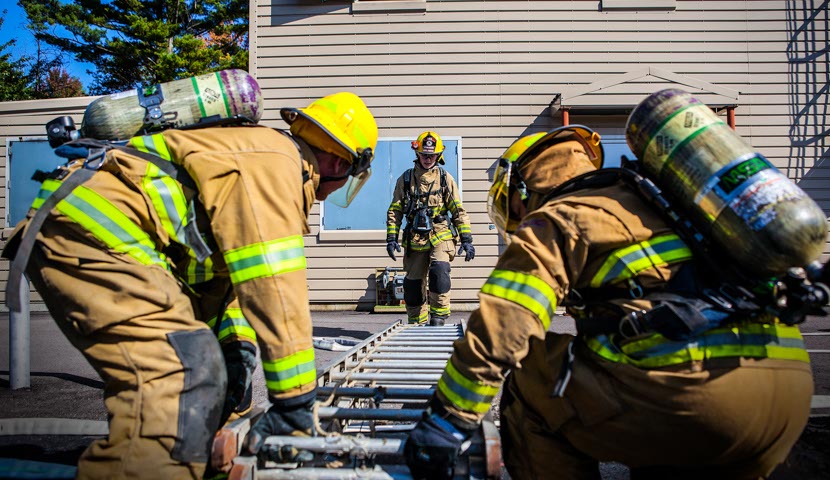
At Mid-State, you’ll receive hands-on training that prepares you to meet state and national certification requirements. The program can even be completed while you’re still in high school—helping you earn credentials faster and starting your career sooner.

Program Facts

Total Credits
8 Credits
Degree Type
Technical Degree
Program Length
Less Than One Year
Estimated Program Cost
$3,205.89
Financial Aid Eligibility
Not Eligible

Program Outcomes

Graduates leave ready to succeed in their careers. Each year, data from Mid-State's Graduate Survey and statewide reports show consistently high satisfaction and strong starting salaries. Here's a snapshot of what success looks like after graduation.

Career Opportunities

Firefighter
Firefighter/EMT
Firefighter/Paramedic
$51,011
Median Annual Salary
Recent program grads in Wisconsin earned a starting salary of $51,011. Source: Lightcast Data Set
252
Average Monthly Hires
252 of recent Wisconsin program grads landed jobs within six months of graduation. Source: Lightcast Data Set

Program Details

Take a closer look at what the program offers and what to expect.

Following is the list of courses within the program. Your course plan may vary, and you'll get a recommended sequence once you're enrolled. See the program information guide below for full course details or talk with your advisor.

Program Information Guide (PDF)

Full-Time Curriculum (8 Total Credits)

Credit for Prior Learning (CPL) options are available for some courses.

Term 1: (4 Credits)

Course Number

Course Name

CPL

Credits

30503101

Basic Firefighting and Hazmat Ops

No

4

Term 2: (4 Credits)

Course Number

Course Name

CPL

Credits

30503102

Advanced Firefighting

No

2

30503103

Firefighter Safety and Survival

No

2

Employers will expect graduates of this program to be able to:

  • Demonstrate professional conduct by displaying personal code of ethics, positive work ethics, flexibility, teamwork skills, physical fitness, safe procedures, and sensitivity to diverse cultures and individuals.
  • Meet professional fire and EMS credentialing standards.
  • Apply critical thinking skills to both emergency and non-emergency situations.

Alongside your career training, you'll develop key workplace strengths. Explore the additional skills you'll build.

Employability Skills (PDF)

To succeed in this program, you'll need to meet certain technical standards. These are the key skills and abilities needed for the program and future career success—with or without reasonable accommodations. Be sure to review them carefully before you apply.
Technical Standards (PDF)

Career Pathways

Career pathways help you build your education step by step. Each stage offers one or more credentials that are recognized by employers and lead to real jobs—and you can keep building toward your career goals as you go.

Prior Learning

Certificate

Technical Degree

Associate Degree

Bachelor's Degree

Get credit for what you already know. You may be able to earn college credit for prior learning through skills you’ve gained through high school classes, previous college work, self-study, military training, jobs, or volunteer experience.

  1. Credit for Prior Learning
  2. High School Dual Credit
  3. Mid-State Fast-Track – Open to high school students (age requirements apply)

Explore Other Options

Other Programs

Explore more Mid-State programs and find your path to success.

Workforce Training

Not ready for a full degree? Learn job-ready skills with our workforce training options.

Continuing Education

Add a new skill, explore a hobby, or take the next step in your career with our lifelong learning options.

Farm Operation

Technical Degree

Why Farm Operation?

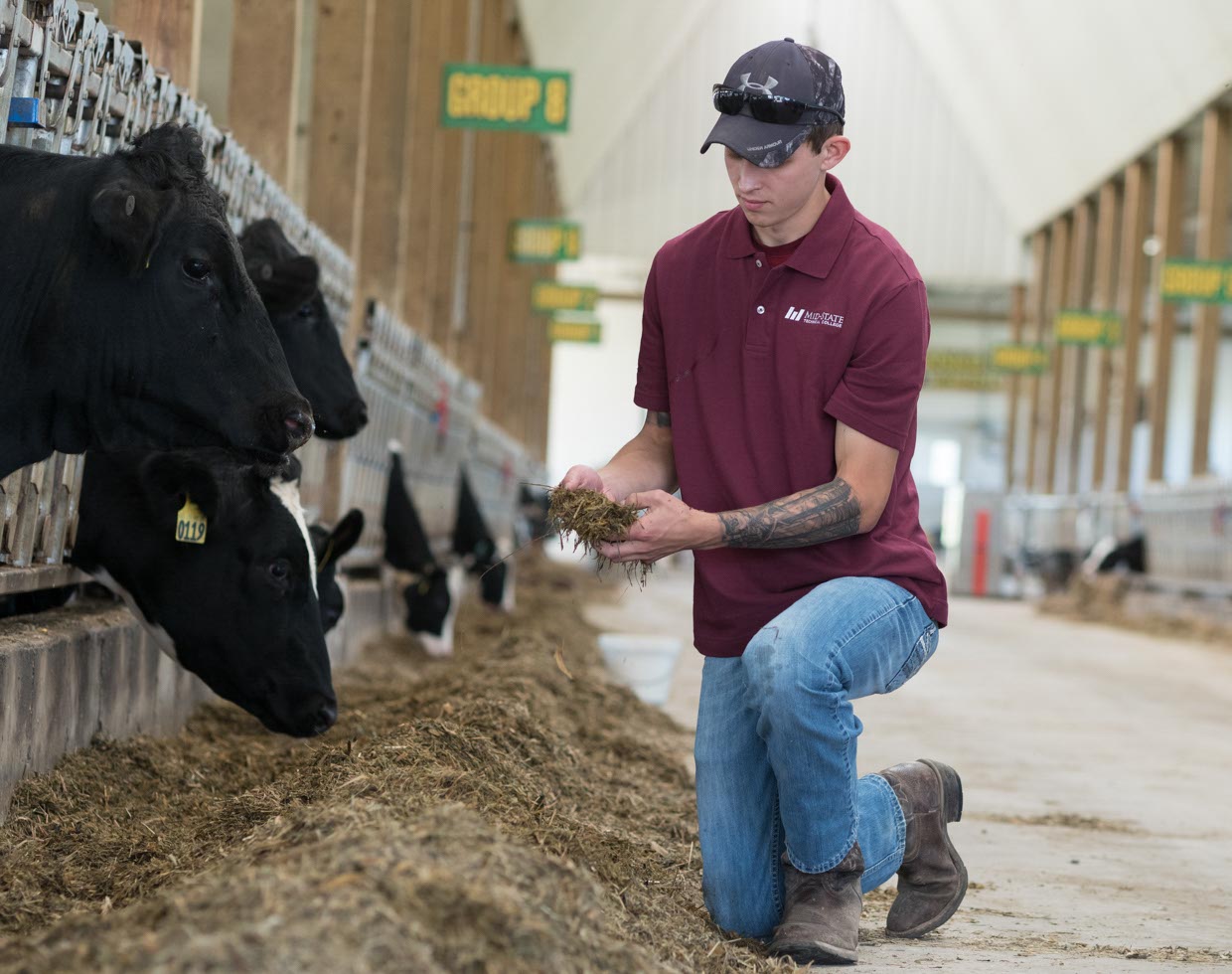
Successful farm management requires knowledge, adaptability, and a commitment to continual improvement. In this program, you will learn how to make sound management decisions by analyzing research-based practices, applying modern technology, and understanding the business side of agriculture. You’ll gain the confidence to oversee daily operations, improve productivity, and sustain profitability on the farm.

At Mid-State, you’ll learn from agribusiness professionals through hands-on experiences, on-farm labs, and interactive demonstrations. With a unique schedule designed from late fall to early spring, this program fits perfectly around your agricultural calendar while building essential skills for long-term success.

Program Facts

Total Credits
27 Credits
Degree Type
Technical Degree
Program Length
One Year
Estimated Program Cost
$5,026.68
Financial Aid Eligibility
Fully Eligible

Program Outcomes

Graduates leave ready to succeed in their careers. Each year, data from Mid-State's Graduate Survey and statewide reports show consistently high satisfaction and strong starting salaries. Here's a snapshot of what success looks like after graduation.

Career Opportunities

Agriculture Industry Technician
Agriculture Sales
Farm Owner
Herdsperson
Livestock Breeder
$32,238
Median Annual Salary
Recent program grads in Wisconsin earned a starting salary of $32,238. Source: Lightcast Data Set
223
Average Monthly Hires
223 of recent Wisconsin program grads landed jobs within six months of graduation. Source: Lightcast Data Set
100%
Mid-State Graduate Satisfaction Rate
Students leave proud, prepared, and confident in what comes next. Source: Mid-State Graduate Survey Results

Program Details

Take a closer look at what the program offers and what to expect.

Following is the list of courses within the program. Your course plan may vary, and you'll get a recommended sequence once you're enrolled. See the program information guide below for full course details or talk with your advisor.

Program Information Guide (PDF)

Full-Time Curriculum (27 Total Credits)

Credit for Prior Learning (CPL) options are available for some courses.

Term 1: (16 Credits)

Course Number

Course Name

CPL

Credits

10103106

Microsoft Office-Introduction

Yes

3

10093104

Principles of Crop Management

No

3

10091105

Animal Health

No

3

10080105

Intro to Soil Science

No

3

10091102

Intro to Animal Science

No

3

10890102

GPS for Student Success

Yes

1

Term 2: (11 Credits)

Course Number

Course Name

CPL

Credits

10006102

Agribusiness Equipment & Facilities

No

2

10006107

Agriculture Commodities & Marketing

No

3

10070104

Basic Agriculture Mechanics and Technology

No

3

10090101

Agriculture Business Management

No

3

Meet our full-time instructors.

Teri Raatz, BS, MS
Teri holds a BS in agricultural education from UW-River Falls and a master’s in agriculture/ag sustainability from Murray State University. Her love agriculture started in childhood—she grew up on a diversified livestock farm and showed/owned registered dairy cattle. Prior to her 15 years of teaching at Mid-State, Teri taught middle school and high school agriculture for six years. She has also worked at Wisconsin's first ethanol plant in Stanley, Wisconsin, where she was involved in grading and purchasing corn. Teri is actively involved in the Colby FFA Alumni and Supporters, volunteers with the Clark County 4-H, and serves as advisor for the Clark County Jr Holstein Association, and her family owns a small herd of registered dairy cattle that her kids show across the state. She also serves as a member of the City of Colby Board of Appeals. 

“I am passionate about all areas of agriculture and bring vast experience in agriculture into the classroom. I enjoy teaching students about the many opportunities available today in the world of agriculture.”

Employers will expect graduates of this program to be able to:

  • Utilize agronomic resources for optimal farm production.
  • Evaluate livestock management plans.
  • Plan for operation and maintenance of facilities and equipment.
  • Create a farm business plan.
  • Apply marketing principles to agricultural enterprises.

Alongside your career training, you'll develop key workplace strengths. Explore the additional skills you'll build.

Employability Skills (PDF)

To succeed in this program, you'll need to meet certain technical standards. These are the key skills and abilities needed for the program and future career success—with or without reasonable accommodations. Be sure to review them carefully before you apply.
Technical Standards (PDF)

Career Pathways

Career pathways help you build your education step by step. Each stage offers one or more credentials that are recognized by employers and lead to real jobs—and you can keep building toward your career goals as you go.

Prior Learning

Certificate

Technical Degree

Associate Degree

Bachelor's Degree

Get credit for what you already know. You may be able to earn college credit for prior learning through skills you’ve gained through high school classes, previous college work, self-study, military training, jobs, or volunteer experience.

  1. Credit for Prior Learning
  2. High School Dual Credit
  3. Mid-State Fast-Track – Open to high school students

Explore Other Options

Other Programs

Explore more Mid-State programs and find your path to success.

Workforce Training

Not ready for a full degree? Learn job-ready skills with our workforce training options.

Continuing Education

Add a new skill, explore a hobby, or take the next step in your career with our lifelong learning options.

Emergency Medical Technician

Technical Degree

Why Emergency Medical Technician?

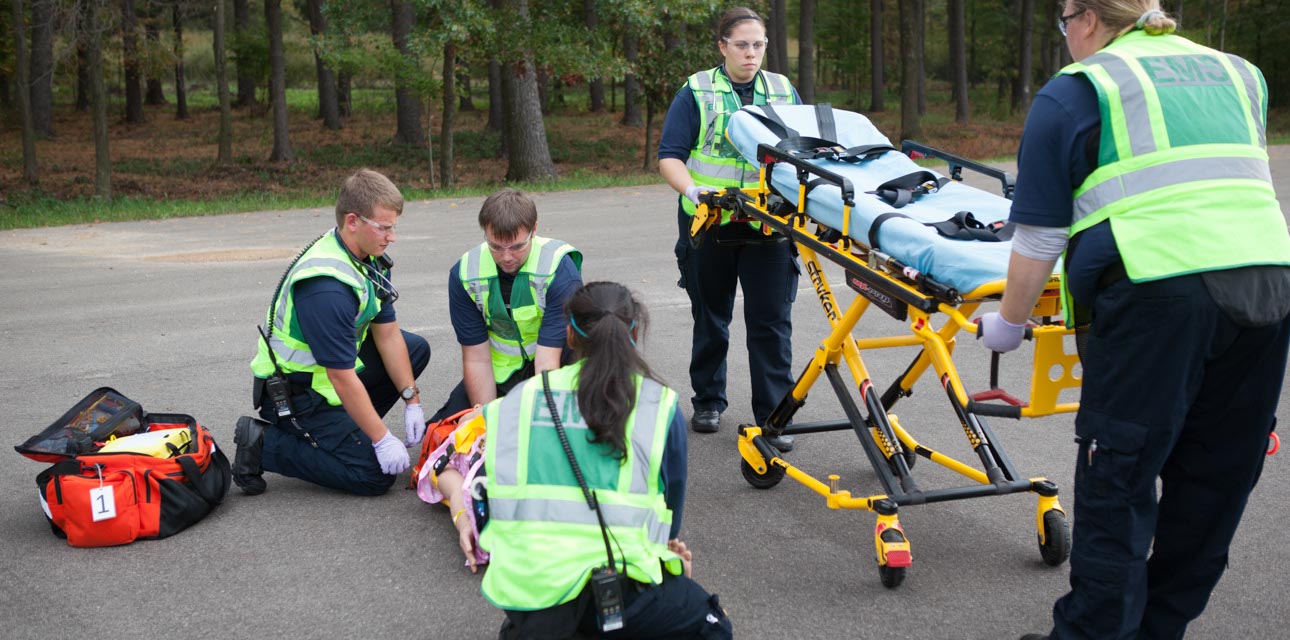
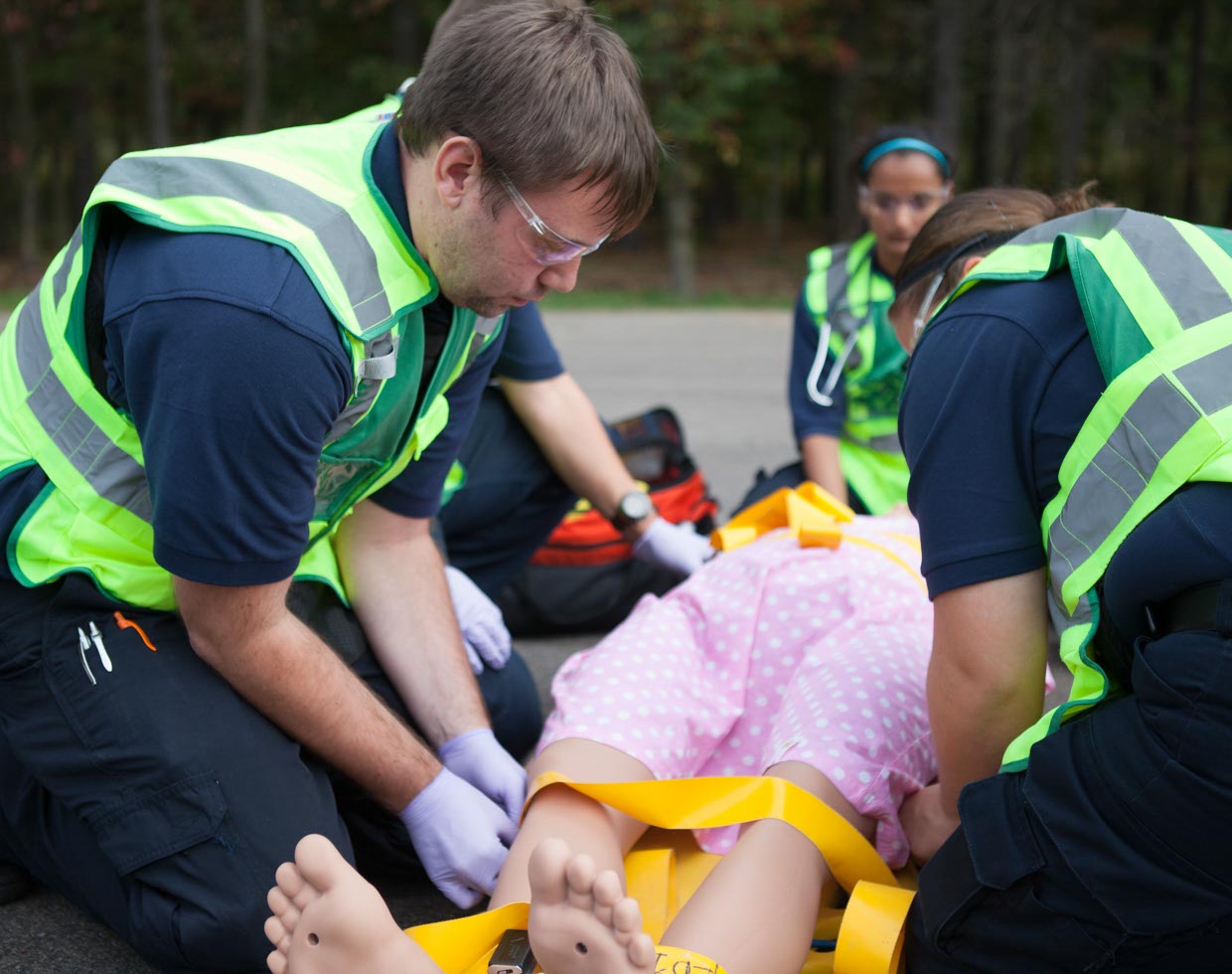
Emergency Medical Technicians are vital members of first-response teams, delivering life-saving care in critical situations. In this program, you will learn to assess patients, manage trauma, and provide emergency medical treatment sanctioned by the Wisconsin Division of Health. You will gain the knowledge, confidence, and composure needed to make quick, sound decisions when every second counts.

At Mid-State, you’ll learn through a mix of classroom instruction, hands-on labs, and pre-hospital clinical experiences. Successfully completing the program qualifies you to take the National Registry of EMTs certification exam required for Wisconsin state licensure.

Program Facts

Total Credits
7 Credits
Degree Type
Technical Degree
Program Length
Less Than One Year
Estimated Program Cost
$1,820.68
Financial Aid Eligibility
Not Eligible

Program Outcomes

Graduates leave ready to succeed in their careers. Each year, data from Mid-State's Graduate Survey and statewide reports show consistently high satisfaction and strong starting salaries. Here's a snapshot of what success looks like after graduation.

Career Opportunities

Dispatcher
Emergency Department Technician
Emergency Medical Technician
First Responder
Industry Safety Department
$43,346
Median Annual Salary
Recent program grads in Wisconsin earned a starting salary of $43,346. Source: Lightcast Data Set
196
Average Monthly Hires
196 of recent Wisconsin program grads landed jobs within six months of graduation. Source: Lightcast Data Set
95%
Mid-State Graduate Satisfaction Rate
Students leave proud, prepared, and confident in what comes next. Source: Mid-State Graduate Survey Results

Program Details

Take a closer look at what the program offers and what to expect.

Following is the list of courses within the program. Your course plan may vary, and you'll get a recommended sequence once you're enrolled. See the program information guide below for full course details or talk with your advisor.

Program Information Guide (PDF)

Full-Time Curriculum (7 Total Credits)

Credit for Prior Learning (CPL) options are available for some courses.

Term 1: (3 Credits)

Course Number

Course Name

CPL

Credits

30531100

EMR/EMT 1

No

3

Term 2: (4 Credits)

Course Number

Course Name

CPL

Credits

30531101

EMR/EMT 2

No

4

Meet our full-time instructors.

Alyssa Larsen, AAS
Alyssa holds paramedic technician and fire protection technician associate degrees from Mid-State Technical College. She is also pursuing a BAS in leadership and organizational studies from UW–Oshkosh. She is a registered paramedic with the National Registry of Emergency Medical Technicians and a Wisconsin state licensed paramedic with critical care endorsement. Prior to teaching for Mid-State, Alyssa worked as a part-time EMT and full-time paramedic. She continues to work part-time as a paramedic.

“Being an EMS instructor is very gratifying. It means so much to share my passion and to watch students acquire new skills and knowledge as they become professionals who will go out and help within our communities. It is one career that keeps giving back.”

Employers will expect graduates of this program to be able to:

  • Prepare for incident response and EMS operations. 
  • Integrate pathophysiological principles and assessment findings to provide appropriate patient care.
  • Demonstrate EMT skills associated with established standards and procedures for a variety of patient encounters.
  • Communicate effectively with others.
  • Demonstrate professional behavior.
  • Meet state competencies for EMT certification.

Alongside your career training, you'll develop key workplace strengths. Explore the additional skills you'll build.

Employability Skills (PDF)

To succeed in this program, you'll need to meet certain technical standards. These are the key skills and abilities needed for the program and future career success—with or without reasonable accommodations. Be sure to review them carefully before you apply.
Technical Standards (PDF)

This program prepares you for licensure to work in Wisconsin. If you plan to work in another state, be sure to check that state's licensure requirements—Mid-State's program may not meet them all. If you've applied to the program and have any questions about this information, talk to your advisor.

Licensure Information (PDF)

Career Pathways

Career pathways help you build your education step by step. Each stage offers one or more credentials that are recognized by employers and lead to real jobs—and you can keep building toward your career goals as you go.

Prior Learning

Certificate

Technical Degree

Associate Degree

Bachelor's Degree

Get credit for what you already know. You may be able to earn college credit for prior learning through skills you’ve gained through high school classes, previous college work, self-study, military training, jobs, or volunteer experience.

  1. Credit for Prior Learning
  2. High School Dual Credit
  3. Mid-State Fast-Track – Open to high school students

Explore Other Options

Other Programs

Explore more Mid-State programs and find your path to success.

Workforce Training

Not ready for a full degree? Learn job-ready skills with our workforce training options.

Continuing Education

Add a new skill, explore a hobby, or take the next step in your career with our lifelong learning options.