$2.5 million already raised toward transformational public safety education and training center serving central Wisconsin
Mid-State Technical College, in partnership with the City of Stevens Point and public safety agencies throughout central Wisconsin, has officially launched the campaign for the Nexus Public Safety Center, a planned regional education and training complex designed to transform how future and current first responders prepare to serve their communities.
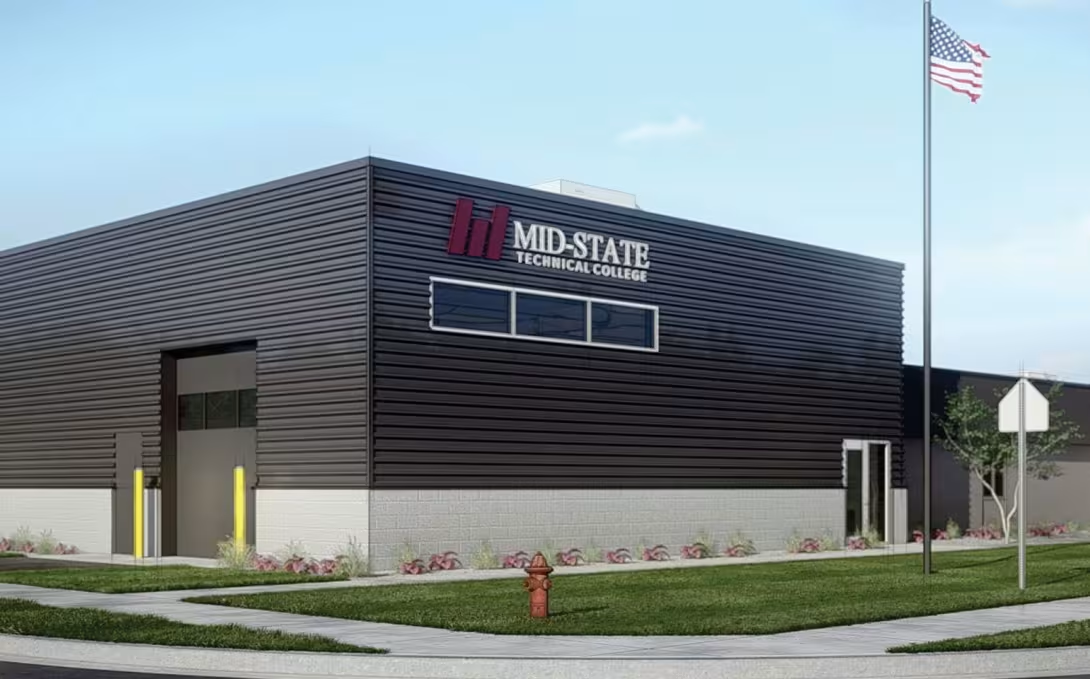
The approximately $32 million project will create a 71,000-square-foot building complex in Stevens Point, combining a 52,000-square-foot Mid-State education and training center with a 17,000-square-foot City of Stevens Point fire station and 2,000-square-foot satellite police station. An additional investment of $13 million in outdoor training environments will provide realistic, scenario-based opportunities for fire, EMS, law enforcement, corrections, emergency management and other public safety disciplines.
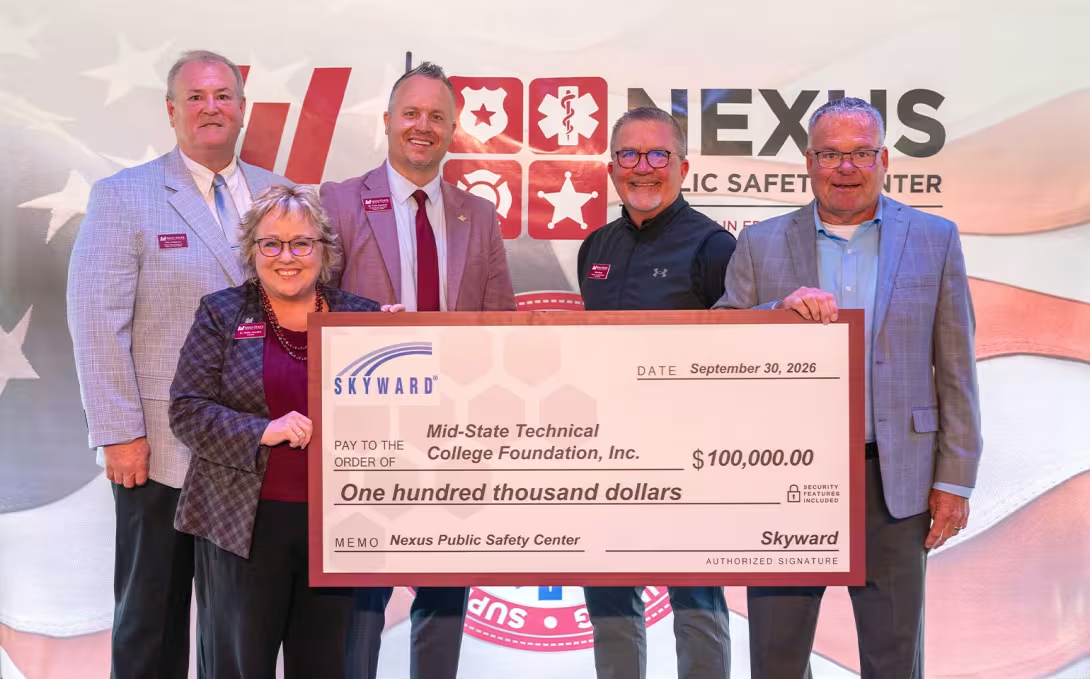
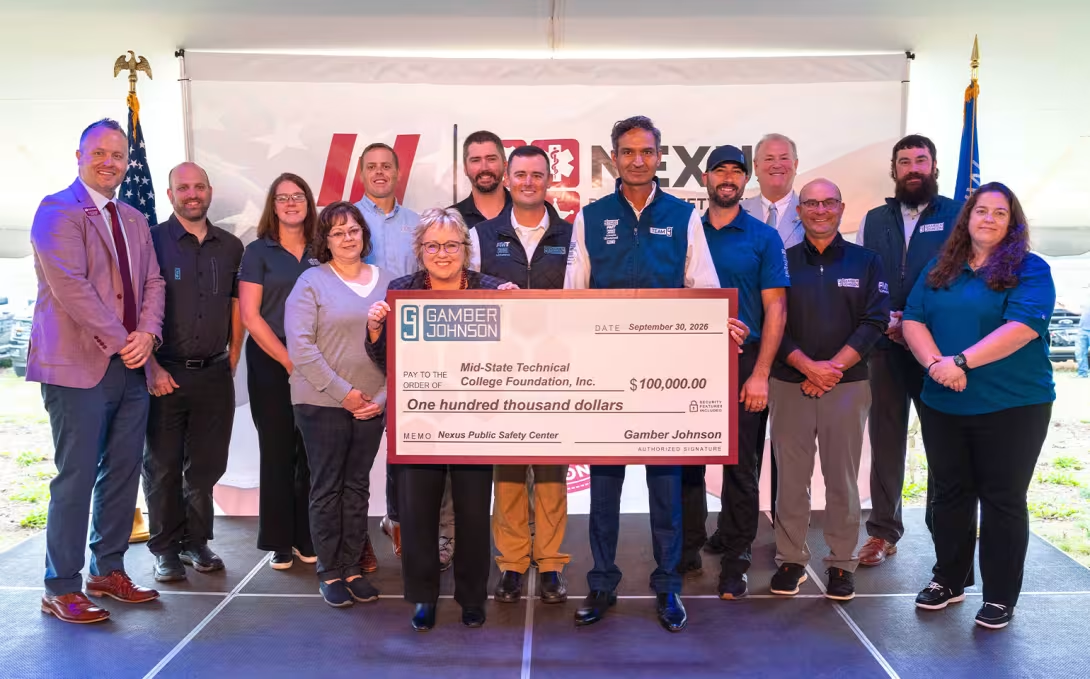
The campaign is launching with significant early momentum. More than $2.5 million has already been raised, demonstrating strong support for the vision and the need for expanded public safety training in central Wisconsin.
“Nexus is about preparing the people our communities depend on when it matters most,” said Dr. Shelly Mondeik, president of Mid-State Technical College. “This project brings education, public safety agencies, government, business and community partners together around a shared responsibility. By investing in the people who protect and serve our communities, we are investing in the safety, strength and resilience of our entire region.”
The need for Nexus was identified through conversations with public safety leaders throughout the region. Workforce shortages, aging and limited training facilities, increasing demands on emergency responders and the need for more advanced technology and collaborative training emerged as common challenges.
That regional support has been significant. All 62 public safety agencies in the Mid-State district have expressed support for a centralized training center, creating a shared vision for a facility that can serve agencies throughout the College’s eight-county district while maintaining Mid-State’s decentralized training opportunities in Adams, Marshfield, Stevens Point and Wisconsin Rapids.
“For those of us working in public safety, training is not something that ends when you earn a credential. It is something we do throughout our careers because the situations we respond to, the technology we use and the needs of our communities continue to change,” said Jb Moody, fire chief for the Stevens Point Fire Department. “Nexus will give agencies throughout our region the opportunity to train together in realistic environments before we are called to respond together in a real emergency. That kind of preparation and collaboration can make a tremendous difference when seconds matter.”
Nexus is designed to create those realistic training opportunities under one collaborative model. Planned features include specialized lab spaces, virtual simulation and scenario rooms, a realistic jail training complex, apparatus bays, classrooms and shared training spaces. Outdoor training areas will include props, buildings and a track for vehicle and emergency response training.
The facility will also support training beyond traditional fire, EMS, law enforcement and corrections education. Specialized training is expected to include agricultural and industrial rescue, railroad and public works safety, confined-space rescue, high-angle and trench rescue, hazardous materials response, emergency management, K9 training, responder wellness and emerging technologies.
The impact is expected to extend well beyond the students enrolled at Mid-State. Nexus is projected to serve approximately 2,680 participants annually by its third year after completion, representing a 110 percent increase from the 2024–25 baseline of 1,272 participants. Mid-State estimates the project could generate approximately $8.2 million in annual economic impact.
For public safety agencies, having advanced training available locally can also reduce the time and expense associated with sending personnel outside the district for specialized training. The project is intended to strengthen recruitment and retention, increase opportunities for multi-agency training and build a stronger pipeline of future public safety professionals.
The Nexus campaign will bring together businesses, foundations, government partners, public safety agencies, community organizations and individual donors. Funding for the project is expected to include a combination of philanthropic support, public-sector resources, federal appropriations and grants and contributions from project partners. More than 75 naming opportunities are planned throughout the facility and outdoor training environments.
“Nexus is more than a building,” Mondeik said. “It is a commitment to ensuring that the people who answer the call have the training, technology, partnerships and resources they need to be ready. We have an opportunity to build something here in central Wisconsin that will serve our communities for generations.”
Businesses, organizations, agencies and individuals interested in supporting the Nexus Public Safety Center can learn more about the project, campaign and partnership opportunities at mstc.edu/nexus.