More than 80 registered participants from 33 agencies in four states come together for hands-on emergency response training in Marshfield
From tractor rollovers and grain bin entrapments to hazardous manure pit gases and large animal rescues, agricultural emergencies require specialized knowledge, equipment and rapid decision-making. This past weekend, Mid-State Technical College brought together emergency responders from across Wisconsin and beyond for two days of intensive agricultural rescue training designed to help save lives in rural communities.
Held October 23–24 in Marshfield, the Agriculture Rescue Training program returned after a one-year hiatus, thanks to Mid-State's efforts to revive the longstanding regional event in partnership with Pittsville Fire Company and the National Farm Medicine Center.
The training drew 80 registered participants, representing 33 agencies from Wisconsin, New York, Indiana and North Carolina.
“Wisconsin is one of the nation's leading agricultural states, and that means our emergency responders face situations that are very different from those encountered in traditional residential or commercial emergencies,” said Rick Anderson, dean of Mid-State’s Adams Campus and School of Public Safety. “Whether it's a tractor rollover, a worker trapped in a grain bin or dangerous gases in a manure pit, these emergencies require specialized training and quick, informed decisions. When an emergency happens on a farm, there is no room for guesswork. Providing realistic, hands-on training helps ensure our first responders have the skills and confidence to protect lives, including their own.”
The two-day program began Friday evening at Mid-State's Marshfield Campus with expert presentations addressing agricultural emergencies, confined-space hazards, trauma response and large animal rescue.
On Saturday, participants gathered at Heiman Holsteins in Marshfield for hands-on training across five specialized rescue scenarios: tractor rollover, equipment extrication, manure pit rescue, grain bin rescue and large animal rescue. Participants rotated through four stations, practicing rescue techniques and learning to identify hazards unique to agricultural operations.
The training addresses a critical challenge for rural emergency departments. Farm-related emergencies often involve complex machinery, confined spaces, hazardous gases and unpredictable conditions. While these incidents may occur infrequently, they can carry significant risks for both victims and the responders working to rescue them.
The return of Agriculture Rescue Training reflects Mid-State's broader commitment to expanding access to realistic, scenario-based public safety education throughout central Wisconsin.
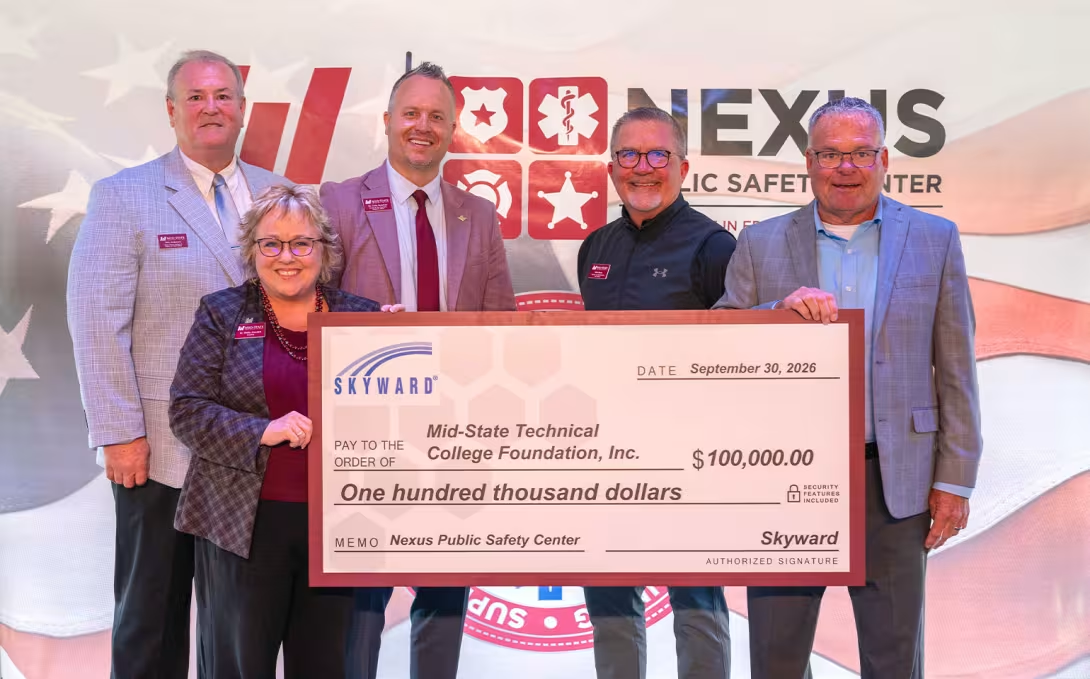
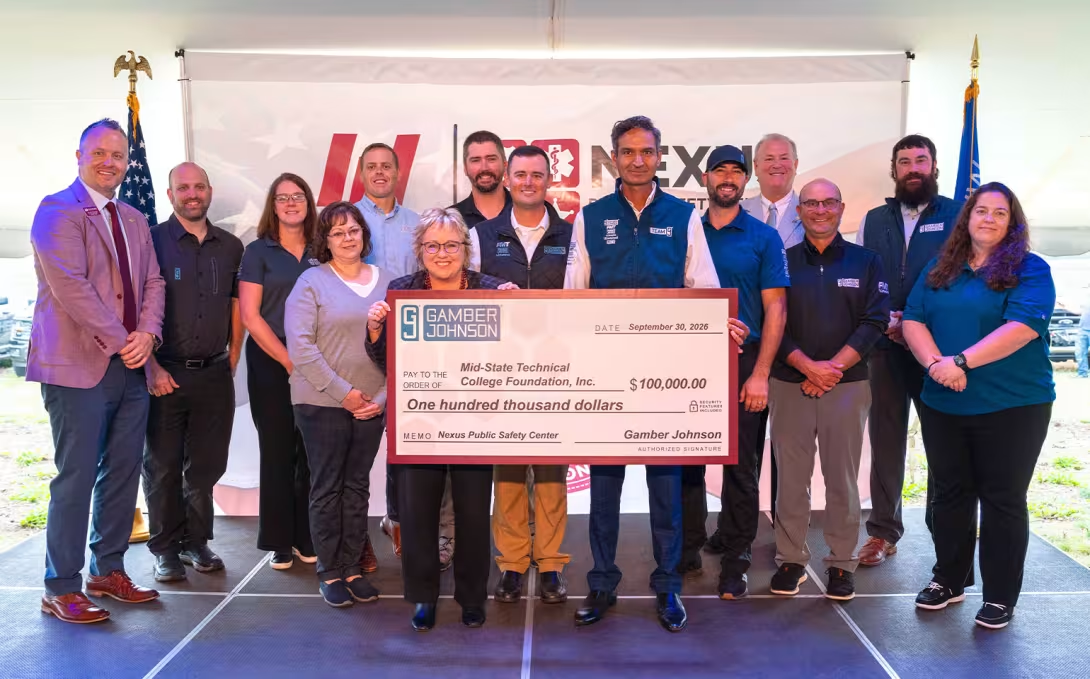
That same commitment is driving the College's development of the Nexus Public Safety Center, a planned regional education and training complex in Stevens Point that will strengthen training opportunities for current and future firefighters, emergency medical personnel, law enforcement officers, corrections professionals and other first responders.
Developed in partnership with the City of Stevens Point and public safety agencies throughout the region, the approximately $45 million Nexus project will bring together modern educational facilities, specialized training environments and opportunities for collaboration across public safety disciplines.
“Training like this demonstrates exactly why continued investment in public safety education is so important,” Anderson added. “Our communities depend on first responders who are prepared to handle whatever emergency comes their way. Through programs like Agriculture Rescue Training and future investments like Nexus, Mid-State is committed to providing the resources, partnerships and hands-on experiences that make our communities safer.”
While Nexus will provide a centralized regional training resource, Mid-State will continue to deliver specialized training throughout its district, recognizing the unique needs of rural communities and their emergency response agencies.
The training also continued an important effort to prevent agricultural tragedies through the distribution of lifesaving safety equipment.
Through support from the Mike Biadasz Farm Safety and Education Memorial Fund and the National Farm Medicine Center, participating emergency response departments registering three or more personnel were eligible to receive a four-gas monitor to help identify dangerous atmospheric conditions during agricultural emergencies.
The initiative honors Mike Biadasz, who died on August 15, 2016, after being overcome by hydrogen sulfide gas while agitating a manure pit on his family's farm. His family established the gas monitor program to help prevent similar tragedies and protect both agricultural workers and emergency responders.
The return of Agriculture Rescue Training was made possible through collaboration among Mid-State, Pittsville Fire Company, the National Farm Medicine Center and supporting organizations, including Heiman Holsteins, Heeg Farms Inc., Life Link III and the Central Wood Fire and Rescue Services Association.
To learn more about Mid-State's public safety training opportunities and the Nexus Public Safety Center, visit www.mstc.edu/nexus.